Introduction
Let me be honest with you. When I first started teaching biology to SSC and UPSC aspirants, I noticed something fascinating: students could memorize the definition of a cell in five minutes, but they couldn't tell you why that definition matters or how cells actually keep them breathing right now. That disconnect always bothered me.
See, cell biology isn't just another chapter to cram before your exam. It's the foundation of literally everything alive. I'm talking about you, me, that mosquito buzzing around your room at 2 AM while you're studying, even the mango tree in your neighbor's yard—we're all made of cells. And understanding how these tiny structures work is like understanding the plot twist in a Bollywood movie: once you get it, everything else makes sense.
In this post, I'm going to walk you through cell biology and life processes the way I explain it to my students during our online sessions. No unnecessary jargon, just clear thinking and a few tricks that'll help you remember this stuff for life. Sound good?
What Actually Is a Cell, and Why Should You Care?
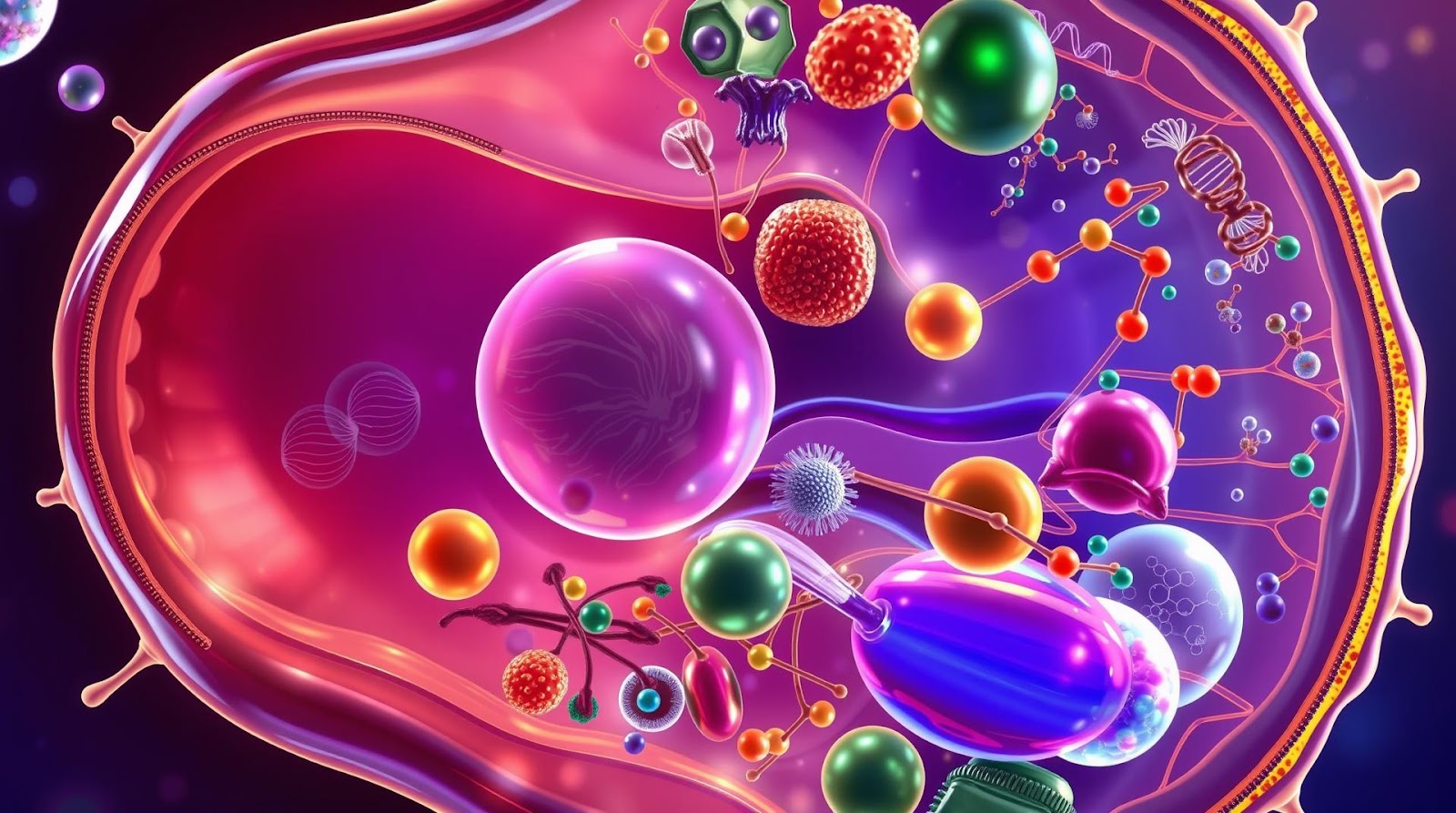
Alright, let's start with the basics. A cell is the smallest unit of life that can function independently and perform all life processes. Think of it like this: if a human body is a cricket team, then a cell is a single player. Every player has a specific role, and together they win the match. Remove one crucial player, and the whole team struggles.
Now, here's what blows most students' minds: there are two main types of cells, and they're fundamentally different in ways that actually matter for your exam.
Prokaryotic Cells: The Ancient Warriors
Prokaryotic cells are old school. They've been around for about 3.5 billion years and they're still thriving. Bacteria and archaea are examples. What makes them special? They don't have a nucleus. Seriously. Their genetic material just floats around in the cytoplasm like an instruction manual left on a kitchen table.
I always tell my students: "Prokaryotes are like a small village shop where the owner handles everything from the counter. There's no separate office, no formal structure. Just raw organization."
Eukaryotic Cells: The Complex Corporations
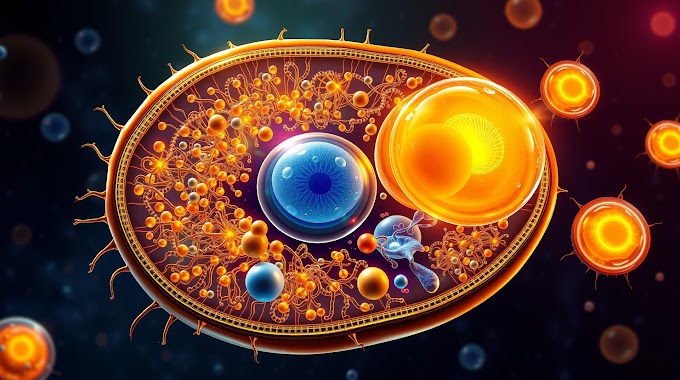
Eukaryotic cells are the fancy ones. That's us—humans, animals, plants, fungi. We've got a nucleus where our DNA is tucked safely inside, like important documents in a CEO's private office. We also have membrane-bound organelles, which are like different departments in a company: HR, finance, production, quality control. Each one does its job independently but coordinates with the others.
You might be wondering, "Why does this matter for my exam?" Because SSC CGL and UPSC love asking comparison questions. They'll show you a diagram and ask: "Is this a prokaryotic or eukaryotic cell?" And if you understand the core difference—nucleus, organelles, complexity—you'll nail it.
The Organelles: Meet the Workers Inside Your Cells
Okay, so you've got a eukaryotic cell with a nucleus. What else is in there? A bunch of hardworking organelles, and I'm going to introduce you to them like they're characters in your favorite series.
The Nucleus: The Boss
The nucleus is literally the control center. It contains your DNA—all the instructions for building you and keeping you running. When a cell needs to do something, it checks the DNA in the nucleus and gets the instructions. It's surrounded by a nuclear envelope, which is basically a security barrier that decides what gets in and out.
Mitochondria: The Power Plants
I always call mitochondria "the power plants of the cell," and honestly, that's exactly what they are. They convert glucose and other nutrients into ATP (adenosine triphosphate), which is basically the cell's energy currency. Every time you run, think, digest food, or move your fingers—that's mitochondria working.
Here's a memory trick I teach all my students: "MIT = Mighty IT (Information Technology) that powers everything." Corny? Yes. Effective? Absolutely.
Endoplasmic Reticulum and Golgi Apparatus: The Postal Service
The endoplasmic reticulum (ER) is like a manufacturing unit. Rough ER (with ribosomes attached) makes proteins. Smooth ER makes lipids. Then these products travel to the Golgi apparatus, which packages them like gifts and sends them where they need to go. Without this system, your cells couldn't produce enzymes, hormones, or antibodies.
Lysosomes: The Cleanup Crew
Lysosomes are filled with digestive enzymes that break down waste materials inside the cell. Think of them as the sanitation workers of your body. They're particularly important in white blood cells, which use lysosomes to destroy invading bacteria. In some diseases, lysosomes malfunction, and waste builds up inside cells—very serious stuff.
| Organelle | Main Function | Found In |
|---|---|---|
| Nucleus | Controls cell activities; stores DNA | Eukaryotic cells only |
| Mitochondria | Produces ATP (cellular energy) | Eukaryotic cells |
| Chloroplast | Photosynthesis (light energy to glucose) | Plant cells only |
| Lysosome | Digests and breaks down waste | Animal cells |
| Golgi Apparatus | Packages and modifies proteins | Eukaryotic cells |
| Ribosome | Synthesizes proteins | All cells |
Life Processes: What Makes Something "Alive"?
Now we're getting into the really important stuff. A cell—and by extension, all living organisms made of cells—performs certain life processes. If you can't do these, you're not alive. It's that simple.
Metabolism: The Chemical Juggling Act
Metabolism is the sum of all chemical reactions happening in your body right now. It's split into two parts: catabolism (breaking things down to release energy) and anabolism (building things up using energy). When you eat rice and your body breaks it down into glucose, that's catabolism. When your muscles use that glucose to build muscle protein, that's anabolism.
Here's the memory trick I use: "CAT-abolism breaks things down (like a cat knocking things off a table), and AN-abolism builds things up (like ants building a colony)."
Nutrition and Transport: Getting the Goods In
Your cells need nutrients—glucose, amino acids, minerals, vitamins. But how do these substances cross the cell membrane? Through different types of transport.
Diffusion is passive—molecules just naturally move from high concentration to low concentration, like how a drop of ink spreads in water. No energy needed.
Osmosis is specifically water molecules moving across a semipermeable membrane. This is crucial. In your red blood cells, if you put them in distilled water, they swell up and burst (hemolysis) because water rushes in. Put them in very salty water, and they shrivel (crenation). This is why doctors use isotonic saline solutions in hospitals.
Active transport is when the cell uses energy (ATP) to pump substances against the concentration gradient. Your nerve cells do this constantly to maintain their electrical potential.
Respiration: The Energy Extraction
Cellular respiration is where your cells extract usable energy from food. It happens in two main stages.
Glycolysis occurs in the cytoplasm and breaks down one glucose molecule into two pyruvate molecules, releasing a small amount of energy (2 ATP). This is the only stage that doesn't require oxygen—it's anaerobic.
Aerobic respiration (Krebs cycle and electron transport chain) happens in the mitochondria and extracts much more energy—about 30-36 ATP per glucose molecule. This is why aerobic respiration is so efficient compared to anaerobic respiration (fermentation), which only yields 2 ATP and produces lactic acid as a byproduct (that's the burning sensation in your muscles after intense exercise).
Growth and Reproduction: Making More Cells
Cells grow by synthesizing new proteins and other molecules, and they reproduce through cell division. There are two main types:
Mitosis produces two identical daughter cells from one parent cell. This is how your body grows and how it repairs damaged tissue. I always tell students: "Mitosis makes identical twins."
Meiosis is only in reproductive cells and produces four genetically different cells, each with half the chromosome number. This is how you get sperm and egg cells. If mitosis is twins, meiosis is quadruplets who are all different from each other and their parents.
Plant Cells vs. Animal Cells: Know the Difference
Both plant and animal cells are eukaryotic, but they've got some key differences that examiners love asking about.
Plant cells have chloroplasts (for photosynthesis), a cell wall (rigid structure made of cellulose outside the cell membrane), and a large central vacuole that maintains turgor pressure and stores nutrients. Animal cells don't have any of these. Instead, animal cells often have small vacuoles and multiple lysosomes.
Why? Because plants stay in one place and need structural support. Animals move around, so they need flexibility. It's evolution at work.
One final thought: understanding cells and life processes isn't just about passing an exam. It's about understanding yourself. Right now, as you read this, billions of cells in your body are carrying out respiration, transport, and growth. Your immune cells are hunting down bacteria. Your nerve cells are firing signals to your brain. Your muscle cells are holding you upright in your chair. Pretty incredible when you think about it, right?
Master these concepts, practice the questions below, and you'll walk into that exam room with genuine confidence, not just memorized facts.
Practice Questions
A) They have a well-defined nucleus with a nuclear envelope B) They lack membrane-bound organelles C) They are found only in eukaryotic organisms D) They contain mitochondria for energy production
Answer: B) They lack membrane-bound organelles
A) Store genetic information B) Synthesize proteins C) Produce ATP through cellular respiration D) Break down cellular waste
Answer: C) Produce ATP through cellular respiration
A) Active transport B) Endocytosis C) Osmosis D) Facilitated diffusion
Answer: C) Osmosis
A) Rough Endoplasmic Reticulum B) Golgi Apparatus C) Lysosome D) Ribosome
Answer: B) Golgi Apparatus
A) 30-36 ATP and carbon dioxide B) 2 ATP and ethanol C) 2 ATP and lactic acid D) 18 ATP and water
Answer: C) 2 ATP and lactic acid
Published by Dattatray Dagale • 25 April 2026
.jpg)
.png)


.png)


.png)


0 Comments