Introduction
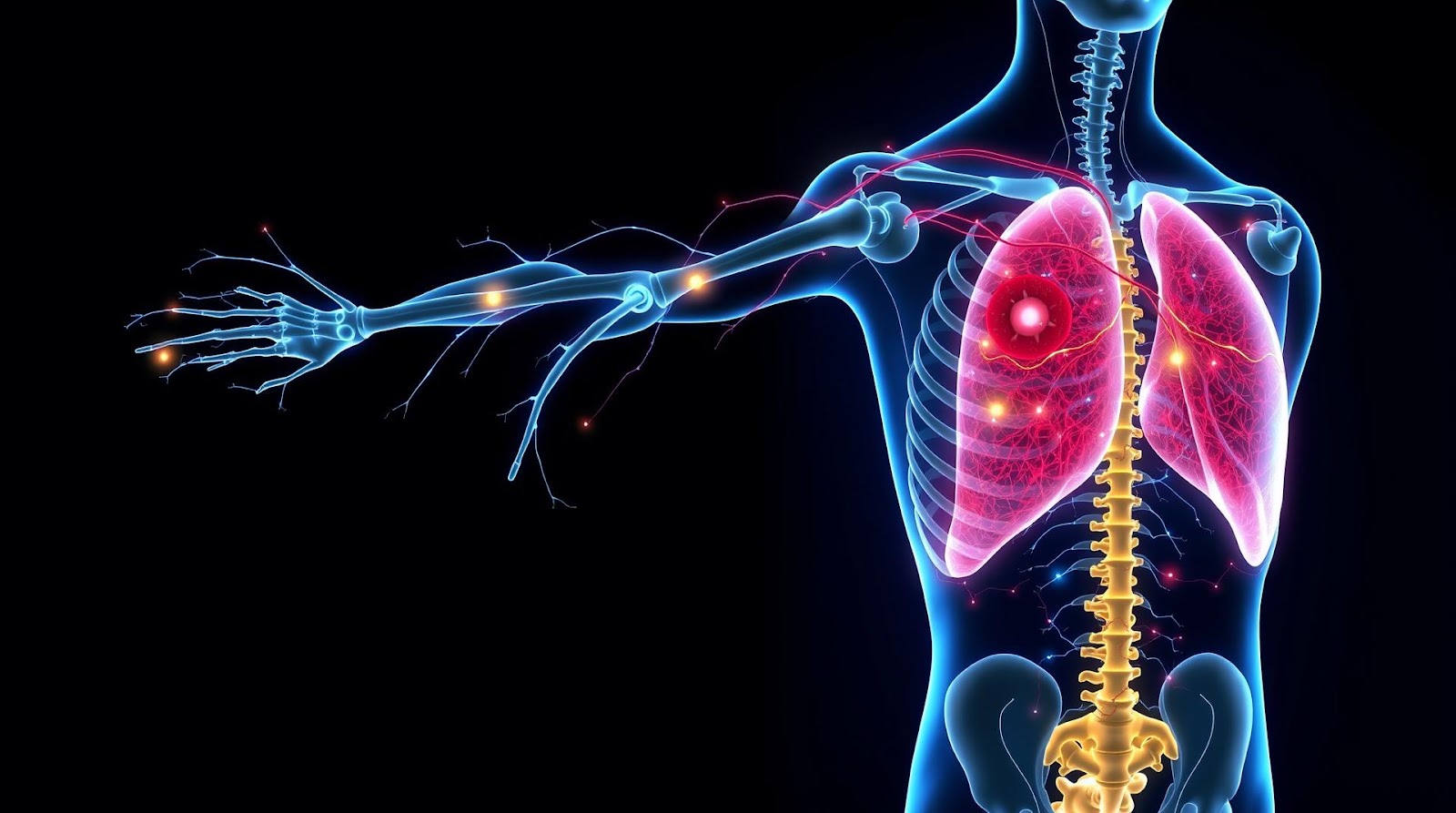
Listen, I've been teaching General Science for over a decade now, and if there's one topic that makes students panic unnecessarily, it's the human body systems. I remember Priya, a bright student from Delhi, who once told me: "Sir, the body is so complicated, how am I supposed to memorize everything?" And you know what I told her? "You're not. You're going to understand it."
That's the real trick here. Most textbooks make it sound like you need to become a doctor to crack SSC or UPSC questions on this topic. Nonsense. The examiners don't want a neurosurgeon's knowledge. They want you to understand how systems talk to each other, what goes wrong when they don't, and which organs do what jobs. That's it.
Today, I'm going to walk you through the 11 major body systems the way I explain them to my students—clearly, with examples you'll actually remember, and without the medical jargon that makes your eyes glaze over. By the end of this, you'll not only understand how your body works, but you'll also ace those questions that have tricked countless aspirants before you.
The Big Picture: Why Systems Matter
Before we dive into individual systems, let me set the stage. Your body isn't just a random collection of organs. It's like a cricket team—each player has a specific role, but they all have to coordinate for the team to win. Your heart can be the best heart in the world, but if your lungs aren't working, you're out of the game.
Understanding Integration and Homeostasis
Here's a term you'll see everywhere: "homeostasis." Fancy word, simple meaning. It's your body's ability to keep everything balanced—your temperature, water levels, pH, everything. Think of it like the thermostat in your home. When the temperature drops, the heater kicks in. When it rises, the AC turns on. Your body does the same thing, just way more sophisticated.
All 11 systems work together to maintain this balance. And that's what examiners love to ask about. They'll give you a scenario—say, a person running in the summer—and ask which systems activate. You need to trace the chain: muscles work → heat rises → nervous system detects this → endocrine system releases hormones → circulatory system increases blood flow to skin → skin sweats (integumentary system) → temperature drops. Beautiful coordination.
The 11 Systems at a Glance
Let me give you a quick framework before we go deep. The 11 systems are: skeletal, muscular, nervous, endocrine, circulatory, respiratory, digestive, urinary, reproductive, lymphatic (immune), and integumentary. I'll break down each one, but here's a trick I tell my students: group them by function.
The Structural Systems: Building and Moving
Skeletal System – Your Body's Framework
Your skeleton isn't just there to keep you from collapsing into a puddle (though that would be inconvenient during exams). It does four major jobs: support, protection, movement, and mineral storage.
Now, here's what students get wrong. They memorize all 206 bones like it's the periodic table. Stop. The exam won't ask you to list every bone. Instead, it'll ask things like: "Which bone is the longest in the human body?" (femur), or "Which system produces red blood cells?" (bone marrow in the skeletal system—and yes, this counts!), or "What happens if calcium levels drop?" (bones release calcium into the bloodstream).
The key insight: bones aren't just dead rock. They're living tissue. They're constantly remodeling, communicating with your endocrine system, and trading minerals with your blood. Fascinating stuff.
Muscular System – The Workers
Three types of muscle: skeletal (voluntary, you control them), smooth (involuntary, in your organs), and cardiac (your heart, also involuntary).
Here's a memory trick I created for my students: "SCS" – Skeletal is Conscious, Smooth is in organs, Cardiac in heart. Silly? Yes. But you'll never forget it.
The muscular system doesn't work alone. Muscles need nerves to tell them when to contract (nervous system), blood to bring oxygen (circulatory system), and glucose to fuel the contraction (digestive system). See how everything connects?
The Control Systems: Your Body's Communication Network
Nervous System – The Lightning-Fast Messenger
The nervous system is like your body's internet. It sends signals at incredible speeds—some nerve impulses travel at 120 meters per second. That's why when you touch a hot stove, your hand jerks back before you even feel the pain. Pure reflex.
Two main divisions: central (brain and spinal cord) and peripheral (all other nerves). Students often ask: "Sir, which is more important?" Neither. You need both. Your brain processes information, but your peripheral nerves are the delivery system.
A really common exam question: "Which part of the brain controls balance and coordination?" Answer: cerebellum. "Which part controls basic functions like breathing?" Answer: medulla oblongata (in the brainstem). These are your bread-and-butter questions.
Endocrine System – The Slow But Powerful Messenger
While the nervous system sends messages at lightning speed, the endocrine system sends hormones through the bloodstream. Slower, but more lasting effects. Think of it like this: nervous system is a phone call, endocrine system is an email. The email takes longer but has longer-lasting impact.
The pituitary gland is the "master gland"—it controls most other endocrine glands. But here's what teachers don't always emphasize: the pituitary itself is controlled by the hypothalamus, which is part of the brain. So there's no real "master"—it's hierarchical. The brain is at the top.
Thyroid controls metabolism, pancreas controls blood sugar (insulin and glucagon), adrenal glands give you that adrenaline rush when you're scared. These are the ones that show up constantly in exams.
The Transport and Filtration Systems: Keeping Everything Moving
Circulatory System – The Delivery Network
Your heart beats about 100,000 times a day. Let that sink in. And every single beat is sending blood to every cell in your body. The circulatory system has three jobs: transport oxygen and nutrients, remove waste, and regulate temperature.
Here's a mental image that helps students: think of your circulatory system like Delhi's metro. The heart is the central control station. Arteries are the main lines going out, veins are the return lines coming back, and capillaries are the small branch stations where the real work happens—oxygen gets dropped off, carbon dioxide gets picked up.
Quick fact for your exam: arteries carry blood away from the heart (both words start with A), veins return blood to the heart (both have "in" sound). Childish? Maybe. Effective? Absolutely.
Respiratory System – The Oxygen Station
Nose → trachea → bronchi → lungs. Simple path, but the lungs are where the magic happens. Oxygen diffuses into the blood, carbon dioxide diffuses out. This happens in tiny air sacs called alveoli.
One thing that confuses students: your respiratory system doesn't transport oxygen. The lungs pick up oxygen, hand it to the blood (circulatory system), and the blood transports it. Respiratory system's job is just gas exchange. That's it. Don't overestimate its role.
Urinary System – The Waste Manager
Kidneys filter blood, creating urine that contains water, urea, and other wastes. This system maintains water balance and pH. You have two kidneys, but you can live with one—the exam will definitely ask this someday.
The urinary system is actually more sophisticated than people think. It doesn't just remove waste; it also regulates blood pressure and produces hormones that stimulate red blood cell production. But for basic exams, focus on the filtering and waste removal functions.
| System | Main Organs | Primary Function |
|---|---|---|
| Skeletal | Bones, cartilage, ligaments | Support, protection, movement |
| Muscular | Skeletal, smooth, cardiac muscles | Movement and heat generation |
| Nervous | Brain, spinal cord, nerves | Rapid communication and control |
| Endocrine | Pituitary, thyroid, pancreas, adrenal | Hormone secretion and regulation |
| Circulatory | Heart, arteries, veins, capillaries | Transport of oxygen and nutrients |
| Respiratory | Lungs, trachea, bronchi | Gas exchange (O₂ and CO₂) |
| Digestive | Mouth, stomach, intestines, liver, pancreas | Nutrient absorption |
| Urinary | Kidneys, bladder, urethra | Waste removal and water balance |
| Lymphatic/Immune | Lymph nodes, spleen, thymus, white blood cells | Defense against pathogens |
| Integumentary | Skin, hair, nails | Protection and temperature regulation |
| Reproductive | Ovaries/testes, uterus/prostate | Reproduction |
The Processing and Defense Systems
Digestive System – The Processor
Food comes in, nutrients are extracted, waste goes out. Simple summary, but the process is incredible. Your stomach produces acid strong enough to dissolve metal, yet doesn't dissolve itself. Why? Because of a protective mucus layer. Your small intestine has finger-like projections called villi that absorb nutrients. Your liver processes everything.
Here's a common mistake students make: thinking the digestive system just breaks down food. Wrong. It breaks it down, then absorbs the nutrients, then gets rid of waste. Three separate jobs. And the liver is like the quality control department—it processes almost everything absorbed from the intestines.
Lymphatic and Immune Systems – The Defenders
Your immune system is constantly under attack from bacteria, viruses, and other invaders. The lymphatic system is part of the circulatory system—it's the cleanup crew. White blood cells (produced in the bone marrow and thymus) patrol your body looking for trouble.
There are two types of immunity students should know: innate (you're born with it, like your skin barrier) and adaptive (your body learns to recognize specific invaders). Vaccines work with adaptive immunity—they teach your immune system to recognize a threat before it attacks.
Integumentary System – Your Protective Barrier
Skin is not just pretty. It's your largest organ, and it does three major jobs: protection from the environment, temperature regulation, and sensation. It has three layers: epidermis (outer), dermis (middle), and hypodermis (deep layer with fat for insulation).
Students often overlook this system, but it shows up in questions about temperature regulation, vitamin D synthesis, and protection from pathogens. Don't skip it.
The Reproductive System and Final Thoughts
I'm not going to spend too much time here because every student already knows the basics. But remember: this system is the one that works intermittently, not like the others that work 24/7. The male system produces sperm, the female system produces eggs, and together they create new life. Hormonally, they're controlled by the pituitary gland through FSH and LH.
One memory trick for exams: "MF Logic"—Male = Fatherhood, Female = Fertilization. Both start with F for the female system. I know, I know, it's terrible. But it works.
Now, here's my final advice. Don't memorize facts about these systems in isolation. Always ask yourself: "How does this system talk to other systems? What happens if this system fails? What controls this system?" This is how examiners think, and this is how you'll crack even the toughest questions.
I had a student, Aditya, who went from scoring 4/5 on body system questions to perfect scores. How? He stopped trying to memorize and started drawing connections. He'd ask things like: "If the thyroid isn't working, what happens to metabolism? To weight? To the nervous system?" One question, multiple answers. This is the thinking that separates toppers from average students.
You've got this. Now go and ace those exams.
Practice Questions
A) Production of hemoglobin B) Absorption of fats and circulation of lymph C) Filtration of blood D) Gas exchange
Answer: B) Absorption of fats and circulation of lymph
A) Digestion only B) Respiration and heartbeat C) Temperature regulation D) Blood pressure only
Answer: B) Respiration and heartbeat
A) Pancreas B) Stomach C) Gallbladder D) Small intestine
Answer: C) Gallbladder
A) Pancreas and liver B) Kidneys and bladder C) Heart and lungs D) Stomach and intestines
Answer: B) Kidneys and bladder
A) Endocrine system B) Digestive system C) Nervous system (reflex arc) D) Circulatory system
Answer: C) Nervous system (reflex arc)
Published by Dattatray Dagale • 26 April 2026
.jpg)
.png)



.png)



.png)


0 Comments