Introduction
Let me start with a question I ask every batch of students: What's older — the pyramids of Egypt or the cities of the Indus Valley? Most say Egypt. They're wrong, and that's exactly why this topic fascinates me even after teaching it for over a decade.
The Indus Valley Civilisation is like that friend who threw the wildest party, then disappeared without a trace. We found the leftover clues, but the guest list remains a mystery. While Egyptians were building their famous pyramids around 2500 BCE, the people of the Indus Valley had already constructed sophisticated cities with planned roads, drainage systems, and weights-and-measures standardisation that wouldn't be matched in Europe for another 2,000 years.
Here's what gets me excited: we still don't know why they vanished. We don't know what they called themselves. We can't read their script. Yet, their legacy shaped everything that came after in India. It's like trying to solve a puzzle where half the pieces are missing, but the picture is unmistakably brilliant.
So let's sit down and explore this civilisation properly — not just for your exams, but because understanding where we came from changes how we see ourselves.
Geography and Timeline: Where and When?
The Heartland of Ancient Urban Life
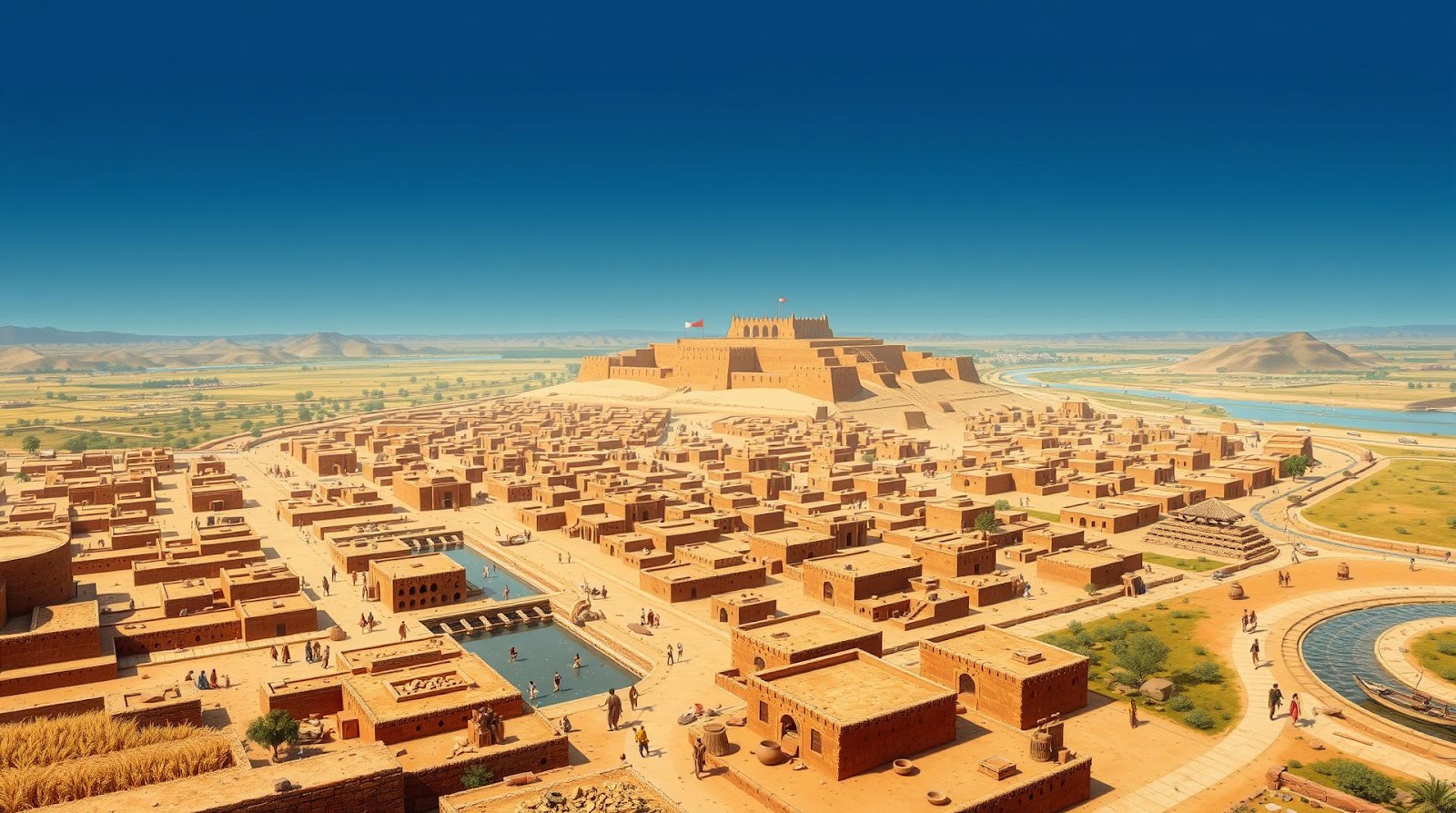
The Indus Valley Civilisation spread across an area roughly the size of the entire European continent — imagine that for a moment. We're talking about a region that covered parts of modern-day Pakistan, northwest India (Rajasthan, Gujarat, and the Punjab), and even extended into Afghanistan and Iran. The main cities were concentrated along the Indus River and its tributaries, with major hubs at Harappa and Mohenjo-daro.
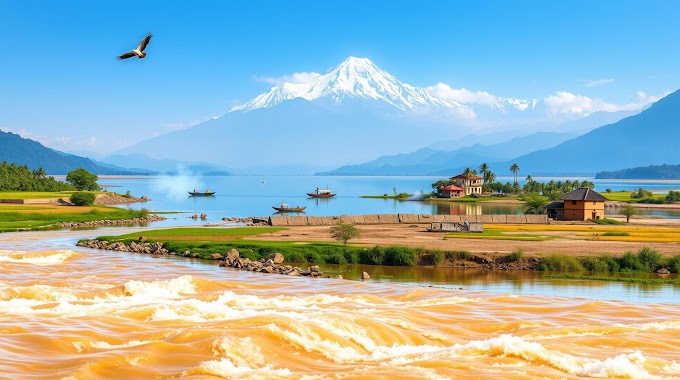
Now, why did they choose these locations? Simple: the Indus River. Just like the Nile made Egypt possible and the Tigris-Euphrates shaped Mesopotamia, the Indus was the lifeline. During monsoon season, it would flood and deposit nutrient-rich silt, creating fertile agricultural land. Perfect for feeding a growing population. It was also a trade highway — goods moved up and down this river, connecting the Indus Valley with Mesopotamian traders and the people of the Persian Gulf.
The archaeological discovery of this civilisation is itself a thrilling story. In the 1920s, Sir John Marshall was excavating at two sites — Harappa and Mohenjo-daro — when he realised these weren't just random ruins. They were cities. Planned cities. With buildings aligned to cardinal directions, streets crossing at right angles, and a drainage system that would make any modern engineer jealous.
Timeline: The Three Phases
Historians divide the Indus Valley Civilisation into three distinct phases:
Early Harappan Period (3300–2600 BCE): This was the birth. Small settlements were establishing themselves, figuring out agriculture, domesticating animals, and slowly building communities. Think of it as the startup phase.
Mature Harappan Period (2600–1900 BCE): This was the golden age. Cities flourished, trade networks expanded, standardisation happened, and the civilisation reached its absolute peak. We call this the "urban phase" because that's when the famous planned cities developed.
Late Harappan Period (1900–1300 BCE): The decline. Population shifted, cities were abandoned, and gradually, this magnificent civilisation faded away. Why? That's the million-rupee question we still can't fully answer.
Urban Planning and Architecture: Cities Ahead of Their Time
The City Grid That Amazed Everyone
I tell my students: if you want to understand the Indus people, visit a modern planned city like Chandigarh or Navi Mumbai. Now imagine that kind of planning 4,500 years ago, without computers, without autocad, without any modern tools. That's what the Indus Valley people did.
Mohenjo-daro covered about 260 acres and housed an estimated 40,000 people. The city was divided into two main areas: the "Citadel" (an elevated platform with important buildings) and the "Lower Town" (where ordinary people lived). Streets were laid out in a perfect grid pattern — main streets running north-south and east-west, subdivided by smaller lanes. It's like they invented the checkerboard city planning!
What amazes me the most? The drainage system. Every house had its own drain connected to underground sewage pipes that ran beneath the streets. Think about that — you're in 2500 BCE, and you have a sewage system. Most European cities didn't have proper drainage until the 19th century! If I tell this to students, suddenly they stop thinking of "ancient" as "primitive."
The buildings themselves were remarkably uniform. Houses were made of baked bricks (not sun-dried, but kiln-baked for durability — another advanced technique), usually two or three storeys high. Many had interior courtyards, a design still common in India today. There's a continuity here that's absolutely fascinating.
The Great Bath and Other Structures
One of the most famous structures is the "Great Bath" at Mohenjo-daro. It's about 40 feet long, 23 feet wide, and 8 feet deep, with stairs leading down on both sides. What was it used for? Religious rituals? A public bathing place? We honestly don't know, but the fact that they built something this large and elaborate suggests it held significant cultural importance.
Other notable structures include the "Great Granary" — a large warehouse structure probably used for storing grain — and residential houses with rooms arranged around courtyards. Many houses also had wells for water supply, separate spaces for different activities (cooking, sleeping, storage), and pottery workshops.
Let me give you a memory trick I use with my students: "CDB-WH" — Citadel, Drainage, Bricks (baked), Wells, Hexagonal town planning. Remember these five features, and you've got the architectural essence of the Indus Valley.
Economy, Trade, and Daily Life
What Did They Do? How Did They Live?
The Indus Valley people were primarily agriculturalists. They grew wheat, barley, peas, and sesame. They domesticated cattle, sheep, goats, and pigs. Fishing was also significant, given the proximity to rivers and the coast. But here's what's remarkable: they weren't just subsistence farmers. They had surplus production, which allowed for specialisation.
Some people became potters. Others became tool makers, traders, priests, or administrators. This division of labour is a hallmark of complex civilization. You can't have bureaucracy without surplus; you can't have specialised craftspeople without surplus. The Indus Valley had all of these.
Archaeologists have found terracotta figurines of animals, toys, and what appear to be ritual objects. They've found game pieces, suggesting people played games. They wore ornaments made of shells, stones, and metals. They used cosmetics — archaeologists found what appears to be antimony (used for eye makeup) in containers. In other words, they weren't just surviving; they were living.
The Weight and Measure Revolution
Here's something that absolutely blows my mind: the Indus Valley people had a standardised system of weights and measures. Archaeologists have found hundreds of weights made of stone, and they follow a precise mathematical ratio. The smallest unit is about 0.85 grams, and subsequent weights are in multiples of this.
Why does this matter? Because standardisation means trust. When a merchant in the Indus Valley sold goods, both the buyer and seller could be confident that the weights they were using represented the same value everywhere else in the empire. This is the foundation of commerce. Modern currency, stock markets, international trade — it all depends on this principle that the Indus Valley people figured out 4,500 years ago.
Trade Networks and International Connections
The Indus Valley wasn't isolated. Archaeologists have found Indus Valley seals in Mesopotamian sites and Mesopotamian artefacts in Indus sites. They traded with the Persian Gulf, with Oman, with Central Asia. Goods moved through both maritime routes and overland caravans.
What did they export? Probably cotton (which they invented or perfected), indigo dye, timber, ivory, and crafted objects. What did they import? Metals like tin and copper, luxury goods, and other raw materials. This global trade network made them prosperous and connected them to the larger ancient world.
The Undeciphered Script and the Great Mystery
Now we come to the most tantalising mystery: the Indus script. Over 4,000 seals and artefacts have been found with these symbols, but we still can't read them. Let that sink in. We know these are writing — they're definitely not random marks — but they remain completely undeciphered.
Scholars have proposed various theories. Some say it's a logographic script (like Chinese, where symbols represent words). Others suggest it's an alphabetic script. Some even claim it records a Dravidian language. But here's the honest truth: we don't know. Every few years, some researcher claims to have "deciphered" it, gets media attention, and then other scholars debunk it. It's frustrating, but it also shows academic integrity.
This uncertainty actually makes the Indus Valley civilisation more mysterious and more fascinating. We can see how they lived, but we can't hear their voices. It's like watching a film on mute — you understand the visual narrative, but the dialogue is lost forever.
For your exam purposes, remember: The Indus script remains undeciphered, and that's a fact. Don't get confused by claims of decipherment. Also, there's no evidence of any written literature (like the epics we find in other civilisations), no inscriptions of rulers boasting about their conquests, no religious texts. This further distinguishes the Indus from contemporary civilisations like Egypt and Mesopotamia.
Decline, Disappearance, and Legacy
What Happened? The Great Disappearing Act
Around 1900 BCE, the Indus Valley Civilisation began its decline. Cities were gradually abandoned. The population dispersed. Smaller settlements emerged in different areas. Within a few centuries, the complex urban civilization had essentially vanished. The question is: why?
Scholars have proposed multiple theories:
1. Environmental Change: Perhaps the Indus River's course changed, or monsoon patterns shifted, making agriculture difficult. Geological evidence suggests the climate did become drier during this period.
2. Natural Disaster: Some suggest earthquakes or flooding from the Sutlej River damaged the irrigation systems the civilisation depended on.
3. Invasion Theory: Older texts suggested Indo-Aryan invasions destroyed the civilisation, but modern scholars largely reject this. The evidence doesn't support large-scale military invasion.
4. Internal Decline: Perhaps deforestation, overpopulation, or resource depletion led to gradual collapse. Maybe there were social upheavals or loss of trade networks.
Honestly? It was probably a combination of factors. Civilisations rarely collapse for one reason. Just like how the Roman Empire didn't fall in a day, the Indus Valley Civilisation probably declined gradually due to environmental stress, economic pressure, and social change.
Continuities: What Survived?
Here's what fascinates me most: despite the civilisation's disappearance, many elements survived and became part of later Indian culture. Scholars have found similarities between Indus Valley beliefs and later Hindu practices — like the veneration of certain animals (the bull, for instance), ritual bathing (the Great Bath suggests this was important), and possibly goddess worship (female figurines are common).
Some argue that the Indus Valley people didn't completely vanish but migrated to other parts of India, mixing with incoming Indo-Aryan populations and eventually contributing to the formation of Vedic culture. This is speculative, but the cultural continuity in some regions suggests this is plausible.
The most concrete evidence of continuity comes from later Indian cities, which show similar planning principles, similar pottery styles, and similar artefacts. It's like a relay race — one runner (Indus Valley civilisation) passes the baton to the next runner (Vedic culture), and the race of Indian civilisation continues.
| Aspect | Details |
|---|---|
| Time Period | 3300–1300 BCE (with peak 2600–1900 BCE) |
| Geographic Spread | Parts of modern Pakistan, northwest India, Afghanistan, Iran |
| Major Cities | Harappa, Mohenjo-daro, Dholavira, Kalibangan |
| Estimated Population | 4–5 million at peak |
| Primary Economy | Agriculture, crafts, trade |
| Script Status | Undeciphered, undecoded |
| Key Discovery | Planned cities with grid patterns, advanced drainage systems |
| Reason for Decline | Likely combination of climate change, environmental stress, and trade disruption |
Quick Takeaway for Your Exam
If you remember nothing else, remember this: The Indus Valley Civilisation was humanity's first planned urban civilization. It was contemporaneous with Egypt, as sophisticated as any ancient civilisation, and yet it remains mysterious. When you see questions about ancient Indian history, the Indus Valley is always the foundation. Everything that comes after — Vedic culture, Mauryan empire, Hindu civilisation — builds on what came before, partly on the legacy of the Indus Valley.
One last memory trick I give my students: "SCRIPT" — Seal impressions, Cities planned, River valley agriculture, International trade, Perfect standardisation, Towns with drainage. Six key features that define the civilisation.
Study this with genuine curiosity, not just for marks. These people built something remarkable 4,500 years ago without the advantages you have. That's worth respecting.
Practice Questions for Your Revision
A) Grid-pattern street layout B) Advanced underground drainage systems C) Monumental temples with elaborate sculptures D) Baked brick construction
Answer: C) Monumental temples with elaborate sculptures. The Indus Valley people left no evidence of monumental religious structures or elaborate temple art like we see in Egypt or Mesopotamia.
A) Religious uniformity across regions B) A developed commercial system with inter-regional trade C) Military strength and control D) Vedic influence on the civilisation
Answer: B) A developed commercial system with inter-regional trade. Standardised weights allowed merchants from different regions to trade with confidence.
A) Fully deciphered and understood B) Partially deciphered with some words understood C) Completely undeciphered despite numerous attempts D) Proven to be non-linguistic decorative art
Answer: C) Completely undeciphered despite numerous attempts. Over 4,000 seal impressions exist, but the script remains an unsolved mystery.
A) Sudden invasion by Indo-Aryans with superior weapons B) Single natural disaster like tsunami C) Likely combination of environmental, economic, and social factors D) Deliberate migration to Mesopotamia for trade
Answer: C) Likely combination of environmental, economic, and social factors. Modern scholarship rejects the single-cause theories and suggests multiple stressors.
A) The civilisation had advanced military engineering B) Public spaces existed suggesting organised civic life and possibly ritualistic practices C) The civilisation had large-scale irrigation systems D) Evidence of a caste system similar to later Vedic periods
Answer: B) Public spaces existed suggesting organised civic life and possibly ritualistic practices. The Great Bath suggests communal ritual bathing was important to their society.
Published by Dattatray Dagale • 05 May 2026
.jpg)
.png)



.png)


.png)


0 Comments