Introduction
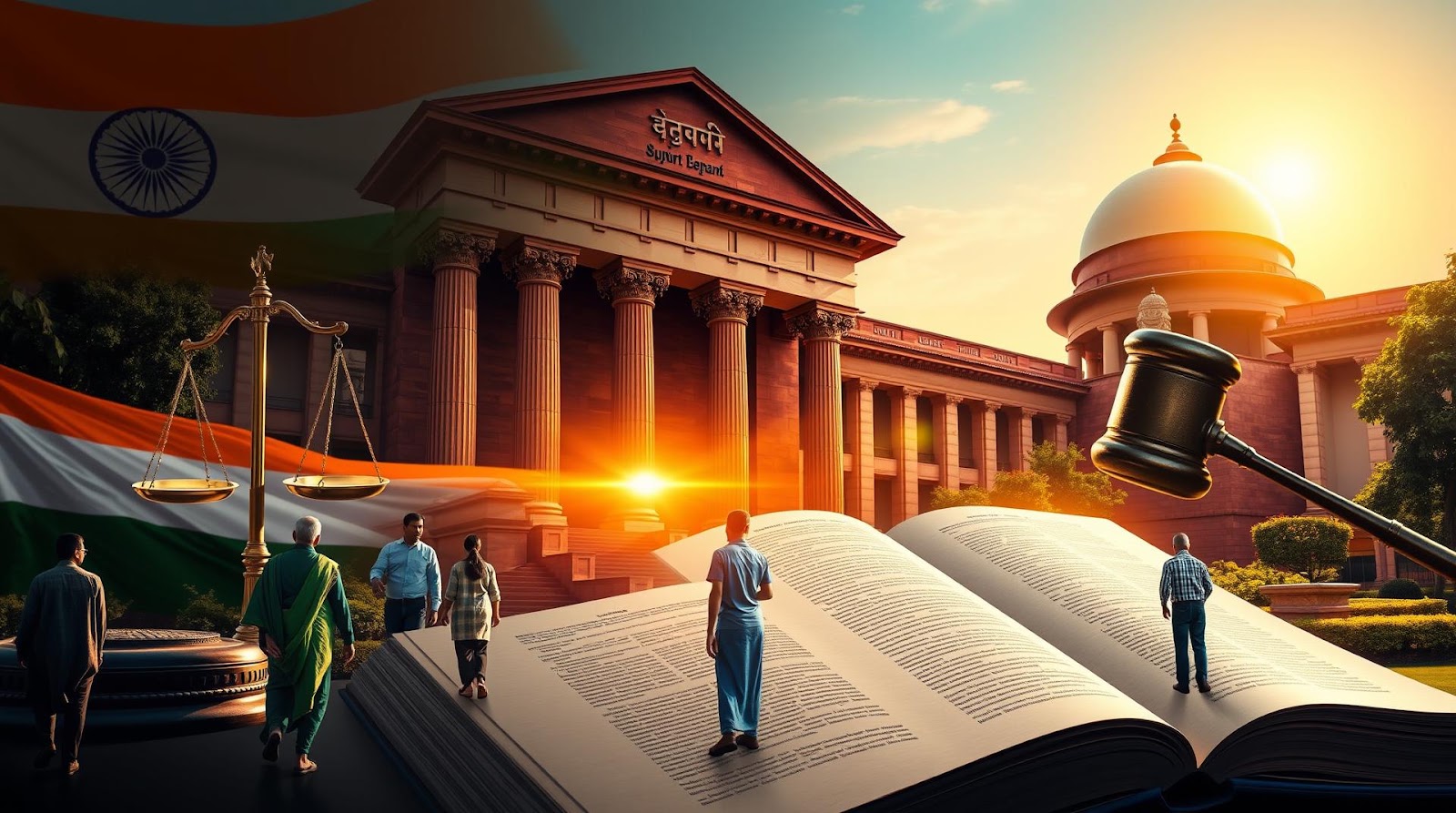
Let me start with a confession: when I first began teaching Indian polity, I found the judiciary intimidating. All those Latin terms, the hierarchies, the writs—it felt like learning a foreign language while sitting in a law school lecture. But here's what I discovered over a decade of teaching thousands of students like you: the Indian judiciary isn't complicated. It's actually beautifully designed. And once you understand the "why" behind it, everything clicks into place.
Think of India's judiciary as a guardian standing at the gates of your fundamental rights. The Constitution gave these courts incredible power—not to rule over us, but to protect us when the government or anyone else tries to crush our freedoms. Today, I want to walk you through this system, and more importantly, I want to demystify those writs that seem so confusing on first reading.
Whether you're preparing for SSC CGL, UPSC, or just want to understand how your rights are protected, this is the post that will make it all clear. So grab a chai, settle in, and let's dive in.
Understanding the Structure: The Three Tiers of Indian Judiciary
The Indian judicial system works like a three-storey building. The ground floor is where most cases start, the first floor is where appeals go, and the top floor—that's where the ultimate decisions happen. Let me break this down for you the way I explain it to my students during revision.
The Supreme Court: The Guardian at the Top
The Supreme Court of India sits at the apex. It's not just another court—it's the interpreter of our Constitution, the final word on what the law means. Established in 1950, it has a Chief Justice and other judges (usually around 30-34). The number can increase based on government decision, which happened when the caseload became unbearable.
Now here's what fascinates me: the Supreme Court doesn't hear every case that comes to it. It's selective. It has what we call "discretionary jurisdiction"—meaning it can choose which cases to hear. Why? Because if it heard everything, it would collapse under the weight. Instead, it focuses on cases that involve constitutional interpretation or set important precedents.
The Supreme Court also has "original jurisdiction"—certain cases can go directly to it without passing through lower courts. These typically involve disputes between states or matters of fundamental rights. This is crucial for quick justice when fundamental rights are at stake.
High Courts: The Regional Powerhouses
Every state has a High Court (or sometimes two states share one, like in the Northeast). There are 25 High Courts across India. The Chief Justice heads each one, supported by multiple judges depending on the workload.
High Courts are the workhorses of Indian justice. They hear appeals from lower courts, handle complex civil and criminal cases, and have supervisory powers over district courts and other lower courts. Most importantly—and this is something that directly affects your fundamental rights—High Courts have original jurisdiction to issue writs. This is the gateway many citizens use to challenge government actions.
District and Lower Courts: Where Justice Touches Ground
Below High Courts are District Courts (one per district, headed by a District Judge) and below them are lower courts like civil courts, criminal courts, and Gram Nyayalayas in villages. This is where 90% of cases actually get decided. These are the courts that directly interact with common citizens like us.
Writs: The Weapons That Protect Your Fundamental Rights
Alright, let me be honest. When students first hear "writs," they think I'm speaking Sanskrit. But writs are actually quite straightforward once you understand their purpose.
A writ is a formal written order issued by the court. Think of it like a legal command. When the government or anyone violates your fundamental rights, you can approach the High Court or Supreme Court seeking a writ. The court examines whether your right has truly been violated, and if yes, it issues a writ commanding the violator to either do something or stop doing something.
Here's the beautiful part: writs are accessible. You don't need a lawyer necessarily. You can file a writ petition directly in the High Court or Supreme Court, and the court will often treat it sympathetically because fundamental rights are involved.
The Five Writs: A Mnemonic That Works
There are five main writs in the Indian Constitution (Articles 32 and 226). Let me give you the mnemonic I've been teaching for years, and honestly, it's impossible to forget once you learn it:
HQPHM — Habeas Corpus, Quo Warranto, Prohibition, Habeas Corpus (wait, that's wrong!), and Mandamus... okay, that mnemonic didn't work well!
Let me try again with what I actually tell my students: "Can't Mandamus Prohibit Habeas Quo" — which is rubbish too. Honestly, the best way is just understanding each writ individually. Let me do that for you.
Habeas Corpus: "Produce the Body"
This is Latin for "you produce the body." Imagine the police arrest someone illegally and put them in detention. The family is desperate—where is their son? A habeas corpus writ commands the authorities to bring the detained person before the court and explain why they're being held.
If the detention is unjustified (like arrest without proper grounds), the court orders immediate release. This writ protects your right to personal liberty—one of the most fundamental rights. In recent years, it's been used to challenge arbitrary detentions and police abuse.
I remember a famous case where a lady filed habeas corpus for her missing son, and the court used this writ to force authorities to reveal where he was. It's your legal shield against kidnapping by the state.
Mandamus: The "We Command" Writ
"Mandamus" means "we command." This writ orders a government official or public body to perform a duty they're legally required to do but are refusing to do.
Here's a practical example: Your local municipal corporation is supposed to provide clean drinking water (that's their legal duty), but they're not. You file a mandamus writ, and the court orders them to do it. Or imagine a school principal is wrongly withholding your exam results—mandamus can force them to release it.
The key difference from habeas corpus: habeas corpus is about releasing someone illegally detained, while mandamus is about forcing someone to do their job.
Prohibition: Stopping Unconstitutional Action
Prohibition is the opposite of mandamus. While mandamus says "do this," prohibition says "stop this." It's issued to prevent an inferior court or body from taking an action that's beyond their authority or violates someone's rights.
For example, if a lower court is about to pass an order that's clearly unconstitutional, the High Court can issue a writ of prohibition to stop it. A district judge trying to pass a verdict on a matter outside their jurisdiction? Prohibition steps in.
Quo Warranto: "By What Authority?"
This writ questions the authority of someone holding a public office. "Quo Warranto" literally means "by what authority" or "by what warrant."
Imagine someone is holding an office (like being a judge or official) illegally—maybe they don't have the proper qualifications, or they were appointed unconstitutionally. A citizen can file quo warranto asking the court to examine whether this person has the right to hold that office. If they don't, they're removed.
This is particularly important for preventing unqualified people from holding positions of power. In recent times, it's been used to challenge appointments that were made without following proper constitutional procedures.
Certiorari: The "To Be Certified" Writ
The fifth writ, certiorari, is used to challenge decisions of inferior courts or tribunals that have acted beyond their authority or have violated principles of natural justice.
Basically, certiorari quashes (cancels) an order or judgment of a lower court. If a court has acted illegally or unfairly, the higher court can use certiorari to overturn its decision. The word means "to be certified"—the higher court is certifying that the lower court's action was invalid.
| Writ | Meaning | When to Use |
|---|---|---|
| Habeas Corpus | Produce the body | Illegal detention or arrest |
| Mandamus | We command | Public official not performing duty |
| Prohibition | Stop the action | Inferior court acting beyond authority |
| Quo Warranto | By what authority? | Questioning illegal office holder |
| Certiorari | To be certified | Quashing illegal lower court order |
Key Powers and Responsibilities of the Indian Judiciary
The judiciary in India isn't just about settling disputes between parties. It has evolved into something much more powerful—a guardian of the Constitution itself.
Judicial Review: The Power to Question Laws
One of the most important powers the Indian judiciary has is judicial review. This means the courts can examine whether a law passed by Parliament or any executive action is constitutional. If it violates the Constitution, the courts can strike it down.
Now, this is powerful stuff. Imagine Parliament passes a law that takes away your basic rights. The judiciary can say, "No, this violates Article 21, and it's unconstitutional." This happened with several laws—for instance, certain provisions about privacy were struck down by the Supreme Court because they violated constitutional principles.
But here's the balance: the judiciary doesn't interfere in the legislative process itself. It doesn't say, "Don't make this law." It only says, "This law you made is against the Constitution," after the fact.
Public Interest Litigation (PIL): Justice for the Common Man
This is something I absolutely love about Indian judiciary. The Supreme Court developed the concept of Public Interest Litigation (PIL) in the 1970s and 80s. It means anyone can approach the court on behalf of the public in matters of public interest.
For example, you could file a PIL about pollution in your city on behalf of all residents. You don't need to be directly affected—you just need to show it's in the public interest. This has been used to tackle environmental pollution, right to education, treatment of prisoners, and so much more.
Some famous PILs include those against manual scavenging, for rights of street children, and for environmental protection. The judiciary, through PIL, has essentially stepped in as the voice of those who have no voice.
Important Articles and Constitutional Provisions You Must Know
Let me list out the crucial constitutional references for your exam:
Article 32: Right to Constitutional Remedies. This is the article that gives you the right to approach the Supreme Court for protection of fundamental rights. The Supreme Court can issue writs here.
Article 226: High Courts also have power to issue writs for violation of rights, but importantly, they can issue writs even for non-fundamental rights. This makes High Courts more accessible than the Supreme Court.
Article 141: The law declared by the Supreme Court is binding on all courts. This is called the doctrine of precedent—once the Supreme Court decides something, lower courts must follow it.
Article 142: The Supreme Court can issue any order it deems necessary or proper to do "complete justice." This is a very broad power that allows the Supreme Court flexibility in unique situations.
Articles 370-395: These outline the jurisdiction, powers, and composition of the judiciary.
Practice Questions to Cement Your Understanding
A) Habeas Corpus B) Quo Warranto C) Mandamus D) Prohibition
Answer: B) Quo Warranto — This writ questions "by what authority" someone is holding public office. If the appointment is invalid, the writ can remove them from office.
A) Article 226 B) Article 32 C) Article 141 D) Article 142
Answer: B) Article 32 — This is the right to constitutional remedies. Article 226 allows approach to High Courts. Remember: 32 for Supreme (court), 226 for High (court) — the numbers help!
A) Certiorari B) Prohibition C) Habeas Corpus D) Mandamus
Answer: C) Habeas Corpus — This writ literally means "produce the body" and is used against illegal detention. The court orders the person's release.
A) Judicial Review B) Public Interest Litigation C) Certiorari D) Jurisdiction
Answer: B) Public Interest Litigation (PIL) — This was developed by the Indian courts and allows collective justice without direct personal interest.
A) Habeas Corpus B) Quo Warranto C) Mandamus D) Prohibition
Answer: C) Mandamus — This writ means "we command" and forces a public body to perform a duty they're legally required to do but are refusing to do.
There you have it—a complete walkthrough of Indian judiciary and writs. The key to remembering this is understanding the purpose behind each writ. Habeas Corpus protects your freedom from illegal detention. Mandamus makes officials do their jobs. Prohibition stops illegal actions. Quo Warranto removes unfit officials. And Certiorari overturns illegal court decisions.
In your exams, if you get a scenario question about writs, ask yourself: Is someone illegally detained? (Habeas Corpus). Is a public official not doing their job? (Mandamus). Is a lower court overstepping? (Prohibition). Is someone holding office illegally? (Quo Warranto). Is a court order illegal? (Certiorari).
The Indian judiciary is one of the world's finest—and now you understand why. Go revise those articles, practice those MCQs, and you'll ace this topic. All the best!
Published by Dattatray Dagale • 15 May 2026
.jpg)
.png)



.png)



.png)


0 Comments