Introduction
Let me ask you something. How many times have you heard "mitochondria is the powerhouse of the cell" and thought, "Yes, yes, I know this... but why should I actually care?" I've been there. I've asked that question myself as a student, sitting in a biology class that felt about as exciting as watching paint dry in the Delhi summer.
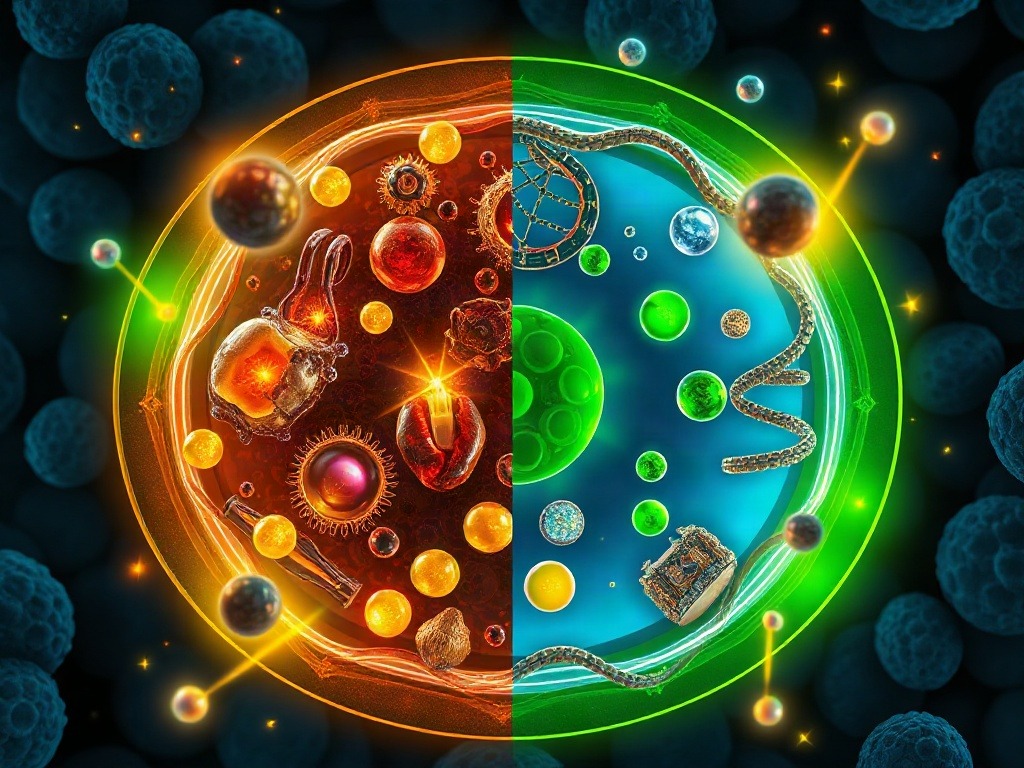
But here's what changed for me — and I hope it changes for you too. The moment I started seeing cells not as abstract diagrams in a textbook, but as tiny cities running inside your body right now, everything clicked. Your cells are literally working as you read this. They're breathing, eating, moving things around, making decisions, and reproducing. That's not just biology. That's your actual life happening at a scale you can't see.
For SSC CGL, UPSC, and basically any competitive exam you're preparing for, understanding cell biology and life processes isn't about memorizing definitions. It's about grasping the logic of how living things work. And trust me, once you get that logic, the questions stop being scary.
So let's dive in. Not like a textbook. Like friends discussing why this actually matters.
What Is a Cell, Really?
The Basic Story
A cell is the smallest unit of life. I mean that literally. If you keep breaking down a living organism into smaller and smaller pieces, the moment you hit a cell, you've hit the smallest thing that's still "alive." Below that? Just chemicals. Not alive anymore.
Now, we have two main types of cells: prokaryotic and eukaryotic. I teach this with a simple house analogy.
Prokaryotic cells are like your neighbourhood kirana shop — everything is in one open room. There's no separation. The owner, the goods, the accounts, the money — all mixed together in one space. No organization. These are bacteria and archaea. Small, simple, ancient.
Eukaryotic cells are like a big shopping mall with different stores, each with its own purpose. A food court here, a clothes shop there, a movie hall somewhere else. Everything is organized in separate compartments called organelles. This is what your cells are. Complex, modern, and highly organized.
The Universal Structures Every Cell Has
Whether your cell is prokaryotic or eukaryotic, it has three things without exception:
1. Cell Membrane — Think of this as the security gate of your cell. It's selective about what comes in and what goes out. Needs oxygen? Sure, come in. Random toxin? Sorry, stay out. It's made of phospholipids (which are like two-faced molecules) and proteins that act as bouncers and workers.
2. Cytoplasm — This is the jelly-like substance inside. Everything floats in here. It's mostly water, but packed with salts, proteins, and dissolved nutrients. The cell's actual work happens here.
3. Genetic Material (DNA/RNA) — This is your instruction manual. It's where all the "how to be a cell" information is stored. For prokaryotes, it's just floating around. For eukaryotes, it's locked safely in the nucleus.
The Essential Organelles You Must Know
The Power Players
Let me give you a trick I tell all my students. Memorize organelles by thinking of a city's functions.
Nucleus — The municipal office. It runs everything. Contains DNA. Without it, eukaryotic cells are dead. (Fun fact: mature red blood cells in mammals have no nucleus, which is why they can't repair themselves and have a limited lifespan of about 120 days.)
Mitochondria — The power plant. Converts glucose and oxygen into ATP (energy currency). Remember: Mito = Mighty. Because it's mighty powerful. This is where cellular respiration happens. And yes, it really is that important.
Ribosome — The factory floor. It reads DNA instructions and manufactures proteins. No ribosomes? No proteins. No proteins? Game over.
Endoplasmic Reticulum (ER) — The transport highway. Rough ER (with ribosomes attached) makes proteins. Smooth ER (without ribosomes) makes lipids and processes toxins. Think of it as the delivery system.
Golgi Apparatus — The packaging unit. Proteins come in a mess, and the Golgi packages them nicely, labels them, and ships them where they need to go. It's like the DHL of the cell.
Lysosome — The garbage disposal. Contains digestive enzymes that break down waste. It's only found in animal cells (plant cells use vacuoles instead). These are dangerous little guys — if they burst, the cell digests itself. That's called autolysis.
Plant Cell Exclusive Features
Now, plant cells have a few things animal cells don't. And these always show up in exams because students forget them.
Cell Wall — A rigid outer layer made of cellulose. This is why plants are stiff and don't need a skeleton. It provides structural support. When you eat vegetables and feel the crunch? That's the cell wall.
Large Vacuole — Plant cells have huge vacuoles that take up 70-90% of the cell's volume. They store water, nutrients, and pigments. This is why plants can stay firm and upright. When plants wilt, it's because the vacuole lost water.
Chloroplast — The photosynthesis factory. It's where sunlight is converted to chemical energy. This is why plants are green (chlorophyll) and don't need to eat like we do. Fascinating organelle.
| Organelle | Main Function | Found In |
|---|---|---|
| Nucleus | Controls cell activity, stores DNA | Eukaryotic only |
| Mitochondria | Energy production (ATP synthesis) | Both (more in eukaryotic) |
| Ribosome | Protein synthesis | Both |
| Chloroplast | Photosynthesis | Plant cells only |
| Lysosome | Waste breakdown | Animal cells only |
| Cell Wall | Structural support | Plant cells only |
Life Processes: The Six Things Every Living Thing Must Do
Here's where it gets interesting. What actually defines "life"? What separates a living cell from a rock? The answer is: living things perform specific processes. And there are six of them. I have a mnemonic for you that actually sticks:
MRS GREN — This stands for:
M — Movement (all living things move, even if it's just internal movement like blood flow)
R — Respiration (converting food into energy)
S — Sensitivity (responding to the environment)
G — Growth (increasing in size and complexity)
R — Reproduction (making copies of themselves)
E — Excretion (removing waste)
N — Nutrition (taking in food)
Now, let me break down the ones that usually confuse students in exams.
Respiration: More Than Just Breathing
This is huge. Most students think respiration = breathing. Wrong. Breathing is just the delivery system. Respiration is what happens inside the cell.
Aerobic respiration happens when oxygen is available. It's like a complete combustion engine. You take glucose, burn it completely with oxygen, and get maximum energy (38 ATP molecules per glucose). This happens in the mitochondria.
Anaerobic respiration happens when oxygen isn't available. It's like a backup generator. You break down glucose without oxygen and get very little energy (only 2 ATP molecules per glucose). This happens in the cytoplasm. When your muscles run out of oxygen during intense exercise, they switch to anaerobic respiration, producing lactic acid as a byproduct — that's the burn you feel.
Photosynthesis: The Other Side of the Energy Coin
While most organisms use respiration to break down energy, plants do something different. They create energy from sunlight. It's the opposite of respiration.
The equation students memorize is: 6CO₂ + 6H₂O + sunlight → C₆H₁₂O₆ + 6O₂
Translation: Carbon dioxide + water + light energy → glucose + oxygen
But here's what's actually happening. The plant is capturing light energy and storing it as chemical energy in glucose. It's basically a biological solar panel. And it produces oxygen as a waste product, which is excellent news for us breathing creatures.
Nutrition and Digestion
Cells need food. But food comes in big chunks that can't cross the cell membrane. So it needs to be broken down. This is digestion.
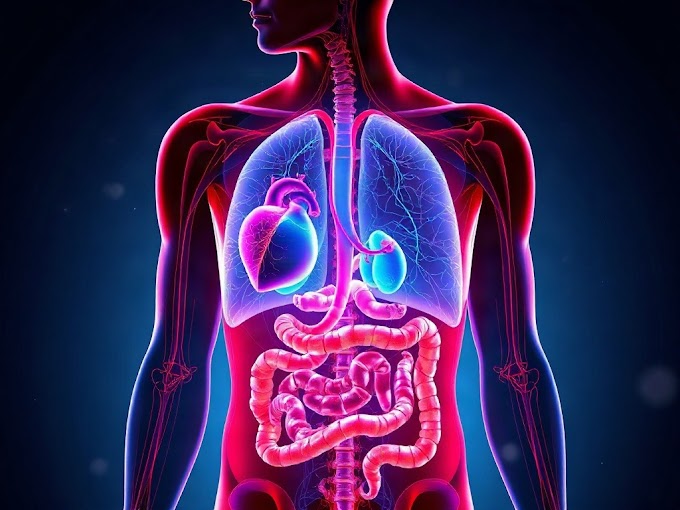
In your body, it starts in your mouth (mechanical and chemical digestion), continues in the stomach (more chemical digestion with acids), and completes in the small intestine (enzymatic digestion). The final products — glucose, amino acids, fatty acids — are small enough to be absorbed through the intestinal wall into the bloodstream and delivered to cells.
At the cellular level, cells do their own digestion too. Remember lysosomes? They break down food particles inside the cell in a process called intracellular digestion. Bacteria do this too, though they don't have lysosomes — they just use enzymes floating in their cytoplasm.
Cell Division and Reproduction
Now here's something that always confuses students. There are different types of cell division, and they're used for different purposes.
Mitosis: Making Copies
Mitosis is how your body grows and replaces damaged cells. One cell divides into two identical cells. Same number of chromosomes, same DNA. Your skin cells, blood cells, bone cells — they're all made through mitosis.
The process has stages: Prophase → Metaphase → Anaphase → Telophase → Cytokinesis
I teach this with a cricket analogy. Imagine a batsman hitting the ball. In prophase, the ball is in the air getting ready. In metaphase, it's at the peak. In anaphase, it comes down. In telophase, it lands. Cytokinesis is when it finally stops moving and the game split into two separate games.
Meiosis: Making Sex Cells
This is completely different. Meiosis is used only for making sperm and eggs. One cell divides into four cells, each with half the chromosomes. It's the reason your children aren't clones of you.
In meiosis, something magical happens called crossing over, where chromosomes exchange genetic material. This is why siblings look different even though they have the same parents. This is what creates genetic diversity.
Exam trick: If a question asks about cell division for growth → think mitosis. If it asks about cell division for reproduction → think meiosis.
Quick Recap: What You Must Remember
Let me be honest with you. Exams don't test whether you understand biology. They test whether you can recall specific facts quickly. So here's what you absolutely must know cold:
1. Cell structure: membrane, cytoplasm, genetic material (in all cells)
2. Organelles: nucleus, mitochondria, ribosome, ER, Golgi, lysosome (in animals)
3. Life processes: MRS GREN
4. Energy conversion: respiration (breaks down) vs photosynthesis (builds up)
5. Cell division: mitosis (two identical) vs meiosis (four different)
These concepts form the foundation of everything else in biology. Master these, and everything else becomes easier.
Now let me give you some practice questions to test yourself.
A) Golgi Apparatus B) Mitochondria C) Ribosome D) Chloroplast
Answer: B) Mitochondria — This is where aerobic respiration occurs, producing ATP as the primary energy currency.
A) Glucose + Oxygen → Carbon Dioxide + Water B) Carbon Dioxide + Water → Glucose + Oxygen C) Glucose → Alcohol + Carbon Dioxide D) Water → Hydrogen + Oxygen
Answer: B) Carbon Dioxide + Water → Glucose + Oxygen — This is photosynthesis, where light energy is converted into chemical energy stored in glucose.
A) Mitosis B) Meiosis C) Binary Fission D) Budding
Answer: B) Meiosis — This produces gametes (sex cells) with half the chromosome number, essential for sexual reproduction.
A) Lysosome B) Centriole C) Chloroplast D) Vacuole
Answer: C) Chloroplast — While vacuoles are also plant-specific, only chloroplasts perform photosynthesis using chlorophyll pigments.
A) Glucose is completely oxidized to CO₂ B) Glucose is broken down without oxygen, producing lactic acid C) ATP is produced from photosynthesis D) Oxygen is consumed at a higher rate
Answer: B) Glucose is broken down without oxygen, producing lactic acid — This is why you feel muscle burn during intense activity; lactic acid buildup causes the burning sensation.
Published by Dattatray Dagale • 22 September 2026
.jpg)
.png)
0 Comments