Introduction
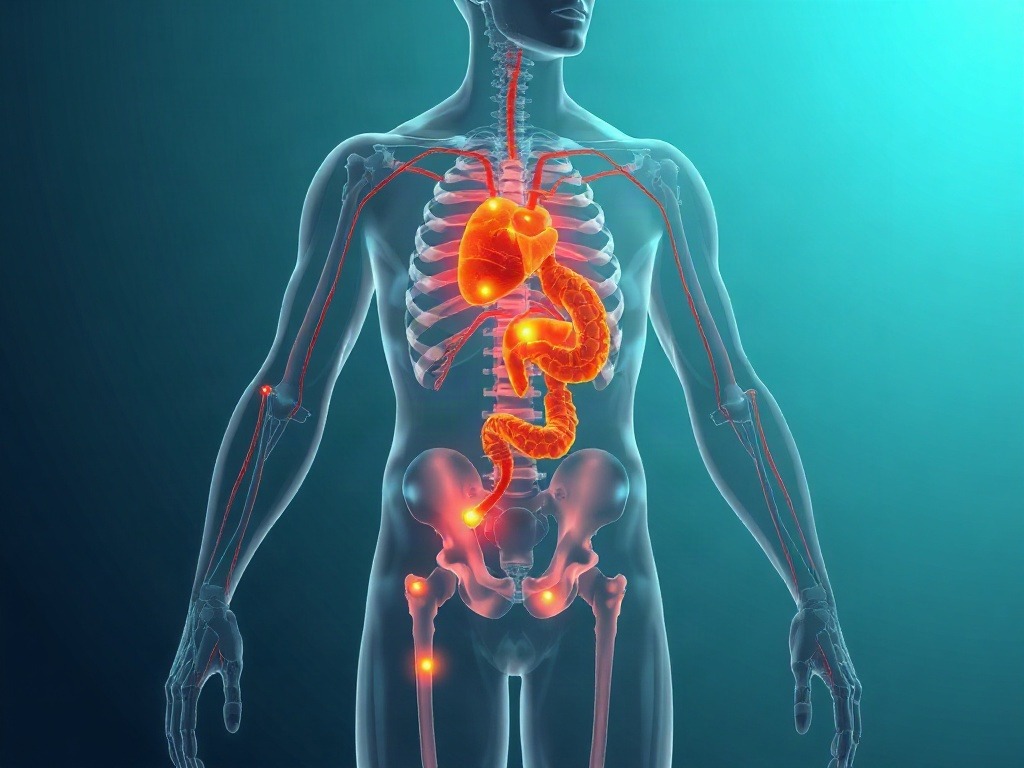
Look, I've taught thousands of students preparing for SSC CGL and UPSC exams, and I can tell you one thing with absolute certainty: human body systems trip up more students than anything else. Why? Because students try to memorise isolated facts instead of understanding how everything connects.
Think of your body like a cricket team. You wouldn't understand how India won a match by just knowing Virat Kohli's individual statistics, right? You'd need to see how the bowlers, batsmen, and fielders work together. Your body systems are exactly like that — 11 different systems, all playing their individual roles, but absolutely dependent on each other.
I've been teaching this topic for over a decade now, and I'm excited to break it down for you in a way that'll stick. By the time you finish reading this, you won't just memorise facts — you'll understand why your body works the way it does. And trust me, that understanding is what separates students who score 95+ in science from those who struggle.
Let me start with something that blew my mind when I was preparing for my own exams: your body is constantly replacing itself. The cells that make up your heart, liver, and bones are different today than they were months ago. Yet you're still you. How? That's the magic of these systems working in perfect harmony.
The Major Body Systems: Understanding the Big Picture
Okay, here's the structure most textbooks give you, but I'm going to explain it the way it actually works in your body:
The 11 Systems You Need to Know
There isn't universal agreement on exactly how to categorise body systems (different textbooks split them differently), but here's what you need for SSC/UPSC:
1. Skeletal System (The Framework) — Bones, cartilage, and ligaments. Think of this as the steel frame of a building. 206 bones in an adult (it's fewer in babies because some fuse together). Remember: babies are born with approximately 270 bones, but many fuse as they grow.
2. Muscular System (The Engine) — Skeletal muscles, smooth muscles, cardiac muscles. Without these, those bones would just be lying there like a puppet without strings.
3. Cardiovascular System (The Transport Network) — Heart, blood vessels, blood. Your heart beats about 100,000 times per day. Imagine that.
4. Respiratory System (The Oxygen Pump) — Lungs, trachea, diaphragm. Without this, nothing happens. Not one system works without oxygen.
5. Digestive System (The Processing Plant) — Mouth to anus, about 7 meters long. It's basically a tube that processes food into usable nutrients.
6. Nervous System (The Communication Network) — Brain, spinal cord, nerves. This is essentially your body's internet. Speed of nerve impulses? About 100 meters per second!
7. Endocrine System (The Hormone Factory) — Glands that produce hormones. Pituitary, thyroid, pancreas — these little factories control everything from your growth to your mood.
8. Immune System (The Defence Force) — White blood cells, lymph nodes, thymus. Your personal bodyguard system.
9. Excretory/Urinary System (The Waste Manager) — Kidneys, ureters, bladder, urethra. Removes waste that your cells can't use.
10. Integumentary System (The Protective Coat) — Skin, hair, nails. Your body's first line of defence against the world.
11. Reproductive System (The Continuity Engine) — For making new humans. Pretty important in the grand scheme of things.
Now, here's the trick I tell all my students: whenever you're confused about a system, ask yourself: "What does this system transport, process, or protect?" This single question clarifies almost everything.
How These Systems Actually Talk to Each Other
This is where most textbooks fail students. They teach each system separately, and students think they're independent. They're not. Let me show you with a real example.
The Symphony: How Systems Work Together
Imagine you're about to give a presentation at your college or preparing for an interview. You're nervous. Here's what happens in about 2 seconds:
Your nervous system (specifically the sympathetic nervous system) detects stress and sends signals. Your endocrine system (adrenal glands) releases adrenaline and cortisol. Your cardiovascular system pumps faster, sending more blood to your muscles. Your respiratory system speeds up, delivering more oxygen. Your muscular system tenses. Your digestive system slows down (that's why you lose appetite when stressed). Your integumentary system produces sweat through your skin.
All of this happens automatically because these systems are connected through nerves and hormones. The nervous system is the "quick response" team (uses electrical signals), while the endocrine system is the "sustained response" team (uses chemical signals).
The Three Control Mechanisms
Every system is controlled by three things:
1. Nervous Control — Fast, electrical, short-term. Your reflex when you touch a hot pan? That's nervous control. It happens before your brain even registers pain.
2. Hormonal Control — Slow, chemical, long-term. Why you grow during puberty over years? Hormones. Why your menstrual cycle is roughly 28 days? Hormones.
3. Local Control — Direct, immediate, mechanical. When your muscles work hard, they demand more oxygen and blood. Local vessels dilate to supply it. No hormone, no nerve signal — just a direct local response.
Here's a memory trick I created years ago: NHoL (Neural, Hormonal, Local) — think "No Holiday!" because your body never takes a break.
Critical System Details That Come Up in Exams
The Cardiovascular System: Your Body's Highway
The heart is roughly the size of your fist but pumps 5 litres of blood every minute. That's 7,200 litres every day. Blood vessels? If you laid them end to end, they'd circle the Earth 2.5 times.
Four chambers: Right atrium receives deoxygenated blood → Right ventricle pumps to lungs → Left atrium receives oxygenated blood → Left ventricle pumps to the body.
Here's a trick for remembering this: RaRv, LaLv or "Right receives, Right ventricle; Left loads, Left ventricle."
The Nervous System: Your Body's Internet
Two divisions: Central Nervous System (CNS) = brain + spinal cord. Peripheral Nervous System (PNS) = all the nerves branching out.
The PNS further divides: Somatic (voluntary) and Autonomic (involuntary). The autonomic nervous system has three branches: Sympathetic (speeds up — "fight or flight"), Parasympathetic (slows down — "rest and digest"), and Enteric (gut nerves — "the second brain").
Fun fact: your gut has about 500 million neurons. It's almost like a second brain! That's why you get "butterflies" in your stomach when nervous.
The Endocrine System: Your Body's Chemical Messengers
Key glands you must know:
Hypothalamus — The boss. Controls the pituitary gland and regulates everything from body temperature to hunger to sleep.
Pituitary Gland — The "master gland." Anterior pituitary (growth hormone, TSH, ACTH, FSH, LH) and posterior pituitary (vasopressin, oxytocin).
Thyroid — Controls metabolism. Thyroxine speeds up your cells. Too much? You're jittery and lose weight. Too little? You're sluggish and gain weight.
Pancreas — Produces insulin (lowers blood glucose) and glucagon (raises blood glucose). This is why you need both for balance.
Adrenal Glands — Sit on top of kidneys. Release adrenaline and cortisol during stress.
Gonads — Ovaries (produce oestrogen and progesterone) and testes (produce testosterone).
| Gland | Hormone(s) | Primary Function |
|---|---|---|
| Thyroid | Thyroxine (T4), T3 | Metabolism, growth, energy |
| Pancreas | Insulin, Glucagon | Blood glucose regulation |
| Adrenal | Adrenaline, Cortisol | Stress response |
| Pituitary (Anterior) | Growth Hormone, TSH, ACTH | Growth, gland regulation |
| Pituitary (Posterior) | Vasopressin, Oxytocin | Water balance, contractions |
The Digestive System: Your Body's Food Factory
I'll be honest — digestion confuses a lot of students because it's such a long process. But here's the simplified version:
Mouth → Saliva starts breaking down carbs. Oesophagus → Tube to stomach. Stomach → Acid breaks down proteins. Small Intestine → The real absorption happens here. Duodenum gets pancreatic enzymes and bile. Jejunum and ileum absorb nutrients. Large Intestine → Absorbs water, compacts waste.
Why does this matter? Because about 70% of your immune system is based in your gut lining! Your digestive health directly affects your immunity. That's why Indians have traditionally used things like turmeric and ginger — they improve digestion, which improves immunity.
Here's a memory device for small intestine divisions: "DJ" = Duodenum, Jejunum, (and) Ileum — wait, that's three parts. Better: think "Duodenum Joins Jejunum & Ileum" — helps you remember it's one continuous thing divided into three parts.
Exam-Level Questions and Problem-Solving Approach
Let me give you the approach I teach all my students for handling body system questions:
Step 1: Identify what's being asked — Is it asking about structure, function, or the connection between systems?
Step 2: Link it to the control mechanism — Is nervous system involved? Hormonal? Both?
Step 3: Think of a real example — Picture it happening in your own body. When do you experience this?
Step 4: Eliminate wrong answers — Usually, one answer mentions the right organ but wrong function, one mentions the right function but wrong organ, one is completely illogical, and one is correct.
I've seen more students get questions wrong because they don't read carefully rather than because they don't know the content. A question asking about "hormonal regulation" won't have "nervous reflex" as the answer, even if that nerve is involved.
Final Thoughts: Integration is Everything
The human body is the most integrated system you'll ever study. Every chapter in your biology textbook is actually just a different lens to look at the same incredible machine. When you see a question, don't ask "which system is this about?" Instead, ask "how are all the systems working together here?"
I had a student a few years ago who scored 85 in general science before learning this approach, then 97 after implementing it. The difference wasn't that she learned new content. The difference was that she started seeing the connections.
That's my challenge to you: the next time you study any system, don't just memorise its function. Ask yourself: "What does this need from other systems? What does it provide to other systems?" That one shift in thinking will transform your scores.
Now, let me test your understanding with some questions. These are exactly the style you'll see in SSC and UPSC exams:
A) Thyroxine B) Insulin C) Adrenaline D) Cortisol
Answer: B) Insulin — Insulin lowers blood glucose while glucagon raises it. They work opposite to each other to maintain blood glucose balance.
A) Endocrine System B) Spinal Reflex Arc (Nervous System) C) Cardiovascular System D) Lymphatic System
Answer: B) Spinal Reflex Arc — This is a reflex that doesn't wait for the brain to process. The signal goes spinal cord → motor nerve → muscle, bypassing the brain initially.
A) Production of bile B) Storage of glycogen C) Production of digestive enzymes D) Detoxification of blood
Answer: C) Production of digestive enzymes — The liver produces bile (for fat digestion), stores glycogen, and detoxifies blood. Digestive enzymes come from the pancreas and salivary glands, not the liver.
A) Parasympathetic B) Sympathetic C) Somatic D) Enteric
Answer: B) Sympathetic — The sympathetic nervous system increases heart rate, dilates pupils, and prepares muscles for action. The parasympathetic does the opposite.
A) Thyroid B) Adrenal Cortex C) Anterior Pituitary D) Posterior Pituitary
Answer: C) Anterior Pituitary — Prolactin is produced by the anterior pituitary and stimulates milk production. Oxytocin from the posterior pituitary causes milk release.
Published by Dattatray Dagale • 29 August 2026
.jpg)
.png)



.png)


.png)


0 Comments