Introduction
You know, I still remember sitting in my college biology class, completely bored out of my mind, thinking cells were just these tiny blobs that scientists cared about. Then my professor did something I'll never forget — he held up his phone and said, "Right now, about 330 billion cells in your body are dying, and 330 billion new ones are being born. You're literally a different person than you were yesterday." That completely changed how I looked at biology.
Here's the thing: understanding cells and life processes isn't just about passing your SSC CGL or UPSC exam (though it definitely helps with that). It's about understanding you. Your body, your energy, why you get tired, how you digest food, why cuts heal — all of it comes down to what happens inside these microscopic factories we call cells.
In this post, I'm going to walk you through cell biology and life processes the way I explain it to my students over chai — straightforward, relatable, and actually interesting. No boring textbook language. Let's dive in.
The Cell: Life's Building Block (And Why You Should Care)
Let me start with a question I ask every batch of students: "What's the smallest unit of life?" Most say molecules. Nope. It's the cell. Every single living thing — from the bacteria in your gut to the whale in the ocean to you reading this right now — is made of cells. And here's what blows most students' minds: some organisms are literally just one cell. A bacterium? Single cell. An amoeba? Single cell. Salman Khan? Made of trillions. (Sorry, couldn't resist.)
Now, cells come in two main varieties, and this distinction is absolutely crucial for your exam.
Prokaryotic vs. Eukaryotic Cells
Think of a prokaryotic cell as a small shop without a proper storage room. Everything's scattered around, and there's no organized inventory. No nucleus, no membrane-bound organelles. Bacteria and archaea are prokaryotes. Simple, efficient, ancient.
A eukaryotic cell? That's a proper factory with departments. Everything's organized — there's an actual nucleus where the DNA is stored, separate compartments (organelles) doing specific jobs, the whole deal. You, me, plants, fungi — we're all eukaryotes.
I tell my students to remember this with a simple phrase: "Pro = simple, Eu = elaborate." That's it. Sticks with them every time.
The Organelles: Meet Your Cell's Department Heads
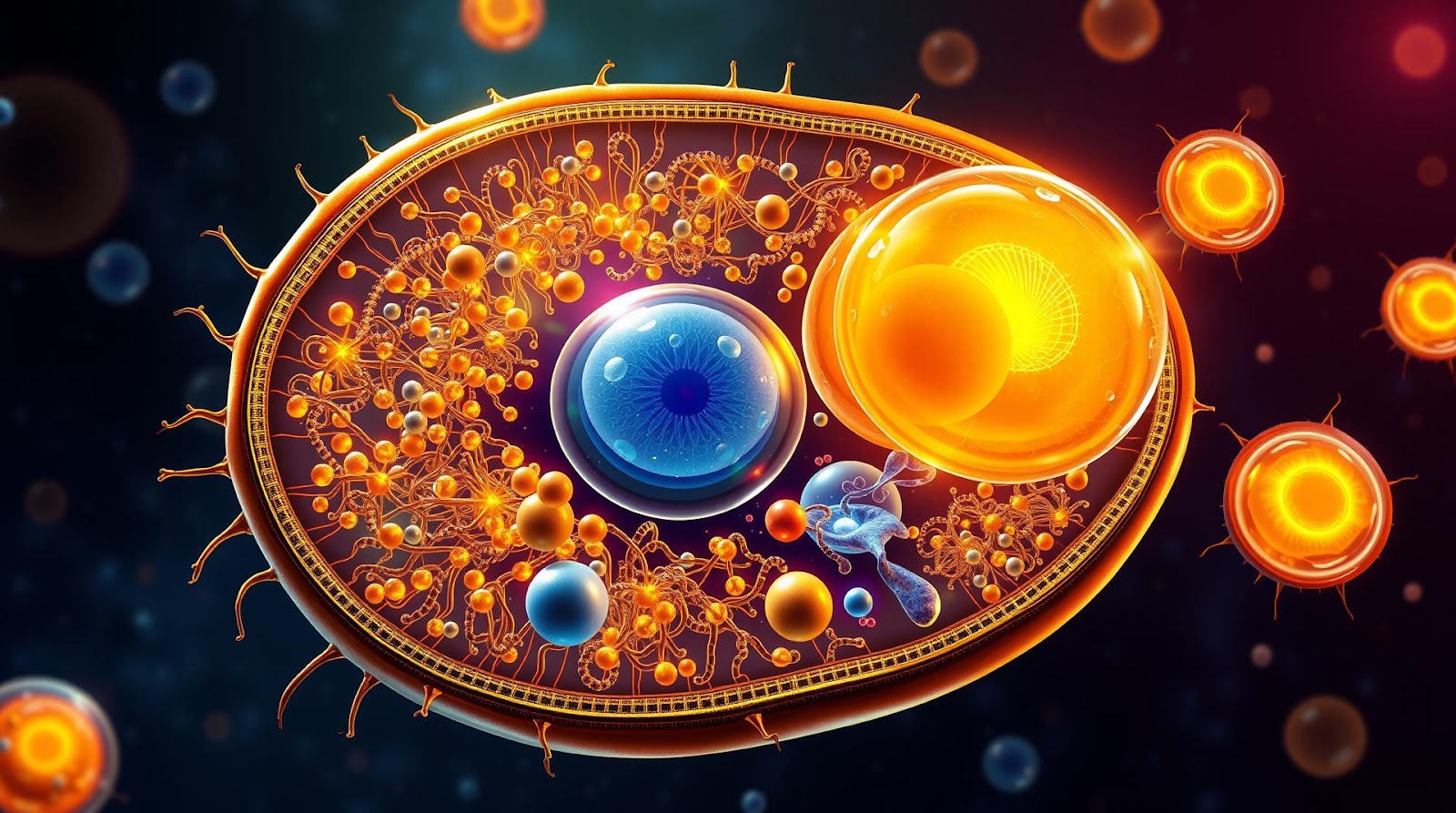
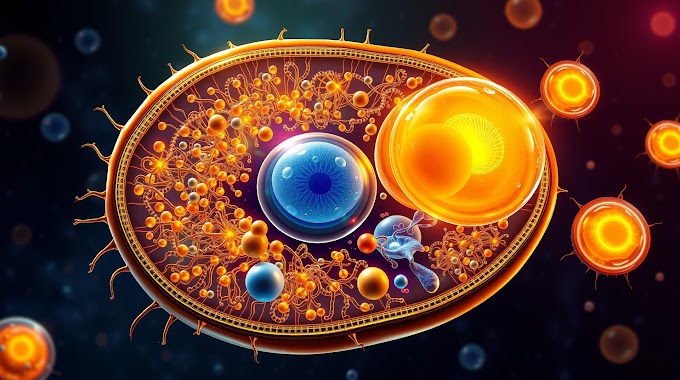
Okay, now here's where it gets fun. Your cells have these little structures called organelles, and each one has a specific job. Let me introduce you to the key players:
The Nucleus: This is the CEO of the cell. It contains your DNA and controls everything that happens. Fun fact? The nucleus has a nuclear membrane, which is selectively permeable — meaning it's picky about what gets in and out. It's like a VIP lounge.
Mitochondria: The powerhouse of the cell. This is where ATP (energy) gets made through cellular respiration. I always tell students: "If the nucleus is the boss, mitochondria is the accountant who makes sure there's money in the bank." No mitochondria? No energy. No energy? No life. Simple as that.
Ribosomes: These tiny structures read your DNA instructions and build proteins. They're like the factory workers on an assembly line. And here's a detail that often comes up in exams: ribosomes can be free-floating or attached to the rough endoplasmic reticulum (making it "rough").
Endoplasmic Reticulum (ER): Two types here. The rough ER (with ribosomes attached) makes proteins. The smooth ER makes lipids and detoxifies stuff. It's like having two assembly lines — one for proteins, one for fats.
Golgi Apparatus: Once proteins are made in the ER, they get shipped to the Golgi like packages to a sorting facility. The Golgi modifies them, packages them, and sends them where they need to go.
Lysosomes: The cleanup crew. They contain digestive enzymes and break down cellular waste. Think of them as your cell's garbage disposal. Missing lysosomes? Cellular junk accumulates. That's actually what causes some genetic diseases.
Chloroplasts (Plants only): Where photosynthesis happens. They convert light energy into chemical energy (glucose). This is why plants are green and why you should eat more of them.
The Life Processes: What Keeps You Alive
Now that we understand what cells are made of, let's talk about what they actually do. Life processes are the activities that distinguish living things from non-living things. I call them the "7 Signs of Life," and here they are:
Nutrition and Metabolism
Every living organism needs to take in nutrients and convert them into energy. That's nutrition. The process of breaking down food and using it? That's metabolism.
There are two types of nutrition: autotrophic (making your own food, like plants) and heterotrophic (eating other organisms, like us). Plants use photosynthesis. We use cellular respiration to break down glucose.
Here's a memory trick I use: PHOTO = Light, SYNTHESIS = Building. Photosynthesis = building with light. And respiration? It's the opposite process.
The equation for photosynthesis is: 6CO₂ + 6H₂O + light energy → C₆H₁₂O₆ + 6O₂
And for aerobic respiration: C₆H₁₂O₆ + 6O₂ → 6CO₂ + 6H₂O + energy (ATP)
See the symmetry? Photosynthesis builds glucose using light. Respiration breaks down glucose to release energy. It's nature's perfect recycling system.
Growth and Reproduction
Living things grow. That means cells multiply through a process called mitosis (for body cells) or meiosis (for sex cells). I won't go too deep here because this deserves its own post, but just understand: mitosis makes identical copies, meiosis makes cells with half the chromosomes (for sexual reproduction).
Growth happens because cells are constantly dividing and adding new cells to your body. Right now, your skin cells are dividing. Your blood cells are dividing. That's how you grow from a baby to an adult.
Response to Environment and Homeostasis
This is something I think students often overlook. Living things respond to their environment. You move away from a hot flame. A plant grows toward light. A bacterium moves toward nutrients. That's response to stimuli.
And homeostasis? That's maintaining a stable internal environment despite external changes. Your body keeps your temperature at 37°C even if it's 45°C outside. Your blood pH stays around 7.4. Your cell maintains the right balance of water and salts. That's all homeostasis, and it's essential for life.
Excretion and Respiration
Cells produce waste products. That's excretion. Your cells respire (break down glucose) and produce CO₂ as waste. Your kidneys filter out urea. Your liver detoxifies harmful substances. All of these are excretory processes.
| Life Process | What It Does | Example |
|---|---|---|
| Nutrition | Taking in and using food | Eating rice, plants absorbing water |
| Metabolism | Converting nutrients to energy | Photosynthesis, cellular respiration |
| Growth | Increase in cell number/size | You becoming taller |
| Reproduction | Creating new organisms | Mitosis, sexual reproduction |
| Response | Reacting to environment | Moving away from heat |
| Excretion | Removing waste products | Breathing out CO₂ |
| Movement | Change in position | Animals walking, protoplasm flowing |
Cell Transport: How Stuff Gets In and Out
Here's a question that always surprises students: "How does a cell decide what gets in and what stays out?" The answer is: the cell membrane. It's not just a random barrier — it's a sophisticated, selectively permeable border that controls everything.
There are three main ways substances move across the cell membrane:
Passive Transport (No energy needed): Substances move from high concentration to low concentration, like water flowing downhill. This includes simple diffusion (small molecules like oxygen just pass through) and osmosis (water following salt or other dissolved particles).
Facilitated Diffusion: Still passive, but now substances need a little help. Proteins in the membrane act like taxi drivers, helping molecules cross. Still no energy needed from the cell.
Active Transport (Energy needed): Here's where the cell gets active. Sometimes cells need to move substances against the concentration gradient — from low to high concentration. That requires ATP energy. Think of it like pumping water uphill. Your nerve cells use active transport constantly to maintain the right balance of sodium and potassium ions.
I use this memory trick with all my students: "PAFAT" — Passive (A) Facilitated, Active Transport. Helps them remember the three types in order!
Now here's something that often appears in exams: endocytosis and exocytosis. When a cell needs to bring in something large (like a bacteria or a big protein molecule), it literally wraps its membrane around it and pulls it inside. That's endocytosis. When it needs to get rid of something, it packages it, brings it to the cell membrane, and pushes it out. That's exocytosis. White blood cells do this — they engulf bacteria through endocytosis, kill them, and expel the waste through exocytosis.
Cell Division: How One Cell Becomes Two
Okay, this is the part where cells get seriously interesting. Every single cell in your body (except your sex cells) contains a complete copy of your DNA. That's roughly 3 billion base pairs. When your cells divide, all that genetic information has to be copied accurately. If it isn't, you could get mutations, cancer, or genetic diseases.
The process is called mitosis, and it happens in phases:
Prophase: Chromosomes condense (become visible under a microscope). The nuclear membrane breaks down. Centrioles move to opposite poles, and spindle fibers start forming.
Metaphase: Chromosomes line up at the center (metaphase plate) of the cell. The spindle fibers attach to the centromere of each chromosome.
Anaphase: Sister chromatids separate. One copy goes to each pole. This is the dramatic part — if you could see it in real-time, the chromosomes literally get pulled apart.
Telophase: Nuclear membranes reform around each set of chromosomes. The cell is almost divided now.
Cytokinesis: The cytoplasm divides. In animal cells, the membrane pinches in the middle (like tightening a belt). In plant cells, a new cell wall forms between the two halves.
Here's my memory trick: "PMAT" — **P**rophase, **M**etaphase, **A**naphase, **T**elophase. Simple, right?
And meiosis? That's different. It's specifically for making sex cells (sperm and egg), and it involves two divisions, so you end up with four cells, each with half the chromosomes. That's why you get genetic variation from your parents. When sperm and egg fuse, you get a complete set again.
Practical Tips for Your Exams
Look, I know cell biology seems like a lot to memorize. Trust me, I've been there. Here are the things that actually come up repeatedly in SSC CGL and UPSC exams, based on papers from the last decade:
Know your organelles cold. Not just their names, but what they do. You'll definitely get 1–2 questions about this.
Photosynthesis vs. Respiration. Understand the inputs and outputs. Know where they happen in the cell (chloroplasts vs. mitochondria).
Mitosis phases. They might ask you to identify a phase from a diagram. Know what's happening in each one.
Prokaryotic vs. Eukaryotic differences. This comes up more often than you'd think.
Cell membrane and transport. Understand why cells need selective permeability. This links to practical biology.
One last thing: when you study, don't just memorize. Understand. Ask yourself "why" for everything. Why does the mitochondria need to be so abundant in muscle cells? (Because muscles need lots of energy.) Why does a plant cell need a cell wall? (Because it doesn't have muscles to hold its shape.) This kind of thinking will help you answer even questions you haven't seen before.
Alright, let's test your knowledge with some practice questions!
A) Mitochondria B) Chloroplast C) Ribosome D) Golgi Apparatus
Answer: A) Mitochondria (In prokaryotes, the cell membrane itself produces ATP through aerobic respiration)
A) Exocytosis B) Endocytosis C) Diffusion D) Osmosis
Answer: B) Endocytosis
A) Prophase B) Metaphase C) Anaphase D) Telophase
Answer: C) Anaphase
A) Human nerve cell B) Muscle cell C) Bacterial cell D) Plant cell
Answer: C) Bacterial cell — bacteria lack a nucleus and membrane-bound organelles
A) Lysosome B) Golgi Apparatus C) Centrosome D) Nucleolus
Answer: B) Golgi Apparatus — it acts as the cell's postal service
Published by Dattatray Dagale • 14 June 2026
.jpg)
.png)


.png)


.png)

0 Comments