Introduction
You know, I've been teaching for over a decade now, and I can tell you with absolute certainty: cell biology is where most students lose their footing. Not because it's hard—but because we make it sound harder than it actually is.
Let me ask you something. Right now, as you're reading this, about 37 trillion cells in your body are working like a well-oiled factory. Your heart cells are pumping blood. Your nerve cells are sending signals faster than broadband. Your immune cells are standing guard like tiny soldiers. And the wild part? Every single one of them is following the same basic rules of life.
This is what we're diving into today. Not just the textbook definitions, but the actual *why* behind how cells work and what makes life... well, life. Because trust me, once you understand this properly, questions about mitosis, respiration, and photosynthesis will start looking like low-hanging fruit in your exams.
What Actually Is a Cell? The Building Block Story
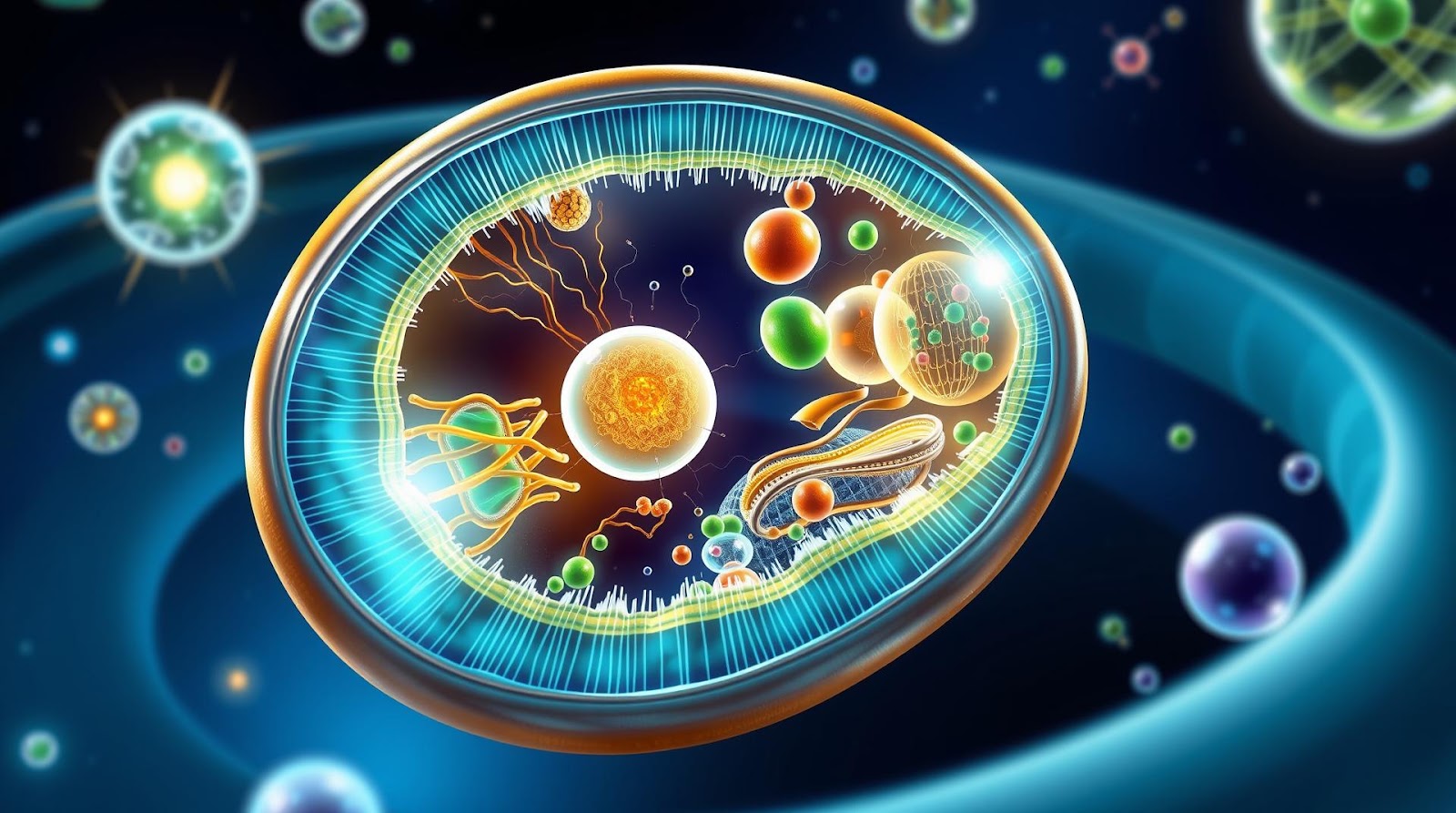
Imagine if I told you that your entire body—your muscles, your brain, your bones, even that birthmark on your arm—is made of billions of tiny rooms stacked on top of each other. Each room has its own walls, its own power generator, its own storage cupboards. Weird, right? But that's exactly what cells are.
The cell is the basic unit of life. Full stop. It's the smallest living thing that can do all the things we associate with being alive: growing, reproducing, responding to stimuli, and using energy.
The Two Types: Prokaryotic and Eukaryotic
Here's where students often get confused, and I blame the textbooks for making it sound complex. Let me simplify this with something you already know.
Think of a prokaryotic cell like a small shop in a busy Delhi market—everything is there, but nothing is organized into separate compartments. There's a counter, there's stuff hanging around, there's a till, but it's all mixed together. That's bacteria and archaea. Simple, no nucleus, no fancy compartments.
Now think of a eukaryotic cell like a modern shopping mall. You've got separate stores, each doing their own thing. The food court handles eating. The theatre handles entertainment. The pharmacy handles medicine. That's us—animals and plants. We've got a nucleus (the main office), mitochondria (the power plant), golgi apparatus (the packaging department), and so on.
For your SSC or UPSC exam, remember: Pro = simple, no nucleus. Eu = complex, has nucleus. One letter separates your bacteria from your own cells.
The Cell Membrane: Life's Gatekeeper
If the cell is a room, the cell membrane is the door and walls combined. It's selectively permeable—meaning it lets some things in and keeps others out. Smart, right?
The membrane is made of a phospholipid bilayer with proteins embedded in it. I always tell my students: imagine a sandwich. The bread is the lipids. The filling is the proteins. Water sticks to the outside (hydrophilic) and avoids the inside (hydrophobic). That's your cell membrane doing its job.
The Major Life Processes: What Makes You Alive
Okay, so we've established cells are tiny factories. But what exactly do they make? What are they busy doing 24/7?
There are seven major life processes. I'm going to teach you a mnemonic that's saved thousands of my students hours of cramming:
MRS GREN (or sometimes MRS NERG)
- Movement
- Respiration
- Sensitivity
- Growth
- Reproduction
- Excretion
- Nutrition
If something does all seven of these things, it's alive. If it skips even one, it's not technically alive. A virus, for example, can't reproduce on its own—so scientists actually debate whether it's "alive" or not!
Respiration: The Energy Dance
This is where I see the biggest confusion in exam halls. Students think respiration means breathing. Wrong. Your lungs breathing is just the mechanism to get oxygen to your cells. What actually matters is *cellular respiration*—the process where cells burn glucose to create energy.
Picture this: glucose (sugar) is like petrol. Your mitochondria is the engine. And ATP (adenosine triphosphate) is the electricity your body runs on. When glucose breaks down, it releases energy, which the cell captures and stores in ATP molecules. Then whenever your cell needs to do work—contract a muscle, fire a nerve signal, build a protein—it uses that ATP energy.
There are two types:
Aerobic respiration (with oxygen): This is the efficient path. One glucose molecule makes about 30-32 ATP. Your cells prefer this when oxygen is available.
Anaerobic respiration (without oxygen): When you're sprinting and your muscles scream, or when bacteria is surviving in a jar sealed with no air—this is anaerobic respiration. It's like running your car on low fuel. One glucose gives only 2 ATP. Not efficient, but it works in a pinch.
The equation you need to remember:
C₆H₁₂O₆ + 6O₂ → 6CO₂ + 6H₂O + Energy (ATP)
That's it. Glucose plus oxygen makes carbon dioxide, water, and energy. Your cells do this thousands of times per second.
Photosynthesis: The Opposite Process
Now here's the beautiful part of biology that gets me excited every time I teach it: plants do the opposite. They take CO₂ and water and sunlight, and they make glucose and oxygen. Which means the oxygen you're breathing right now? Thank a plant for that. Seriously.
6CO₂ + 6H₂O + Light Energy → C₆H₁₂O₆ + 6O₂
It happens in the chloroplasts (which is why plants are green—they're packed with chlorophyll pigments). And here's why this matters for your exams: photosynthesis happens in two stages—the light reactions (need sunlight) and the dark reactions or Calvin cycle (don't need sunlight directly).
Cell Division: How You Grow and Heal
You were born as a single cell. Now you're made of 37 trillion cells. How did that happen? Cell division, my friend.
There are two main types, and here's a trick I tell every student: Mitosis is for Making More. Meiosis is for Making Gametes (sex cells).
Mitosis: The Copy Machine
When you cut your finger and it heals, that's mitosis. When your muscles grow after exercise, that's mitosis. When a child grows taller, that's mitosis.
One cell divides into two identical daughter cells. Each daughter cell has the same number of chromosomes as the parent. For humans, that's 46 chromosomes (23 pairs). In your tissues right now, millions of cells are undergoing mitosis to replace dead cells and keep you functioning.
The process has four stages (PMAT):
Prophase - Chromosomes appear, nuclear membrane breaks down
Metaphase - Chromosomes line up in the middle
Anaphase - Chromosomes split and move to opposite poles
Telophase - Two new nuclei form, cell membrane pinches in
Then cytokinesis happens—the physical splitting of the cytoplasm—and boom, you've got two cells.
Meiosis: The Sex Cell Maker
This one confuses students because it's similar to mitosis but with a twist. Meiosis happens only in your reproductive organs. It takes one cell and makes four sex cells (sperm or egg), each with *half* the chromosomes—23 instead of 46.
This is why you inherit traits from both parents. Your mother's egg has 23 chromosomes, your father's sperm has 23 chromosomes, and together they make you with 46.
Meiosis happens in two divisions (Meiosis I and II), and there's something called crossing over—where chromosomes actually swap bits of DNA. This creates genetic variation. This is why you don't look exactly like your siblings even though you share the same parents.
| Feature | Mitosis | Meiosis |
|---|---|---|
| Purpose | Growth and repair | Sex cell production |
| Number of divisions | One | Two |
| Daughter cells produced | 2 identical cells | 4 different cells |
| Chromosome number | Same as parent (diploid) | Half of parent (haploid) |
| Occurs in | All somatic cells | Germ cells only |
Transport Across Membranes: How Stuff Gets In and Out
Here's something that always surprises students: the cell membrane isn't just a barrier. It's an active bouncer deciding what comes and goes.
Diffusion: Molecules move from high concentration to low concentration without needing energy. Like how perfume spreads in a room. Oxygen diffuses into your cells because there's more oxygen outside than inside.
Osmosis: This is diffusion, but specifically for water molecules moving across a semipermeable membrane. This is why raisins swell up when you soak them—water diffuses in.
Active Transport: When the cell needs to move something against the concentration gradient, it uses energy (ATP). Like swimming upstream. Your nerve cells do this constantly to maintain their electrical charge.
Endocytosis: The cell literally cups its membrane around something and brings it inside. Like a cell doing a little hug around food particles.
Exocytosis: The opposite—the cell pushes something out. This is how your pancreas releases insulin into your bloodstream.
Wrapping It Up: Why This Matters
Look, I know cell biology can feel like memorizing a million terms and processes. But here's the truth I've learned from teaching thousands of students: once you understand that every living thing is just a collection of cells following these same rules, everything clicks into place.
Your exam questions will test you on respiration, photosynthesis, mitosis, and transport. But if you truly understand *why* cells do these things—because they need energy, they need to grow, they need to reproduce, they need to maintain balance—then you're not memorizing. You're understanding. And that's how you ace your SSC or UPSC exam.
So next time you sit down to study, remember: you're not just learning biology. You're learning the rules that make you, well, you.
Practice Questions
A) Movement B) Photosynthesis C) Respiration D) Growth
Answer: B) Photosynthesis. While plants do photosynthesize, it's not a characteristic of all life—bacteria and animals don't photosynthesize. The correct answer would be one of the MRS GREN functions. This is a tricky question because students sometimes confuse "plants are alive" with "photosynthesis is a characteristic of life."
A) 2 B) 6 C) 30-32 D) 100
Answer: C) 30-32. Anaerobic respiration gives only 2 ATP, making aerobic respiration much more efficient. This is why your cells always prefer oxygen when it's available.
A) They are identical processes B) They are opposite processes C) Photosynthesis requires respiration D) Respiration occurs only in animals
Answer: B) They are opposite processes. Photosynthesis builds glucose from CO₂ and water using light energy, while respiration breaks down glucose to release energy. They're mirror images of each other.
A) 23 chromosomes B) 46 chromosomes C) 92 chromosomes D) Chromosomes cannot be counted this way
Answer: B) 46 chromosomes. Mitosis produces identical daughter cells with the same chromosome number as the parent. If the daughters have 46, the parent had 46. (In meiosis, it would be different—the parent would have 46 but produce cells with 23.)
A) Diffusion B) Osmosis C) Active Transport D) Exocytosis
Answer: C) Active Transport. Movement against concentration gradient always requires energy (ATP). Diffusion and osmosis are passive (no energy needed). Exocytosis pushes things out, not in.
Published by Dattatray Dagale • 20 May 2026
.jpg)
.png)


.png)


.png)


0 Comments