Introduction
Let me start with a confession: when I first began teaching human body systems about a decade ago, I used to bore my students to death with Latin names and complicated flowcharts. I'd talk about the integumentary system, and half the class would be mentally checking their Instagram. Then one day, a student asked me a simple question: "Sir, why do we need to know all this?"
That question changed how I teach. And I'm going to tell you exactly what I told that student.
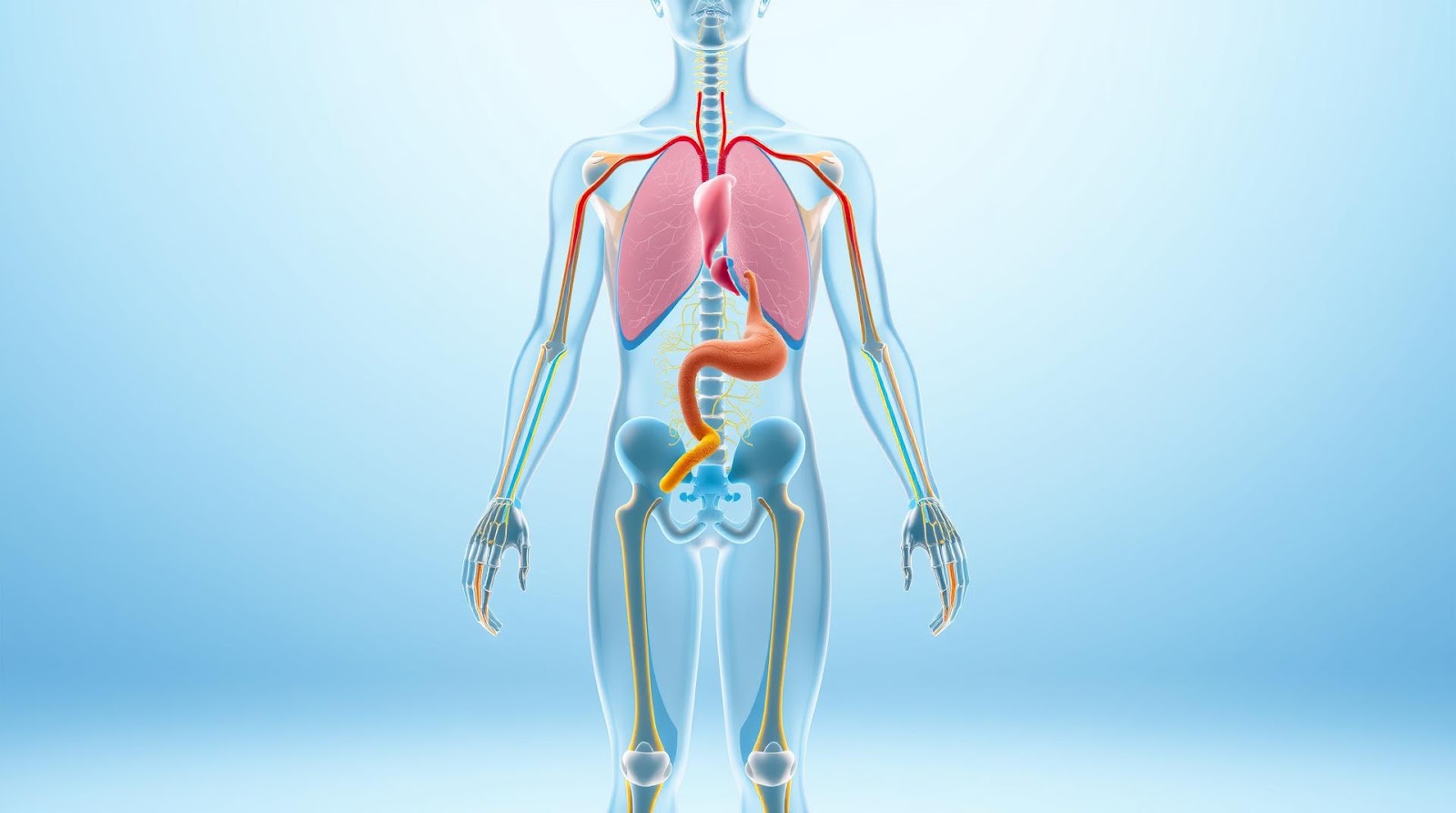
Your body isn't just a random collection of organs. It's the most sophisticated machine you'll ever own. Think of it like a cricket team — you've got your opening batsmen (digestive system), your middle order (circulatory system), your bowlers (nervous system), and your fielders (muscular system). Each has a job, but they all win or lose together. If one player goes missing, the entire match falls apart.
In this post, I'm going to walk you through the 11 major body systems in a way that'll actually stick with you. Not because you're memorizing it for an exam, but because you'll actually understand how your body keeps you alive every single day.
The Digestive System: Your Body's Food Factory
Here's something I ask every batch of students: "Where does your food actually become YOU?" Most say the stomach. Wrong. It's a journey that takes about 24-30 hours, and honestly, it's more interesting than most Bollywood plots.
From Mouth to Toilet: The Complete Journey
Your digestive system is like an assembly line in a car factory. The moment food enters your mouth, your teeth start breaking it down (mechanical digestion), and enzymes in your saliva called amylase start chemical digestion. This is why you should chew properly — not a myth your mom told you.
Then the food slides down the esophagus (a muscular tube, not a hole) and enters the stomach, where it's churned like a washing machine for 2-4 hours. Stomach acid breaks down proteins, and a special enzyme called pepsin gets to work. Now here's what's cool: your stomach doesn't digest itself because of a protective mucus layer. If that layer fails? Hello, ulcer.
After the stomach, the small intestine takes center stage. This is where 90% of nutrient absorption happens. The small intestine is called "small" because of its width, not its length — it's actually 6-7 meters long! That's longer than your height. The liver and pancreas help here too, releasing bile and digestive enzymes respectively.
Finally, the large intestine (colon) absorbs water and forms waste. What comes out? Everything your body didn't need.
Quick trick I tell students: Remember "SMILES" — Saliva, Mouth, Intestine (small), Liver/pancreas, Esophagus, Stomach. Well, that's not quite "SMILES," but you get the idea. Let me give you a real one:
MOUTH → ESOPHAGUS → STOMACH → SMALL INTESTINE → LARGE INTESTINE = "ME SL" (My Early School Lessons). Okay, I'll work on that.
The Accessory Organs You Can't Ignore
The liver is your body's chemical factory. It processes nutrients, detoxifies harmful substances, and produces bile to break down fats. It's so important that if it failed, you'd die within days. The pancreas produces insulin (which regulates blood sugar) and digestive enzymes. The gallbladder stores bile. Simple? Yes. But critical for UPSC exams? Absolutely.
The Circulatory System: Your Body's Transport Network
Imagine you're the logistics manager of a country. You need to deliver oxygen to every village (cell), pick up waste, and keep things moving 24/7. That's what your circulatory system does. And it does it roughly 100,000 beats per minute. Yes, I said that wrong. Your heart beats about 100,000 times PER DAY.
The Heart: Not Just a Metaphor for Love
Your heart is a muscular pump, roughly the size of your fist, and it's divided into four chambers: two atria (upper) and two ventricles (lower). The right side pumps deoxygenated blood to the lungs. The left side pumps oxygenated blood to your entire body. That "lubb-dupp" sound you hear? It's the closing of valves.
Here's what blows my mind every time I explain it: your heart has been beating since before you were born, and it'll beat until the moment you die, without you ever thinking about it once. That's automation on a level Silicon Valley can't match.
Blood Vessels: The Highways of Life
Three types of blood vessels, each with a specific job:
Arteries carry blood AWAY from the heart (both words start with A — memory trick!). They're thick and muscular because they handle high pressure.
Veins carry blood back TO the heart. They have valves to prevent backflow, which is why varicose veins happen when these valves weaken.
Capillaries are so thin that oxygen and nutrients can pass through their walls directly into cells. This is where the magic happens.
Now, blood itself is fascinating. It's not just red liquid. It's made of plasma (the liquid part, 55%), red blood cells (oxygen carriers), white blood cells (immune fighters), and platelets (clotting agents). If you're Type O negative blood, you're a universal donor. You're literally a superhero.
The Nervous System: Your Body's Communication Network
This is the system that separates humans from robots. Well, kind of. Your nervous system is how you think, feel, move, and react. It's the most complex system in your entire body.
Central vs. Peripheral: Two Bosses Running the Show
The Central Nervous System (brain and spinal cord) is mission control. Your brain has about 86 billion neurons, and every single one is connected. The brain weighs about 1.4 kg (about 2% of your body weight) but uses 20% of your energy. It's the most demanding organ you have.
The Peripheral Nervous System includes all the nerves branching out from the spinal cord to the rest of your body. This is further divided into the somatic nervous system (controls voluntary movement) and the autonomic nervous system (controls involuntary functions like heartbeat and digestion).
Now here's where it gets interesting: your reflex arc. Ever touched a hot stove and pulled your hand away before you even felt pain? That's because the signal didn't go all the way to your brain. It hit the spinal cord, bounced back, and told your hand to move. Your brain got the memo later. That's a reflex arc, and it can literally save your life.
Neurons: The Messengers
Neurons are cells that transmit information using electrical and chemical signals. They have three parts: dendrites (receive signals), cell body (processes signals), and axon (sends signals). The gap between neurons is called a synapse, and it's filled with neurotransmitters — chemical messengers that allow neurons to communicate.
This is where dopamine, serotonin, and adrenaline come from. Ever wondered why you feel happy after exercise? Dopamine and endorphins. Why you panic during an exam? Adrenaline.
The Respiratory System: Breathing More Than Just Air
You breathe about 20,000 times a day without thinking about it. Every breath is an exchange: you take in oxygen, your cells use it, and you breathe out carbon dioxide (a waste product). Simple concept, but let me break down why it matters.
Air enters through your nose or mouth, travels down the trachea (windpipe), which splits into two bronchi (one for each lung). Inside the lungs, the bronchi branch into smaller bronchioles, which end in tiny air sacs called alveoli. This is where gas exchange happens. Oxygen enters your blood, and carbon dioxide leaves it.
Your lungs sit in the rib cage, protected like precious jewels. Between your ribs are muscles (intercostal muscles) that expand and contract. Below your lungs is the diaphragm, a muscular sheet that does about 75% of the work during breathing. When it contracts, your lungs expand and air rushes in. When it relaxes, air rushes out.
Your body doesn't actually track oxygen levels — it tracks CO2 levels. That's why holding your breath is uncomfortable. You're not suffocating; you're just accumulating CO2. Your brain senses this and forces you to breathe.
The Muscular System: More Than Just Biceps
You have about 640 muscles in your body, and they come in three types: skeletal (voluntary, attached to bones), cardiac (involuntary, only in the heart), and smooth (involuntary, in organs and blood vessels).
Skeletal muscles are what you see and control. They pull on bones via tendons. They work in pairs — when one contracts, the other relaxes. Your biceps pull your arm up; your triceps pull it down. Agonist and antagonist muscles. Always working together, never alone.
Muscles are powered by ATP (adenosine triphosphate), which is created using glucose and oxygen. When you exercise, you demand more ATP, so your heart pumps faster and you breathe faster. This is literally why exercise is so good for you.
The Other Systems You Can't Forget
I've covered the big five, but there are six more systems that are equally important for your exams:
Endocrine System: Glands that produce hormones (chemical messengers). Pituitary, thyroid, pancreas, adrenal glands — they control growth, metabolism, and stress responses.
Immune System: Your body's defense against pathogens. White blood cells, lymph nodes, the spleen — they're your personal army.
Excretory/Urinary System: Kidneys filter waste from blood and produce urine. Two kidneys, one bladder, urethra. Simple but critical.
Reproductive System: Self-explanatory. Produces gametes and hormones related to sexual function.
Skeletal System: Bones, cartilage, ligaments. Supports your body, protects organs, produces blood cells.
Integumentary System: Your skin, hair, nails. Protects against the environment, regulates temperature, provides sensation.
| System | Main Function | Key Organs |
|---|---|---|
| Digestive | Break down food, absorb nutrients | Stomach, small intestine, liver, pancreas |
| Circulatory | Transport oxygen and nutrients | Heart, arteries, veins, capillaries |
| Nervous | Process information, control movement | Brain, spinal cord, nerves |
| Respiratory | Gas exchange | Lungs, trachea, diaphragm |
| Muscular | Movement and support | Skeletal, cardiac, smooth muscles |
| Endocrine | Hormone production and regulation | Pituitary, thyroid, adrenal glands |
| Immune | Defense against pathogens | Lymph nodes, spleen, white blood cells |
| Excretory | Remove waste, regulate water | Kidneys, bladder, urethra |
| Reproductive | Produce gametes, sexual function | Ovaries/testes, uterus, prostate |
| Skeletal | Support, protection, movement | Bones, cartilage, ligaments |
| Integumentary | Protection, temperature regulation | Skin, hair, nails |
One Final Thing: How It All Works Together
Here's what separates a student who scores 70 from one who scores 95 on general science questions. It's not knowing individual systems — it's understanding how they interact.
Example: You eat lunch. Your digestive system breaks it down. Nutrients enter your bloodstream (circulatory system). Your nervous system signals your muscles to move. Your endocrine system releases insulin to regulate blood sugar. Your respiratory system provides oxygen for all this. Your kidneys filter waste. Your immune system checks that nothing harmful entered with your food. Your skin maintains temperature. All of this happens simultaneously, automatically, without you managing a single detail.
This is why understanding the human body is so important — not just for exams, but for life. You'll get questions that link multiple systems together. A question might ask: "If someone's pancreas stops working, what happens to blood glucose levels and how does the nervous system respond?" See? It's connecting endocrine, circulatory, and nervous systems.
Here's my final advice: don't memorize in isolation. Always ask yourself: "How does this connect to something else?" That's how you build real understanding. And real understanding is what gets you those extra marks.
Practice Questions
A) Bladder B) Kidney C) Ureter D) Urethra
Answer: B) Kidney — The kidneys filter waste; the bladder stores urine; the ureters transport it.
A) Filter air B) Expand and contract to facilitate breathing C) Produce mucus D) Exchange gases
Answer: B) Expand and contract to facilitate breathing — It's the main muscle doing about 75% of breathing work.
A) Vein B) Capillary C) Artery D) Lymph vessel
Answer: C) Artery — Remember: Arteries carry blood Away from the heart.
A) Axon B) Synapse C) Dendrite D) Node of Ranvier
Answer: B) Synapse — This is the junction where chemical signals pass between neurons.
A) Liver B) Pancreas C) Thyroid D) Adrenal gland
Answer: B) Pancreas — It's both an endocrine gland (hormones) and exocrine gland (digestive enzymes).
Published by Dattatray Dagale • 21 May 2026
.jpg)
.png)



.png)


.png)



0 Comments