Introduction
Let me start with a confession. When I was preparing for my first competitive exam, monetary policy absolutely baffled me. I'd read about repo rates and reverse repo rates, and my brain would just... short-circuit. It felt like someone was speaking in tongues. But then one day, a mentor explained it using a simple analogy, and suddenly everything clicked. Today, I'm going to do exactly that for you.
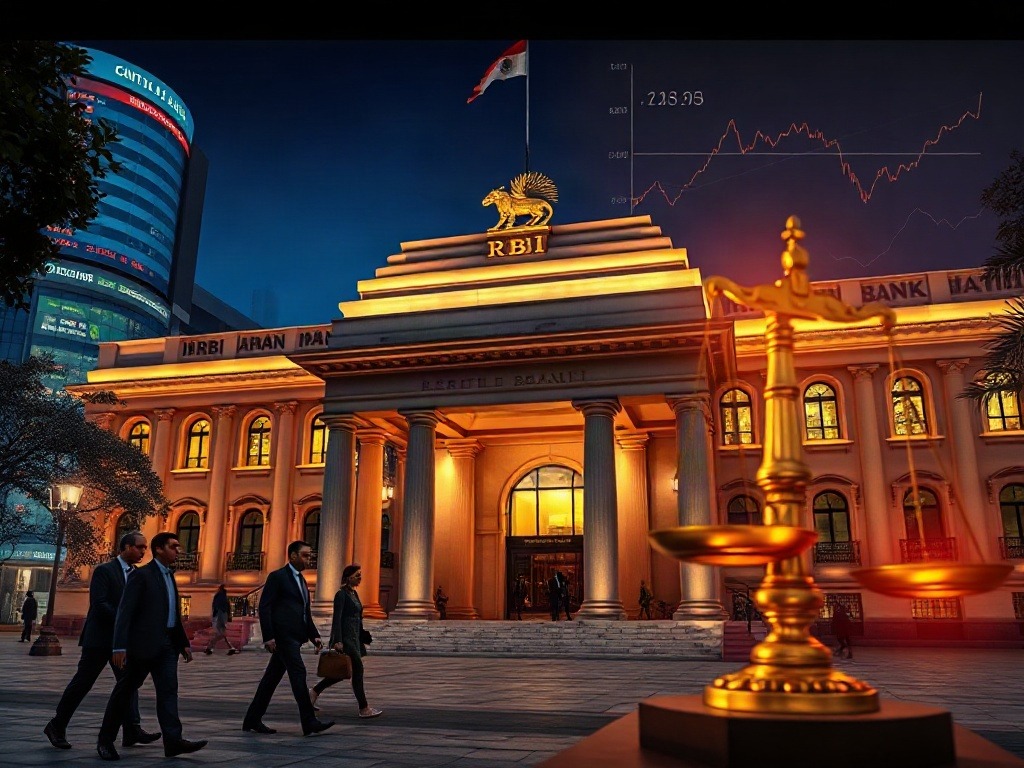
Here's the thing: the Reserve Bank of India (RBI) isn't just some distant institution sitting in Mumbai. It's literally the puppet master controlling how much money flows through your economy, how expensive your home loan will be, and whether inflation eats away your savings. Once you understand this connection, you'll never read a newspaper about RBI decisions the same way again.
Whether you're preparing for SSC CGL, UPSC, or just want to sound smart at the dinner table, this post will make RBI and monetary policy feel as natural as understanding cricket batting averages.
What Exactly is the RBI and Why Should You Care?
The RBI: India's Financial Guardian
Think of the RBI as the goalkeeper of India's economy. Just like MS Dhoni would stand between the wickets to protect India, the RBI stands between banks and chaos to protect India's financial system. Established in 1935 (initially as a private institution, then nationalized in 1951), the RBI is India's central bank—the boss of all bosses when it comes to money.
Now, you might ask: "But isn't the government the boss?" Here's where it gets interesting. The government makes laws and policies, but the RBI has operational independence. This means the RBI can make decisions about interest rates and money supply without the government directly telling it what to do. It's like how a referee in a cricket match doesn't take instructions from the commentators—the referee decides the rules are applied correctly.
The RBI has seven key functions that any serious exam aspirant needs to memorize:
My Memory Trick—Remember "PROBLEM":
- P — Printing and regulating currency (issuing notes and coins)
- R — Regulating banks and financial institutions
- O — Operating as banker to the government
- B — Being the banker's bank (lending to other banks)
- L — Lender of last resort during financial crises
- E — Ensuring economic stability and price stability
- M — Managing foreign exchange reserves
See how that spells out? Makes it stick, right? I've had students remember this for 2+ years just by this simple trick.
The Governor: Who's in Charge?
The RBI Governor is like the captain of India's economic cricket team. Currently, Sanjay Mal leads the charge. The Governor makes crucial decisions about monetary policy and sets the tone for how aggressively (or cautiously) the RBI approaches inflation and growth. You'll frequently see exam questions asking about which Governor did what—so keep track of the current Governor. It changes every six years.
Monetary Policy Demystified: The Art of Managing Money Supply
What is Monetary Policy Anyway?
Alright, imagine you're the manager of a water supply system for a city. If you release too much water, the city floods. If you release too little, people suffer droughts. Your job is to release exactly the right amount to keep everything balanced. That's exactly what monetary policy is—it's the RBI's way of controlling how much money flows through the economy.
Monetary policy has one primary goal: maintaining price stability while supporting economic growth. In simpler terms: keep inflation under control without strangling the economy's growth. Sounds easy? It's absolutely not. It's like walking a tightrope while blindfolded.
Expansionary vs. Contractionary Policy: Two Sides of the Coin
Here's where the practical application comes in:
Expansionary Monetary Policy: This is when the RBI wants to pump more money into the economy. When would it do this? Usually when the economy is sluggish, unemployment is high, and growth is slow. The RBI makes borrowing cheaper and easier. More money in circulation = people spend more = businesses invest more = economy grows. But here's the catch—too much money chasing too few goods creates inflation. Remember the COVID period? When the government was pumping money to help people, inflation shot up because there weren't enough goods to buy. The money was chasing phantom goods.
Contractionary Monetary Policy: This is the opposite. When inflation is running wild (like in 2022-2023 when prices of everything skyrocketed), the RBI makes borrowing expensive and painful. Higher interest rates mean people think twice before taking loans. They spend less. Businesses invest less. Money supply shrinks. Inflation comes down. But it's bitter medicine—growth also slows down.
Now here's my second memory trick for the exam: "When economy is DOWN, money goes AROUND (expansionary). When prices go UP, money shuts UP (contractionary)"
The Tools of Monetary Policy: How RBI Actually Does Its Magic
The RBI doesn't just wave a wand and declare "Let there be more money!" It uses specific instruments. Let me break down the most important ones that appear in every competitive exam.
Policy Rates: The Interest Rate Levers
Repo Rate: This is THE most important rate. "Repo" stands for "Repurchase Option." Picture this: a bank needs quick cash. It sells securities (like government bonds) to the RBI and promises to buy them back at a slightly higher price. The difference is the repo rate. When the RBI increases the repo rate, banks pay more to borrow, so they lend less to you. Your home loan becomes expensive. When the repo rate drops, borrowing becomes cheaper. You've probably heard news anchors say, "RBI cuts repo rate by 25 basis points"—that's them talking about this.
Reverse Repo Rate: This is the flip side. Banks have extra cash and park it with the RBI overnight. The RBI pays them interest (the reverse repo rate) on this parking. A higher reverse repo rate incentivizes banks to park money with RBI rather than lend it out. Lower reverse repo encourages lending.
CRR and SLR: These are mandatory requirements for banks. CRR (Cash Reserve Ratio) means banks must keep a certain percentage of deposits as cash with the RBI. SLR (Statutory Liquidity Ratio) means they must keep a certain percentage in liquid assets like government securities. When the RBI increases CRR, banks have less money to lend out. Boom—money supply contracts. Decrease it, and banks can lend more.
| Tool | What It Does | When Used |
|---|---|---|
| Repo Rate | Rate at which RBI lends to banks | Primary tool; used most frequently |
| Reverse Repo | Rate RBI pays banks for deposits | When inflation needs control |
| CRR | % of deposits kept with RBI | Less frequently changed (blunt tool) |
| SLR | % of deposits in liquid securities | Ensures banking system stability |
| OMO | RBI buys/sells govt securities | Fine-tuning money supply |
Open Market Operations (OMO): The Subtle Art
The RBI buys and sells government securities in the open market. When it buys securities, it injects money into the economy (expansionary). When it sells, it soaks up money (contractionary). It's subtle, elegant, and less disruptive than changing repo rates, which have immediate shockwaves.
The Transmission Mechanism: From RBI Decisions to Your Bank Account
Now here's what most textbooks don't explain clearly: how does an RBI repo rate decision actually affect YOU?
Let me walk you through it:
Step 1: RBI announces it's increasing the repo rate by 0.5%.
Step 2: Banks find it more expensive to borrow from the RBI, so they raise their lending rates too. Your home loan EMI goes up. Your credit card interest goes up. Your fixed deposit returns go up (small consolation!).
Step 3: Because borrowing is expensive, people borrow less. Businesses delay expansion plans. Consumption drops.
Step 4: With less demand, prices stop rising as sharply. Inflation moderates.
Step 5: But slower consumption also means slower growth. Jobs become scarce. This is the painful trade-off called the "growth-inflation dilemma."
This entire chain is called the transmission mechanism—how monetary policy decisions transmit through the economy. In recent years, the transmission has become faster, which is why the RBI's decisions hit your wallet so quickly now.
Recent Trends and What Exams Want You to Know
Let me give you some exam-relevant context:
The Inflation Problem (2021-2023): After COVID, when governments printed money aggressively worldwide, inflation exploded globally. India wasn't spared. The RBI had to raise the repo rate multiple times (from 4% in May 2022 to 6.5% by 2023). This was contractionary policy at its most aggressive in recent years. Expect questions on why the RBI did this and what the consequences were.
Inflation Targeting: In 2015, the RBI formally adopted an inflation-targeting framework. The target is 4% with a tolerance band of ±2%. This means the RBI's primary focus is keeping inflation between 2% and 6%. If it goes outside this band, the Governor has to explain to the government why. This formal framework is crucial for your UPSC preparation—it shows how RBI's independence is balanced with accountability.
The Monetary Policy Committee (MPC): Since 2016, the repo rate isn't decided by just the Governor. There's a committee of six members (three from RBI, three external experts) who vote on the rate. This brings democratic accountability. Every exam asks about the MPC's composition and the voting process.
Here's my third memory trick: "MPC votes by SIMPLE MAJORITY. It's 6 people, so 4 votes wins." I've seen students get confused thinking it needs 5 votes. Nope. Simple majority.
Why This Matters Beyond the Exam
Look, I can give you facts to memorize, but let me tell you why understanding RBI policy changed how I think about personal finance. When the repo rate was high (2022-2023), I saw it as an opportunity to lock in high fixed deposit rates. My money was earning 7-8% annually—that's incredible! Many of my students didn't realize this because they weren't following RBI policy. They were still getting 4% returns from their banks because they didn't switch their deposits.
On the flip side, understanding monetary policy helps you time your big purchases. If you see the RBI is in a tightening cycle (raising rates), you know home loans will become more expensive. Maybe you accelerate your purchase. If loosening is coming, maybe you wait to get a better rate.
This is real knowledge with real financial consequences.
A) Regulating commercial banks B) Setting tax rates C) Managing foreign exchange reserves D) Acting as banker to the government
Answer: B) Setting tax rates. Tax rates are set by the government (Finance Ministry), not the RBI. The RBI controls monetary policy and interest rates, not fiscal policy (taxes and spending).
A) Bank lending increases B) Inflation decreases C) Money supply expands D) Stock markets boom
Answer: B) Inflation decreases. Higher repo rate makes borrowing expensive, reducing money in circulation, which moderates inflation. Options A and C are the opposite of what happens during contractionary policy.
A) 3 B) 4 C) 5 D) 6
Answer: D) 6. The MPC has three RBI members (including the Governor) and three external experts appointed by the government.
A) Currency Reserve Ratio B) Cash Reserve Ratio C) Credit Reserve Requirement D) Capital Ratio Requirement
Answer: B) Cash Reserve Ratio. This is the percentage of deposits that banks must keep as cash with the RBI, not with them.
A) 2%, ±1% B) 3%, ±1.5% C) 4%, ±2% D) 5%, ±2.5%
Answer: C) 4%, ±2%. This was formalized in 2015 and appears frequently in UPSC questions about RBI's mandate and accountability.
Published by Dattatray Dagale • 19 September 2026
.jpg)
.png)

0 Comments