Introduction
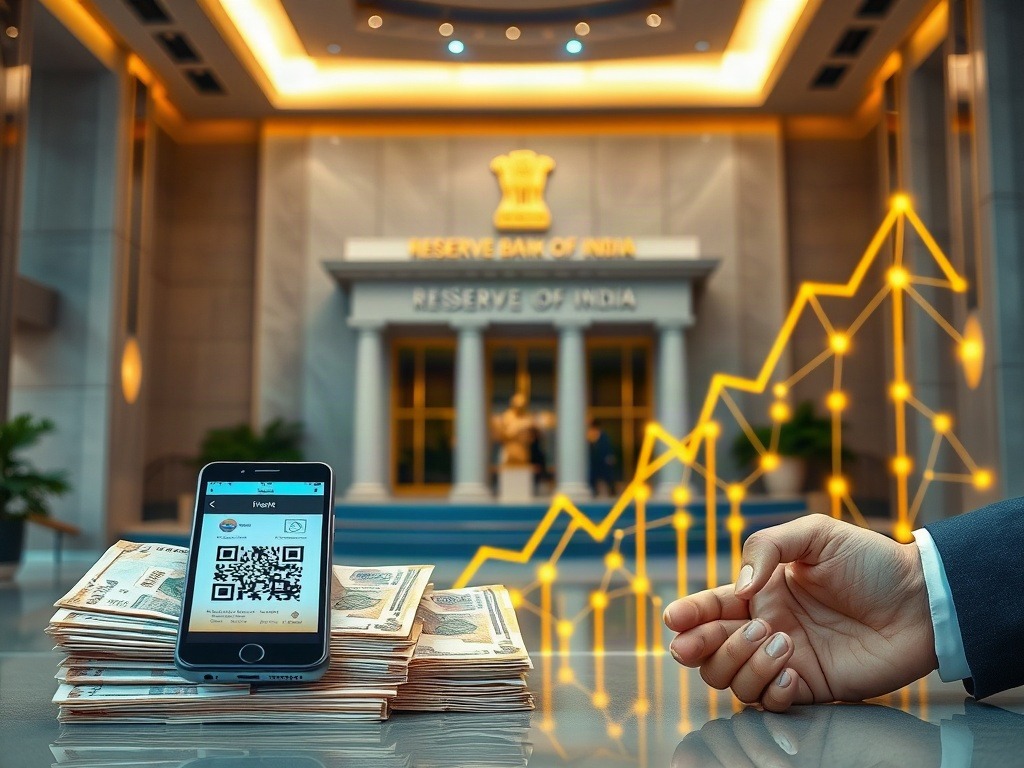
You know, I remember when one of my students asked me, "Sir, why should I care about banking when I just want to pass my exam?" I smiled and said, "Because every rupee in your pocket, every loan your father took for your education, every time your mother checks her bank balance — that's all banking and finance."
Here's the thing: Indian banking and finance isn't just about numbers on a balance sheet. It's the nervous system of our entire economy. When the RBI sneezes, the entire stock market catches a cold. When banks tighten their purse strings, small businesses feel the pinch in villages you've never heard of.
Over the last decade-plus of teaching, I've seen students struggle with this topic not because it's complex, but because it feels disconnected from reality. So today, let me walk you through Indian banking and finance the way I explain it to my batch — with real examples, practical understanding, and yes, a few tricks that'll stick in your memory like a Bollywood song.
The Architecture of Indian Banking: Understanding the Layers
Imagine our banking system as a multi-story building. At the very top is the RBI — the Reserve Bank of India. Below that, you have commercial banks, cooperative banks, regional rural banks, and then the entire microfinance ecosystem. Each layer has a purpose, each has a role.
The Reserve Bank of India: The Conductor of the Orchestra
Let me give you a mental picture. If the Indian economy were a cricket match, RBI would be the umpire and also the chief selector. It decides the rules, enforces them, and controls the pace of the game.
The RBI, established in 1935 (though it became truly independent in 1947), has four main functions that I get my students to remember with this simple mnemonic: CRME
- Create and manage the country's money supply
- Regulate and supervise all banks and financial institutions
- Manage India's foreign exchange reserves
- Ensure economic stability and growth
Here's what makes RBI different from other central banks: it's not just about making money sound. It's about nation-building. When the government needs to borrow money, RBI is the middleman. When inflation goes haywire, RBI steps in with the policy rate.
Commercial Banks: The Middlemen Who Make Money
Commercial banks are like the shopkeepers of finance. They take deposits from you and me at, say, 4% interest. Then they lend that money to businesses and individuals at 8-10% interest. That spread — that 4-6% difference — is how they make their money. It's actually beautifully simple when you strip away the jargon.
In India, we have scheduled commercial banks — banks that are listed in RBI's schedule. We have public sector banks (like SBI, Bank of India), private banks (like HDFC, ICICI), and foreign banks operating in India.
Now here's the interesting part: after the 1991 economic liberalization, private banks exploded onto the scene. When I was a student myself, everyone went to the government bank because that's all we had. Today? Private banks have become so sophisticated with technology and customer service that they've literally forced public banks to innovate. That's healthy competition.
The Policy Tools: How RBI Controls the Economy's Temperature
You know how your mother adjusts the heat when cooking dal? Too high, it burns. Too low, it doesn't cook. RBI does exactly the same thing with the economy, but instead of heat, it uses interest rates and money supply.
Repo Rate and Reverse Repo Rate: The Essential Duo
Let me explain this because it sounds complicated but it's genuinely simple.
Repo Rate is the rate at which RBI lends money to commercial banks. Think of it as the interest rate on RBI's loan to banks. When this goes up, banks have to pay more to borrow from RBI, so they increase interest rates on your loans. Your home loan becomes more expensive. When repo goes down, loans become cheaper.
Reverse Repo Rate is the opposite. It's the rate at which banks lend money to RBI. So if banks have excess cash and nowhere to invest it, they park it with RBI at the reverse repo rate.
Here's my memory trick that NEVER fails: "Repo is what RBI gives, Reverse Repo is what banks give." Sounds like a children's rhyme, but trust me, after hearing this once, you'll never confuse them again.
When RBI wants to control inflation (too much money chasing too few goods), it raises the repo rate. Banks then tighten their lending, money becomes expensive, and people spend less. Inflation comes down. It's macroeconomics at its most basic.
Open Market Operations: The Invisible Hand
Sometimes RBI doesn't want to announce repo rate changes because that's very formal and can spook the market. Instead, it quietly buys and sells government securities in the open market. When it sells securities, it takes money out of the system (reduces liquidity). When it buys, it injects money.
It's like how a shopkeeper reduces stock when goods are gathering dust, or increases stock when everything is flying off the shelves. Except here, the "goods" is money itself.
| Policy Tool | What RBI Does | Effect on Economy |
|---|---|---|
| Increase Repo Rate | Makes borrowing expensive for banks | Reduces inflation, slows growth |
| Decrease Repo Rate | Makes borrowing cheap for banks | Boosts growth, increases inflation |
| OMO (Sell Securities) | Takes money out of the system | Reduces liquidity, tightens credit |
| OMO (Buy Securities) | Injects money into the system | Increases liquidity, eases credit |
| CRR/SLR Increase | Banks must keep more cash with RBI | Less money available for lending |
Financial Inclusion and Digital Revolution: Banking Reaches Everyone
I remember going to my village about three years ago, and I met a farmer who showed me his smartphone banking app. Fifteen years ago, that same farmer would've had to travel 20 kilometers to the nearest bank branch just to check his balance. Today? He's trading in commodities futures from his field.
This is what's called financial inclusion, and India has cracked it far better than most countries.
Jan Dhan Yojana and the Banking Revolution
Launched in 2014, the Pradhan Mantri Jan Dhan Yojana (PMJDY) was RBI's and the government's way of saying "everyone deserves a bank account." And I mean everyone — no minimum balance, zero fees, insta-opening.
The results? Over 400 million accounts opened. Think about that number. Suddenly, casual laborers, street vendors, housewives — people who the banking system had ignored for decades — they had formal accounts. They could borrow against collateral. They could get insurance. They became part of the financial ecosystem.
This isn't just feel-good policy. It's economic strategy. When people have bank accounts, money flows through formal channels, which helps RBI understand the real economy better. It helps with taxation. It creates a paper trail that makes loan disbursement easier.
Digital Payments and UPI: The India Story
You know what amazed me? In 2016, after demonetization, when 86% of cash suddenly disappeared, India didn't collapse. Why? Because we'd invested in digital infrastructure. UPI (Unified Payments Interface) became the bridge between the old banking system and a cashless future.
Today, a vegetable seller in a Delhi market can accept payments through a QR code. A tea stall in a Tamil Nadu village accepts digital payments. This is unprecedented. No other country of India's size has achieved this level of digital payment penetration.
UPI processes over 10 billion transactions monthly now. Let that sink in. 10 billion transactions. That's more than just convenience — that's the entire architecture of the Indian economy shifting in real-time.
Capital Markets and Stock Exchange: Where Money Grows Wings
Banking is about deposits and loans. But capital markets? That's where businesses go to grow wings. And India's capital market has become a powerhouse.
The National Stock Exchange (NSE) and Bombay Stock Exchange (BSE) aren't just places where rich people get richer (though that happens too). They're where small companies go to access capital for expansion. Where mutual funds collect money from ordinary people like you and me and invest in thousands of companies.
Here's something I tell my students: when you're confused about whether to invest in stocks, think about what you're really doing. You're becoming a partial owner of companies. You're betting that the country will grow. You're aligning your personal wealth with India's GDP growth. That's not speculation — that's participation in nation-building.
SEBI (Securities and Exchange Board of India) is like the referee on the stock exchange field. It makes sure there's no match-fixing, no insider trading, no funny business. Without SEBI's stern regulations, the stock market would be a den of thieves.
Now here's where it gets interesting for exam preparation: you need to understand the distinction between the money market (short-term borrowing and lending, like treasury bills) and the capital market (long-term, like stock shares and bonds). Think of it this way: Money Market is like daily groceries, Capital Market is like buying property. One is immediate and short-term, the other is long-term and strategic.
Challenges and Future Outlook: The Road Ahead
If I'm being honest with you, Indian banking and finance still faces real challenges. Asset quality of banks — meaning the percentage of loans that actually get repaid — sometimes worries me. Some public sector banks have had to be recapitalized multiple times because of stressed assets.
Credit growth isn't what it used to be. After 2008, banks became cautious. They tightened lending standards. This means that while wealthy people can still access credit easily, poor and marginal businesses struggle.
But here's what excites me: fintech is disrupting the space in healthy ways. Payment platforms like Paytm, lending platforms like Bajaj Finance, insurance platforms — they're all making financial services more accessible.
The future? RBI is experimenting with a digital rupee. India's working toward a cashless economy. Banking will become invisible — you won't think you're using a bank, you'll just be transacting.
And this is why this topic matters for your exam. It's not just theory. It's the real, pulsing economy that affects your father's salary, your siblings' education loans, your grandmother's pension. When you study banking and finance, you're studying the bloodstream of India itself.
---A) Increasing government spending B) Increasing the repo rate C) Increasing Foreign Direct Investment D) Increasing import duties
Answer: B) Increasing the repo rate — When RBI raises repo rate, banks have to pay more to borrow from RBI, so they increase lending rates, reducing money supply and controlling inflation.
A) Reducing inflation through currency management B) Increasing agricultural exports C) Financial inclusion by providing bank accounts to the unbanked D) Regulating stock market trading
Answer: C) Financial inclusion by providing bank accounts to the unbanked — PMJDY's core objective was to bring every Indian into the formal banking system.
A) They are the same thing B) Repo is what RBI charges banks; Reverse Repo is what banks earn from RBI C) Reverse Repo is for international transactions D) Repo applies only to government banks
Answer: B) Repo is what RBI charges banks; Reverse Repo is what banks earn from RBI — This fundamental difference is crucial for understanding RBI's monetary policy operations.
A) RBI B) Ministry of Finance C) SEBI D) NSE
Answer: C) SEBI (Securities and Exchange Board of India) — While NSE is a stock exchange, SEBI is the regulatory body that oversees all market operations to prevent fraud and maintain transparency.
A) Replaced all banks with digital platforms B) Enabled fast digital payments and financial inclusion for masses C) Was developed before any other country D) Reduced the need for the Reserve Bank of India
Answer: B) Enabled fast digital payments and financial inclusion for masses — UPI democratized digital payments by allowing anyone with a smartphone to transact, regardless of bank account type or status.
Published by Dattatray Dagale • 27 August 2026
.jpg)
.png)



.png)


.png)



0 Comments