Introduction
Let me start with a confession: when I first studied monetary policy back in my college days, I found it absolutely mind-numbing. All those technical terms, interest rates, liquidity ratios — it felt like someone was deliberately making economics boring. Then one day, while having chai with a friend who worked at a bank, he asked me a simple question: "Why do you think the price of your daily samosa keeps going up?"
That's when it clicked. Monetary policy isn't some abstract academic concept floating in textbooks. It's literally the reason your parents complain about inflation, why your younger sibling's education loan has a different interest rate than yours, and why the Reserve Bank of India (RBI) makes headlines every time the Governor opens his mouth.
Over the past 10+ years of teaching SSC CGL and UPSC aspirants, I've realized that students find this topic intimidating simply because it's presented in a complicated way. But here's the truth: if you understand how a bank works and why prices change, you already know 80% of what you need to know about monetary policy. So let's demystify this together, shall we?
What Exactly is the RBI, and Why Should You Care?
The Central Bank: India's Financial Powerhouse
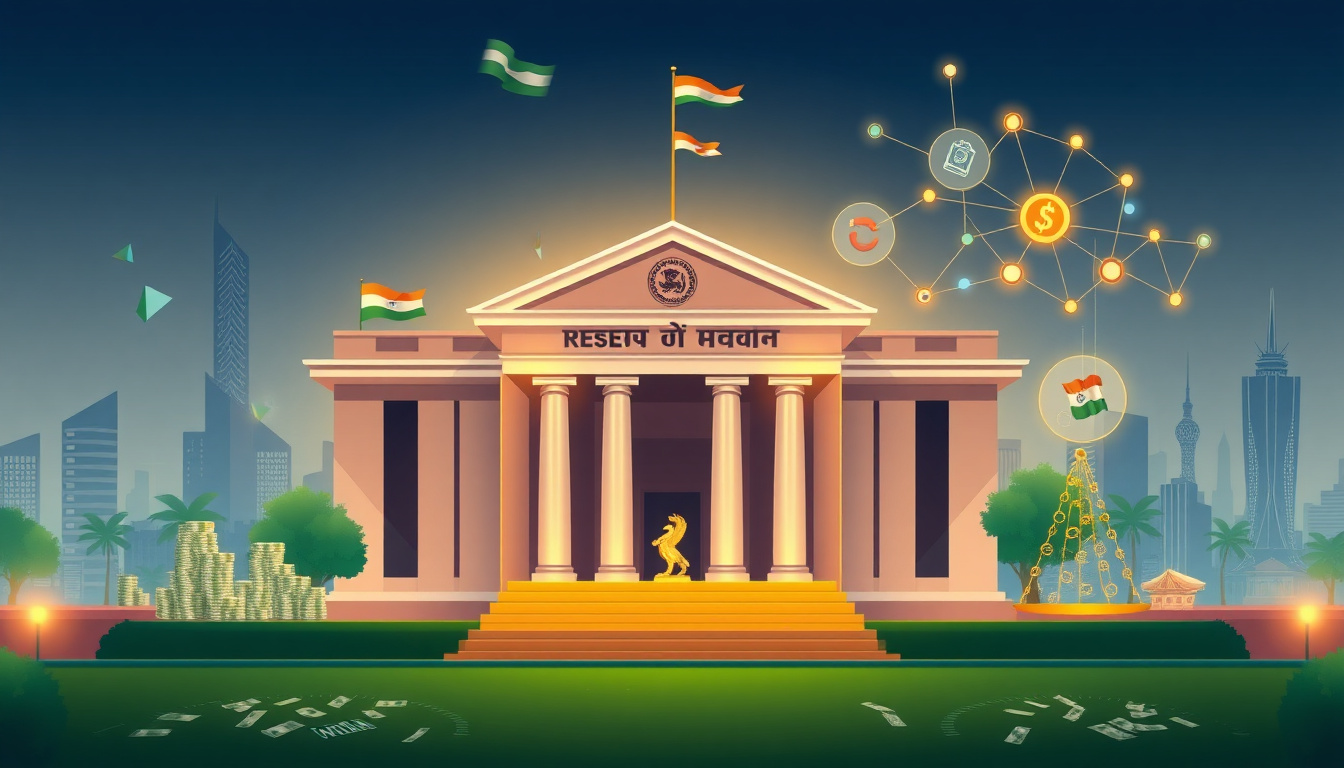
Imagine India's financial system as a massive cricket team. The RBI is essentially the captain — not playing on the field, but making all the strategic decisions that determine whether the team wins or loses. The RBI, or Reserve Bank of India, is our country's central bank, established in 1935. It's the backbone of India's entire banking and financial infrastructure.
Now, you might wonder: "What makes the RBI so special if we already have banks like ICICI, HDFC, and SBI?" Great question. While those banks are like regular players focused on earning profits, the RBI plays a completely different role. The RBI doesn't compete with other banks to grab your savings account. Instead, it regulates them, controls the money supply, and ensures the entire financial system doesn't collapse.
Think of it this way: if the banking sector is like a human body, then the RBI is the heart. Every heartbeat (policy decision) affects the entire system. When the RBI makes a decision, it doesn't just affect millionaires or big corporations — it affects your salary, your grocery bills, your loan eligibility, everything.
Core Functions of the RBI: The "FARMS" Mnemonic
Let me give you a trick I teach all my students. To remember the RBI's main functions, think of "FARMS":
F – Facilitator (manages government finances, holds foreign exchange reserves)
A – Auctioneer (conducts open market operations)
R – Regulator (supervises banks and financial institutions)
M – Manager (of money supply and monetary policy)
S – Stabilizer (ensures financial stability and economic growth)
In exam questions, when they ask "Which of these is a function of the RBI?", just run through FARMS in your head. Works like a charm.
Monetary Policy Explained: The Art of Controlling Money
What is Monetary Policy, Really?
Okay, so here's where most textbooks lose you. They define monetary policy as "the process by which the central bank influences the availability and cost of money." Fancy, right? But what does it actually mean?
Let me break it down with an example from real life. Imagine you're the principal of a school, and you want to discourage students from bunking classes. You could do two things: (1) reduce the pocket money you give them every month (less money = less incentive to leave school), or (2) increase the punishment for bunking (stricter consequences = fewer rule-breakers).
Monetary policy works exactly like this. When inflation is too high and prices are skyrocketing, the RBI wants to discourage people from spending too much money. So it makes borrowing expensive (by raising interest rates) or reduces the money supply in the system (like reducing pocket money). Conversely, when the economy is sluggish and people aren't spending, the RBI makes borrowing cheaper to encourage spending.
Here's the thing that makes monetary policy tricky: the RBI doesn't directly hand out money or directly take it back. It operates through banks. When the RBI raises interest rates, commercial banks follow suit, making loans expensive. When it lowers rates, loans become cheap. This indirect influence is what makes understanding monetary policy so critical.
The Two Faces of Monetary Policy: Expansionary vs Contractionary
Every monetary policy decision falls into one of two categories, and understanding this distinction will solve 70% of your exam questions on this topic.
Expansionary Policy (Easy Money) – This is when the RBI wants to pump money into the economy. It reduces interest rates, buys government securities (injecting cash into the system), and increases the money supply. You typically see this when the economy is struggling, unemployment is high, or growth is slow. The goal? Get people to spend more, businesses to invest more, and the economy to move faster. It's like pressing the accelerator pedal on a car.
Contractionary Policy (Tight Money) – This is the opposite. The RBI reduces the money supply by raising interest rates, selling securities, and making it harder to borrow. When inflation is out of control and prices are rising rapidly, the RBI does this. It's like slamming the brakes. The pain is immediate (higher EMIs on your home loan, lower returns on savings), but the goal is to prevent the economy from overheating.
Now here's what trips up most students: they think one is always "good" and the other "bad." Wrong. Both are tools. A carpenter needs both a hammer and a screwdriver. Using the wrong tool at the wrong time creates disaster.
Key Tools: How the RBI Actually Implements Monetary Policy
You might be wondering: "Okay, so the RBI wants to expand or contract money supply. How does it actually do that?" Well, buckle up, because these tools are incredibly important for your exam.
The Big Four Tools (And One Secret Weapon)
1. Repo Rate and Reverse Repo Rate
This is the most frequently tested concept, so pay close attention. The Repo Rate is the interest rate at which the RBI lends money to commercial banks. "Repo" stands for "repurchase agreement." When a bank needs quick cash, it approaches the RBI, sells government securities, and promises to buy them back at a slightly higher price. That "slightly higher price" is the repo rate.
For example, if the repo rate is 6.5%, a bank can borrow ₹100 crore and pay back ₹106.5 crore after some time. When the RBI raises the repo rate to 7%, borrowing becomes expensive, so banks borrow less, lend less to customers, and money becomes tight. When it lowers the rate, the opposite happens.
The Reverse Repo Rate is the opposite — it's the rate at which the RBI borrows money from banks. If banks have excess cash and nowhere to deploy it, they park money with the RBI at the reverse repo rate.
2. Cash Reserve Ratio (CRR)
Every bank must keep a certain percentage of its deposits with the RBI. This percentage is the CRR. Currently, it's around 4-4.5% (varies). If you deposit ₹1000 in your bank, the bank can't lend out all ₹1000. It must reserve about ₹40-45 with the RBI.
When the RBI increases the CRR, banks must lock away more money, so they have less to lend out. This reduces money supply (contractionary). When it decreases CRR, banks can lend more, increasing money supply (expansionary). Simple, right?
3. Statutory Liquidity Ratio (SLR)
Similar to CRR, but different. SLR requires banks to maintain a certain percentage of their deposits in the form of liquid assets (government securities, gold, etc.), not with the RBI. Currently around 18-21%. The mechanics are the same: increase SLR = less lending = contractionary; decrease SLR = more lending = expansionary.
4. Open Market Operations (OMO)
This is where the RBI buys and sells government securities in the open market. When the RBI buys securities, it injects money into the system (expansionary). When it sells, it sucks money out (contractionary). Think of it like the RBI shopping for government bonds — when it buys aggressively, money flows into the economy.
5. The Secret Weapon: Qualitative Tools
Beyond these main quantitative tools, the RBI uses qualitative measures like selective credit controls, moral suasion (gentle persuasion of banks to follow RBI guidelines), and guidance on lending priorities. These are harder to measure but incredibly important in practice.
| Policy Tool | Increase = Contractionary | Decrease = Expansionary |
|---|---|---|
| Repo Rate | Borrowing becomes expensive | Borrowing becomes cheap |
| CRR | Banks lock more money with RBI | Banks have more to lend |
| SLR | Banks must hold more securities | Banks can lend more freely |
| OMO (Selling) | RBI sells securities = money out | RBI buys securities = money in |
Why This Matters: Real-World Impact of Monetary Policy
Let me ground this in reality. Remember in 2020 and 2021, when the RBI kept interest rates very low and liquidity was abundant? This was an expansionary policy designed to help the economy recover from the COVID-19 shock. What happened? Credit became cheap, businesses invested more, people bought homes (real estate boomed), and the stock market surged. Everyone loved it — for a while.
But then inflation started creeping up. The price of vegetables doubled, petrol became expensive, and common people started feeling the pinch. So in 2022, the RBI started hiking interest rates aggressively. This is contractionary policy. Yes, home loans became expensive and stock market corrections happened. But inflation eventually came down (though not without some pain).
This is the eternal trade-off in monetary policy. You can't have everything — low inflation, high growth, low unemployment, and cheap credit — all at the same time. The RBI has to make painful choices, and understanding these trade-offs is what separates mediocre exam answers from excellent ones.
For you, as an aspirant, this means when you see a question like "The RBI raised the repo rate by 50 basis points. What will be the impact?" — you need to think multi-dimensionally. Yes, borrowing becomes expensive (contractionary effect). But also: inflation might come down (good), growth might slow (bad), foreign investors might be attracted by higher returns (currency strengthens), and real estate prices might fall (good for first-time buyers, bad for existing homeowners).
The Inflation-Growth Dilemma: The Heart of Monetary Policy
Here's something I tell my students that really helps them understand the "why" behind RBI decisions: the RBI essentially juggles two balls — inflation and growth. If inflation is high but growth is slow (called stagflation), what should it do? If inflation is low but unemployment is rising, what's the right move?
This is why monetary policy is as much an art as it is a science. The RBI Governor doesn't have a perfect formula; he makes educated guesses based on current conditions. Sometimes the guess is right, sometimes it's wrong, and the economy pays the price.
For your exam preparation, remember this mnemonic I created: "IGB" — Inflation, Growth, Balance. The RBI is always trying to balance inflation (keep it moderate), growth (keep it healthy), and balance (ensure stability). When one of these three gets out of whack, the RBI springs into action.
Quick Revision Summary
Alright, let's wrap up with a quick mental refresh. The RBI controls money supply through various tools (repo rate, CRR, SLR, OMO) to achieve two main objectives: price stability and economic growth. When inflation is high, it tightens policy; when growth is sluggish, it loosens. These decisions ripple through the entire economy, affecting your salary, savings returns, loan eligibility, and living costs.
The key insight that most students miss: monetary policy works indirectly through banks and market expectations. It's not like the government directly printing money or banning spending. It's subtle, it's psychological, and that's what makes it both powerful and imperfect.
One final thought: monetary policy alone can't solve all economic problems. You can't fix structural issues (like poor infrastructure or low productivity) by just adjusting interest rates. That's why the RBI's decisions always work in tandem with fiscal policy (government spending and taxation). But that's a story for another day!
Practice Questions
A) Inflation will decrease B) Commercial banks will find it cheaper to borrow from the RBI C) The value of rupee will strengthen D) Stock market indices will rise
Answer: B) Commercial banks will find it cheaper to borrow from the RBI. When repo rate falls, the cost of borrowing for banks decreases, making it cheaper for them to access liquidity from the RBI.
A) Banks can lend more freely B) Money supply in the economy increases C) Banks have less money available for lending D) Interest rates automatically fall
Answer: C) Banks have less money available for lending. An increase in CRR means banks must park more money with the RBI, reducing their lending capacity — this is a contractionary measure.
A) Adjusting interest rates based on quality of loans B) Tools like selective credit controls and moral suasion by the RBI C) Quality assessment of currency notes D) RBI's policy toward foreign investments
Answer: B) Tools like selective credit controls and moral suasion by the RBI. Qualitative tools refer to non-quantitative measures like guiding banks toward certain lending priorities or gentle persuasion.
A) Increasing SLR B) Open Market Operations (selling securities) C) Reducing CRR D) Lowering the reverse repo rate
Answer: B) Open Market Operations (selling securities). OMO is the most flexible and can be implemented immediately. When RBI sells securities, it directly sucks money out of the system, reducing money supply quickly.
A) Maximize government revenue B) Maintain price stability and ensure adequate credit flow for economic growth C) Stabilize the exchange rate of the rupee D) Regulate all financial transactions in the country
Answer: B) Maintain price stability and ensure adequate credit flow for economic growth. This dual mandate — controlling inflation while supporting growth — is the core objective of the RBI's monetary policy framework.
Published by Dattatray Dagale • 31 July 2026
.jpg)
.png)



.png)


.png)



0 Comments