Introduction
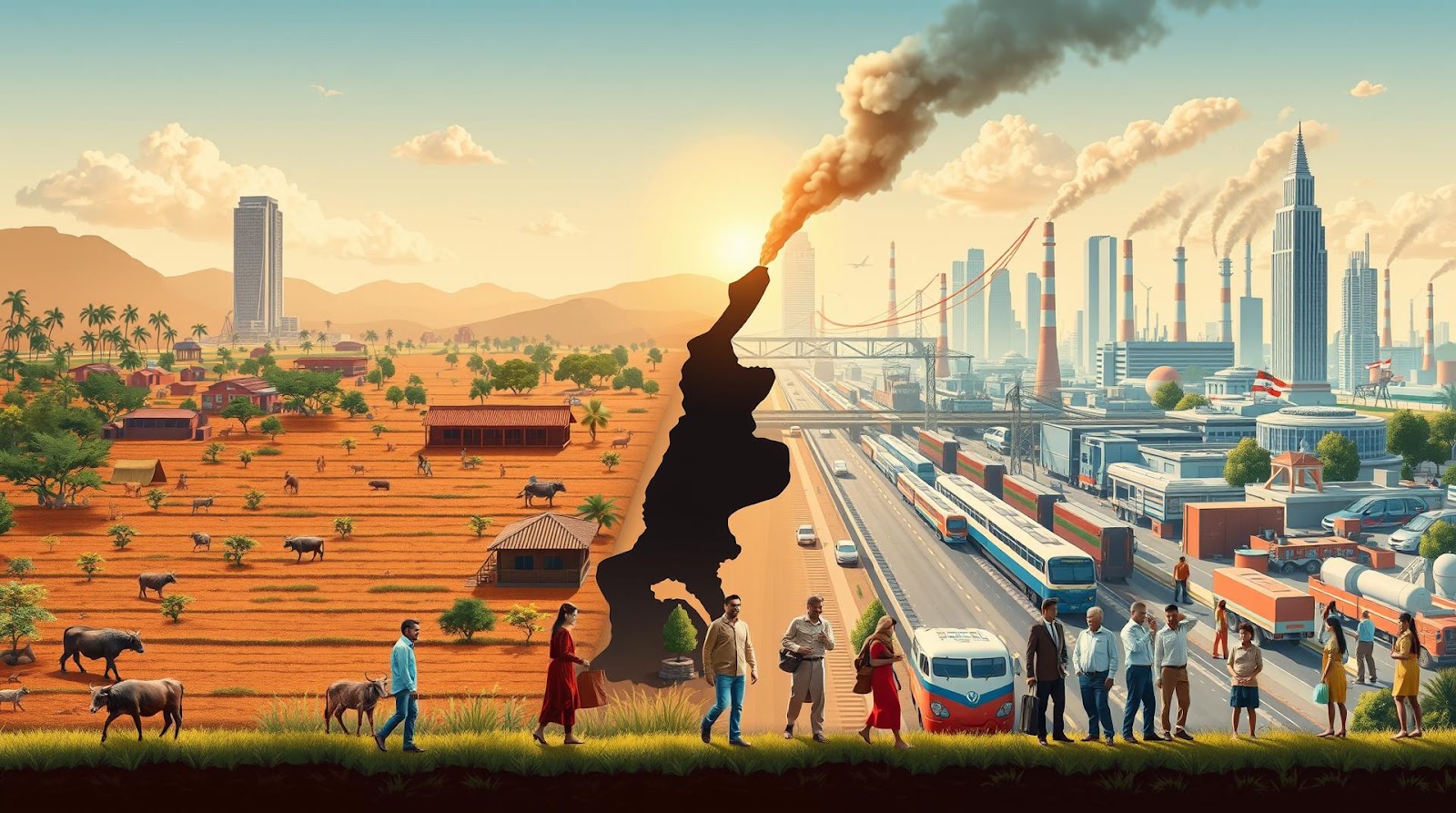
Let me take you back to 1947. India had just become independent, but we were broke, hungry, and exhausted. Our literacy rate was around 12%, we had almost no industries, and people were starving. If someone had told you then that India would become a nuclear power with a trillion-dollar economy by 2023, you'd have called them delusional.
But here's the thing — we didn't stumble into this success by accident. There was a blueprint. A very deliberate, meticulously planned blueprint called the Five Year Plans. And honestly, when I first started teaching this topic fifteen years ago, I thought it would be boring. Just numbers and dates, right? Wrong. This is one of the most inspiring stories of state-led development you'll ever come across.
Today, I want to walk you through how these plans worked, why they mattered, and how they eventually gave way to the economic reforms that shaped modern India. This is the stuff that'll help you score well in your exams, but more importantly, it'll help you understand how your country actually developed.
Understanding the Five Year Plan Philosophy
When India became independent, our first Prime Minister Jawaharlal Nehru was obsessed with one thing: industrialization. He believed that a country couldn't be independent unless it could produce its own goods, its own machines, and its own power. This wasn't just economic theory — it was a survival strategy.
So in 1951, India launched its First Five Year Plan. The idea came from the Soviet Union's model, but India adapted it to fit our democratic, mixed-economy structure. Here's the core concept: every five years, we'd set specific targets for economic growth, industrial development, and social welfare. The government would invest heavily in agriculture, infrastructure, and heavy industries.
Why Five Years?
You might be wondering why five years specifically. Well, it's long enough to actually build something substantial — a factory, a dam, or a road network — but short enough that you can course-correct without losing too much time. It's like a cricket match format. You wouldn't play Test cricket (which is five days) to test a new strategy that needs months of data. But five years? Perfect window.
Let me give you a trick I tell all my students: Remember "FIVE" as — Framework for Investment, Villages and Enterprises. Cheesy, I know, but it sticks in your head during the exam!
The Mixed Economy Approach
Here's what made India's approach unique. We didn't go full Soviet — no complete state control. Instead, Nehru created a "mixed economy" where both the government and private sector had roles. The government would invest in infrastructure and heavy industries (steel, coal, railways), while the private sector could operate consumer goods and other sectors. This balance meant we got the benefits of planning without crushing private enterprise.
The Golden Era: First to Seventh Plans (1951-1990)
The first three Five Year Plans are considered the golden era. This was when India actually built the industrial base that would define us for the next seventy years.
First Plan (1951-1956): Agricultural Focus
The First Plan focused mainly on agriculture because, let's face it, 80% of India was rural and people were literally starving. We invested in irrigation, land reforms, and increased food production. By the end of it, agricultural production had increased by about 20%. Not bad for a country that had just gone through partition!
Second Plan (1956-1961): The Industrial Revolution
Now this is where things got exciting. The Second Plan, heavily influenced by economist Mahalanobis, shifted focus to heavy industries. Steel plants came up in Bhilai, Rourkela, and Durgapur. Coal mining expanded. The government even created the Industrial Policy Resolution of 1956, which designated which industries would be public sector monopolies and which would be open to private enterprise.
This is also when the Planning Commission released its famous "Mahalanobis Model" — a mathematical framework for calculating optimal industrial growth. It's complex stuff, and honestly, for your exam, you don't need the math. Just remember: Heavy industries first, consumer goods later. The logic was simple — you need steel to make trains, and trains to move goods.
Third to Sixth Plans (1961-1980): Mixed Fortunes
The Third Plan had to deal with the 1962 China war and its economic fallout. The Fourth and Fifth Plans struggled with inflation and external debt. The Sixth Plan (1980-1985) actually showed significant progress, with improved agricultural yields (thanks to the Green Revolution) and better industrial growth.
But here's the honest truth: by the 1980s, despite all these plans, India's economy was still sluggish. Our growth rate hovered around 3-3.5% annually. We were self-sufficient in food, but we were still poor. Very poor. Our per capita income was among the lowest in the world.
| Plan Period | Key Focus | Main Achievement |
|---|---|---|
| 1st (1951-56) | Agriculture & Food | Food security, land reforms |
| 2nd (1956-61) | Heavy Industries | Steel plants, industrial base |
| 3rd (1961-66) | Growth & Self-reliance | Manufacturing expansion |
| 4th (1969-74) | Poverty Reduction | Social welfare programs |
| 5th (1974-78) | Growth with Equity | Green Revolution peak |
| 6th (1980-85) | Technology & Growth | Industrial modernization |
| 7th (1985-90) | Accelerated Growth | Pre-reform groundwork |
The Economic Crisis and Why Everything Changed in 1991
Now here's where the plot thickens. By 1990-91, India was in serious trouble. Our foreign exchange reserves were down to just three weeks' worth of imports. The government was on the verge of defaulting on its international loans. Interest rates were sky-high, inflation was eating away at people's savings, and unemployment was rising.
Some people blame the First Gulf War (which increased oil prices), others blame years of fiscal mismanagement. The truth? It was a combination of factors. The planned economy model that had worked in the 1950s was now creating rigidity. Red tape, bureaucratic delays, and government monopolies were killing productivity.
In June 1991, a new Prime Minister — P.V. Narasimha Rao — and his Finance Minister — Manmohan Singh — took over. They made a historic decision: they opened India's economy to the world. This wasn't a gradual change. This was radical, shock-therapy style reform. The government called it "Liberalization, Privatization, and Globalization" or LPG. I call it the moment modern India was born.
What Was Liberalization?
First, the government removed restrictions on how much businesses could produce. Industries could now expand without asking for a "license" from the government. This was HUGE. Imagine wanting to start a factory, but the government telling you that only three factories of that type are allowed in the entire country. That was India before 1991. After liberalization, if you had capital and a good business idea, you could scale up.
Privatization: Goodbye Government Monopolies
The government started selling shares in state-owned enterprises to the public. Air India, Indian Airlines, BHEL, NTPC — these companies that had been exclusively government-owned could now have private shareholders. This brought fresh capital and management expertise.
Now, critics said this would hurt workers and consumers. Partially true. But it also meant these companies could actually compete and become profitable instead of running on government subsidies forever.
Globalization: Opening the Doors
Import duties were slashed. Foreign companies could now invest in India directly. Indian companies could import raw materials more cheaply. The exchange rate became partially convertible, meaning the rupee could find its real value in the market instead of being artificially fixed by the government.
The impact was electric. Within five years, we had everything from Coca-Cola to Mercedes cars in Indian markets. Indian IT companies started outsourcing work and growing exponentially. Companies like TCS, Infosys, and Wipro, which were tiny in 1991, became global giants by 2000.
The Post-1991 Era: A New India Emerges
The reforms didn't happen overnight, and the initial years were rough. Inflation spiked, unemployment increased temporarily, and some domestic industries collapsed because they couldn't compete with foreign goods. But by 1994-95, the economy started roaring back.
From 3% to 7-8% Growth
Remember how I said our growth rate was stuck at 3% during the planned economy era? That was called the "Hindu Rate of Growth" — a term some economists used cynically. But after 1991, something changed. Growth accelerated to 5%, then 6%, then 7-8%. By the 2000s, we were talking about double-digit growth rates in some years.
The IT Boom and Beyond
Here's something fascinating: The Five Year Plans had invested heavily in education, particularly technical education. We had IITs, engineering colleges across the country, and millions of educated youth. But during the planned economy, there weren't enough jobs for them. When liberalization happened, suddenly multinational companies discovered Indian software engineers could do excellent work for a fraction of Western costs. Boom! The IT industry exploded. Companies like TCS, Infosys, and Wipro went from being domestic players to global corporations.
The Eighth Plan (1992-1997) and Beyond
Interestingly, the planning process continued even after liberalization. The Eighth Plan (1992-97) was the first plan designed with the new reformed economy in mind. The Ninth, Tenth, Eleventh, and Twelfth Plans followed, but they were increasingly about guiding growth rather than controlling it. By 2014, the government actually abolished the Planning Commission and replaced it with the NITI Aayog (National Institution for Transforming India). The philosophy had shifted from "Let's plan everything" to "Let's guide and coordinate growth."
The key reforms that powered growth included:
Tax Reforms: The VAT (Value Added Tax) system simplified indirect taxation.
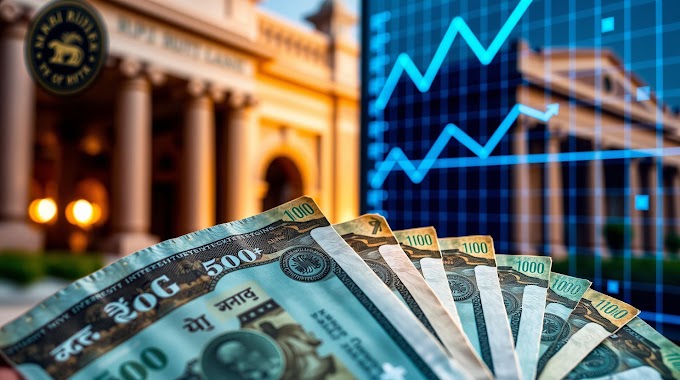
Inflation Targeting: The RBI (Reserve Bank of India) became independent and focused on controlling inflation rather than just printing money for government spending.
FDI Inflows: Foreign Direct Investment poured in, especially in telecom, pharmaceuticals, and automobiles.
Stock Market Development: The BSE and NSE became world-class exchanges. By 2000, you could buy stocks from your home computer. Revolutionary for India.
Infrastructure Push: Highways, ports, and airports were built through a mix of government and private investment.
Let me give you another memory trick for the post-1991 reforms. Remember "TIFF": Tax reforms, Infrastructure, FDI, Finance sector liberalization. These four pillars held up our economic growth for three decades.
By 2008, when the global financial crisis hit, India had built enough resilience that we didn't collapse like many developed economies. By 2010, we were officially called a "BRIC" nation (Brazil, Russia, India, China) — one of the fastest-growing large economies in the world.
I remember in 2005, when India's growth hit 9.5%, my economics professor said something I've never forgotten: "The Five Year Plans built our foundation. The 1991 reforms gave us wings." That's honestly the best summary I've heard.
Key Takeaways for Your Exam
Alright, let's consolidate before we move to practice questions.
Phase 1 (1951-1990): Five Year Plans created industrial base, achieved food security, but growth remained slow due to licensing and government control.
1991 Crisis: Foreign exchange crisis forced India's hand. LPG reforms were the response.
Phase 2 (1991 onwards): Liberalization removed restrictions, privatization brought efficiency, globalization opened markets. Growth accelerated dramatically.
The Architects: Nehru for planned development, Manmohan Singh for liberalization. Both changed India fundamentally.
The Result: From a hungry, backward colony to a trillion-dollar economy with emerging superpower status.
This story isn't just about economics. It's about how policy choices shape nations. How the rigidity of one era becomes the limitation of the next. How sometimes you need the stability of planning, and sometimes you need the freedom of markets. Modern India is a beautiful combination of both.
A) Rajiv Gandhi and Yashwant Sinha B) P.V. Narasimha Rao and Manmohan Singh C) Atal Bihari Vajpayee and Yashwant Sinha D) Indira Gandhi and Pranab Mukherjee
Answer: B) P.V. Narasimha Rao and Manmohan Singh
A) Agriculture and irrigation B) Heavy industries and manufacturing C) Information technology D) Service sector development
Answer: B) Heavy industries and manufacturing
A) Long Period Growth B) Liberalization, Privatization, Globalization C) Liquified Petroleum Gas D) Limited Production Guidelines
Answer: B) Liberalization, Privatization, Globalization
A) Amartya Sen B) Jagdish Bhagwati C) P.C. Mahalanobis D) B.R. Ambedkar
Answer: C) P.C. Mahalanobis
A) Ministry of Finance B) Reserve Bank of India C) NITI Aayog D) State Planning Boards
Answer: C) NITI Aayog (National Institution for Transforming India)
Published by Dattatray Dagale • 18 May 2026
.jpg)
.png)



.png)

.png)


0 Comments