Introduction
Listen, I've been teaching competitive exams for over a decade now, and I can tell you with absolute certainty: if there's one section where students lose "easy" marks, it's General Knowledge. Not because the questions are hard—they're not. But because students treat this section like it's some nebulous, infinite ocean of information. "How am I supposed to memorize everything?" they ask me, throwing their hands up.
Here's the truth I tell them over tea: you don't need to. What you need is strategy, pattern recognition, and a solid understanding of what examiners *actually* ask.
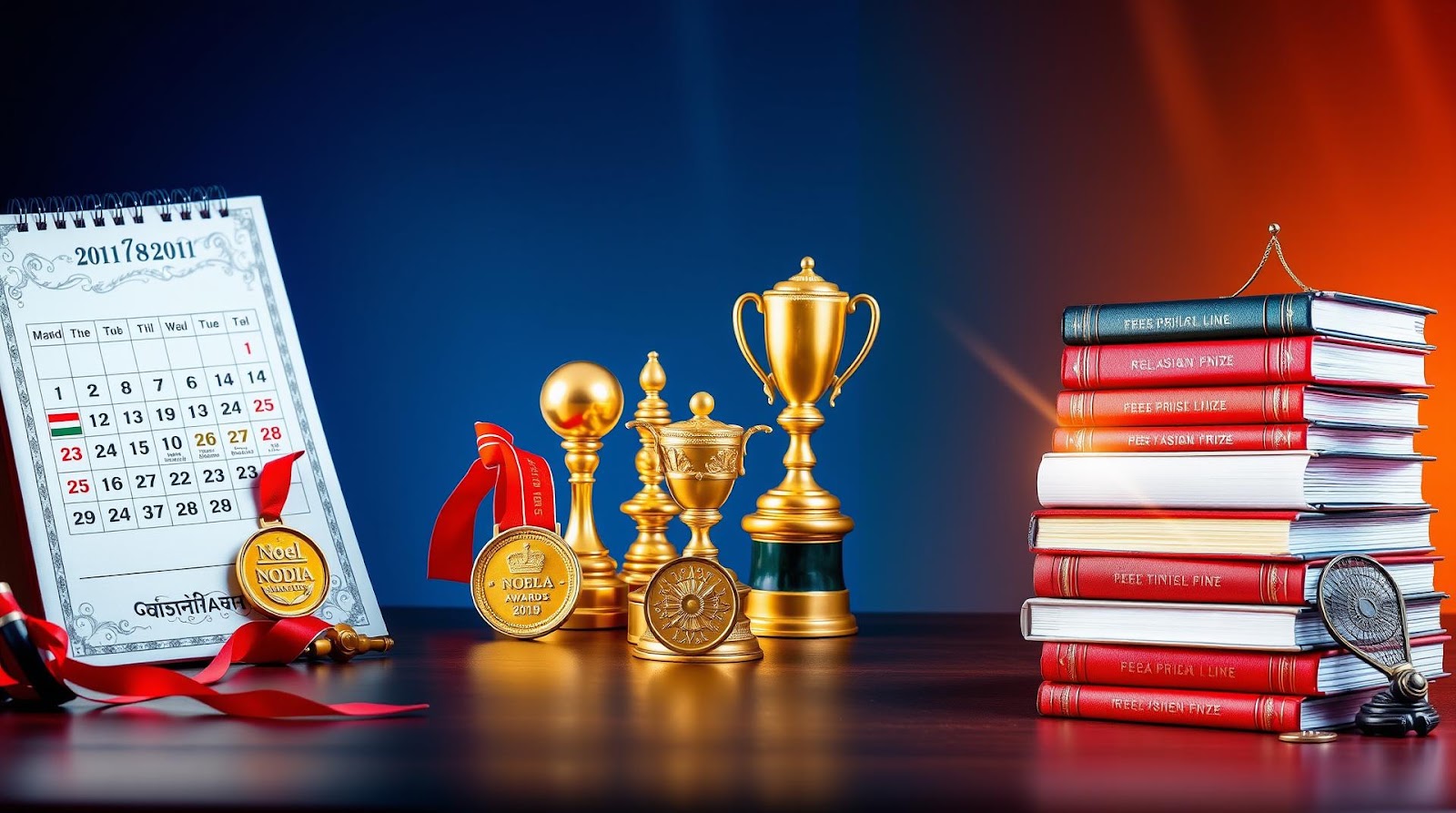
Today, I want to walk you through three of the most high-frequency GK topics: Important Days, Awards, and Books. These three topics alone probably account for 15-20% of your GK questions, whether you're targeting SSC CGL, UPSC, or any other government exam. And the best part? Once you understand the patterns and tricks I'll share, you'll never fumble these questions again.
Part 1: Important Days – The Calendar That Examiners Love
Every year, without fail, 3-4 questions come from "International Days" or "National Days." Now, it's not humanly possible to remember *all* of them. But the good news? About 80% of questions come from the same 25-30 days. Let me share which ones matter.
The Big Three Categories
First, let me categorize important days by theme. This makes memory work exponentially better.
Environmental & Conservation Days: World Environment Day (June 5), World Water Day (March 22), Earth Day (April 22), International Day for Forests (March 21). See the pattern? Most fall in spring months—nature's comeback season. Easy to remember!
Social & Health Days: International Women's Day (March 8), World Health Day (April 7), International Day Against Child Labour (June 12), World AIDS Day (December 1). Here's a trick I teach my students: think of these as "problem-solution" days—each highlights a global issue.
Cultural & Professional Days: International Literacy Day (September 8), World Book Day (April 23), International Day of Non-Violence (October 2—Gandhi's birthday!), Teachers' Day (September 5—Dr. Sarvepalli Radhakrishnan's birthday).
My Mnemonic Trick: The "MOD" Method
I created this years ago, and my students swear by it. For important days, remember: M-O-D—Month, Occasion, Date.
Let me show you how:
M = Month (which season does this topic relate to?)
O = Occasion (what's the *reason* for this day?)
D = Date (now the number sticks because you understand the why)
Example: World Environment Day. It's about nature → June (monsoon, growth) → 5th (environment has 5 letters if you think creatively... okay, that's a stretch, but the point is: June 5 because it's peak growth season).
Trust me, when you understand *why* a date was chosen, you remember it forever. This beats rote memorization by a mile.
Part 2: Awards – India's Pride and Global Recognition
Now we're getting into spicy territory. Awards questions are where students often go wrong because they confuse categories. Is the Padma Shri higher than the Padma Bhushan? Wait, which award is for science? For sports? This is where I see panic.
India's National Awards Hierarchy (The Pyramid Model)
Think of it as a pyramid. At the top, you have the highest. Let me break it down from top to bottom:
Tier 1 (Supreme): Bharat Ratna – only for exceptional service in any field. Indira Gandhi, Mother Teresa, Sachin Tendulkar. Highest civilian award. Period.
Tier 2 (Elite): Padma Vibhushan (second-highest), Padma Bhushan (third-highest), Padma Shri (fourth-highest). These three are for distinguished service in various fields—arts, science, public service, etc.
Tier 3 (Professional Excellence): Ashoka Chakra (military bravery), National Film Awards, Rajiv Gandhi Khel Ratna (renamed Major Dhyan Chand Khel Ratna in 2021—yes, this changed! Watch for it in exams).
Here's something I tell every student: the Padma awards are *not* ranked by the person's achievement level. They're ranked by the *level of recognition the state gives*. Vibhushan is rarer than Bhushan, which is rarer than Shri. Government controls the quota.
Global Awards: The Big Three Everyone Should Know
Nobel Prize: Physics, Chemistry, Medicine, Literature, Peace, and Economics (added 1968). Sweden gives these (except Peace, which is Norway). Remember: "PCMPLE" – though that's not a real word, so make it personal. I think of it as "Prize Category Must Please Literature Enthusiasts" (terrible, I know, but it works!).
Booker Prize: International literary award. Salman Rushdie, Arundhati Roy (Indian, won in 1997 for *The God of Small Things*). Worth remembering because Indian authors regularly win.
Grammy Awards: Music. Ravi Shankar won. A.R. Rahman has been nominated. Not always tested heavily, but occasionally appears as a trivia question.
| Award Category | Highest in India | Key Details |
|---|---|---|
| Civilian | Bharat Ratna | Exceptional service, all fields |
| Services to Arts/Science | Padma Vibhushan | 2nd highest civilian award |
| Military Bravery | Param Vir Chakra | For gallantry in armed conflict |
| Sports Excellence | Major Dhyan Chand Khel Ratna | Renamed in 2021 |
| Literature | Booker Prize (International) | Arundhati Roy won in 1997 |
Part 3: Important Books – Literature That Examiners Can't Resist
This is my favorite section, honestly. Because books aren't just GK fillers—they're windows into understanding history, society, and politics. But here's the challenge: thousands of books exist. Which ones matter for exams?
Classic Books That Define Nations
I divide important books into three buckets: Indian Classics, International Masterpieces, and Recent Award-Winners.
Indian Classics You Must Know:
Ramayana and Mahabharata – Not just books; these are the foundation of Indian culture. The Bhagavad Gita is part of the Mahabharata. Know that.
Mricchakatika by Shudraka – Sanskrit drama. Tested for ancient Indian literature.
The God of Small Things by Arundhati Roy – Won Booker Prize (1997). This one appears often. Roy also wrote The Ministry for the Future (more recent).
Midnight's Children by Salman Rushdie – About India's independence. Important for understanding post-colonial literature.
Mulk Raj Anand's works – Untouchable is crucial. Social realism, caste issues.
International Classics:
Pride and Prejudice (Jane Austen), Wuthering Heights (Emily Brontë) – Often appear in "author of X book" questions.
1984 by George Orwell – Dystopian novel. Tested for its socio-political themes.
To Kill a Mockingbird by Harper Lee – Race relations, American South. Classic in international literature circles.
Books by Politicians, Scientists, and Historical Figures
This is where students often stumble. Examiners *love* asking about auto-biographies and memoirs.
Political & Historical:
My Experiments with Truth – Mahatma Gandhi's autobiography. Cornerstone of Indian independence.
Discovery of India – Jawaharlal Nehru. Written in jail. Key for understanding post-independence vision.
The Indian Struggle – Subhas Chandra Bose. Different perspective on independence movement.
By Scientists:
A Brief History of Time – Stephen Hawking. Physics popularization.
The Selfish Gene – Richard Dawkins. Evolution and genetics.
My "Book Recognition" Trick
Here's what I teach students who panic about remembering books: Author-Period-Theme (APT).
When you encounter a book, ask yourself three questions:
1. Author: Who wrote it? (Even if you don't know the book, knowing the author helps—is it a scientist? A freedom fighter? A novelist?)
2. Period: When was it written? (Ancient? Colonial? Post-independence? That context matters hugely.)
3. Theme: What's it about? (Love? Politics? Science? Social issues?)
Example: Ramayana – Author: Valmiki, Period: Ancient (~500 BCE), Theme: Duty, righteousness, mythology. Boom. You know the book's essence without memorizing every chapter.
| Book Title | Author | Year/Era | Why It Matters for Exams |
|---|---|---|---|
| The God of Small Things | Arundhati Roy | 1997 | Booker Prize, Indian literature, gender & caste |
| My Experiments with Truth | M.K. Gandhi | 1927-1929 | Autobiography, independence, philosophy |
| Discovery of India | Jawaharlal Nehru | 1944-45 | Jail writing, post-colonial vision, education |
| Midnight's Children | Salman Rushdie | 1981 | Booker Prize, 1947, post-colonial literature |
| 1984 | George Orwell | 1949 | Dystopian, political philosophy, totalitarianism |
The Synergy: Why These Three Topics Matter Together
Here's something I realized after teaching thousands of students: these three topics—days, awards, and books—they're not disconnected. They create a *narrative* of human achievement and values.
For instance, World Literacy Day (September 8) celebrates education. Arundhati Roy wrote about education and social issues. She won the Booker Prize. Kailash Satyarthi fought for children's rights and won the Nobel Peace Prize. See how it connects?
When you study GK this way—not as isolated facts but as interconnected stories—suddenly everything sticks. Your brain remembers patterns, not just data. And that's what cracks exams.
So here's my advice: don't just memorize dates. Ask yourself: why is this day celebrated? What book represents the values of this day? Who received awards for promoting these values? Build the network.
Final Tips for Exam Success
Let me leave you with some practical exam strategies I've developed over 10+ years:
First: Create a personal "GK Calendar" for your desk. Mark important days. Read them every morning for 2 minutes. Spaced repetition works wonders.
Second: When you read about an award winner, immediately Google their major contribution or book (if they wrote one). Build those connections I talked about.
Third: For books, focus on the *author and the reason for fame* before worrying about the plot. An MCQ rarely asks "What happens on page 47?" but often asks "Who wrote this?" or "What's the theme?"
Fourth: Track recent award announcements. The Nobel Prize announcements, Booker Prize winners, Padma awards—these change yearly. One or two questions always come from the most recent year. Don't ignore current affairs.
I genuinely believe that GK is the most "attackable" section if you're smart about it. You don't need to memorize everything. You need to understand patterns, build networks of information, and focus on what's most likely to appear.
Start today. Pick one day from the important days list and truly *understand* why it's important. Pick one award and trace three recipients. Pick one book and read its summary. Build from there. By the time you sit for your exam, you'll be shocked at how naturally this information flows.
You've got this. Now go crack that GK section. Chai's on me when you do! ☕
Practice Questions
A) Padma Vibhushan B) Ashoka Chakra C) Bharat Ratna D) Padma Shri
Answer: B) Ashoka Chakra is a military decoration for gallantry, not a civilian award.
A) Jawaharlal Nehru B) Mahatma Gandhi C) Subhas Chandra Bose D) Sardar Patel
Answer: B) Mahatma Gandhi. The book was written between 1927-1929 and details his life and philosophy.
A) 1995 B) 1996 C) 1997 D) 1998
Answer: C) 1997. This is a frequently tested fact about Indian literature in competitive exams.
A) April 22 B) June 5 C) March 22 D) July 28
Answer: B) June 5. This marks the start of the UN Conference on the Human Environment in 1972.
A) Dhyan Chand Khel Ratna B) Major Dhyan Chand Khel Ratna C) Sportsman Excellence Award D) National Sports Award
Answer: B) Major Dhyan Chand Khel Ratna. Renamed in 2021 to honor the hockey legend Major Dhyan Chand.
Published by Dattatray Dagale • 29 May 2026
.jpg)
.png)



.png)


.png)

0 Comments