Introduction
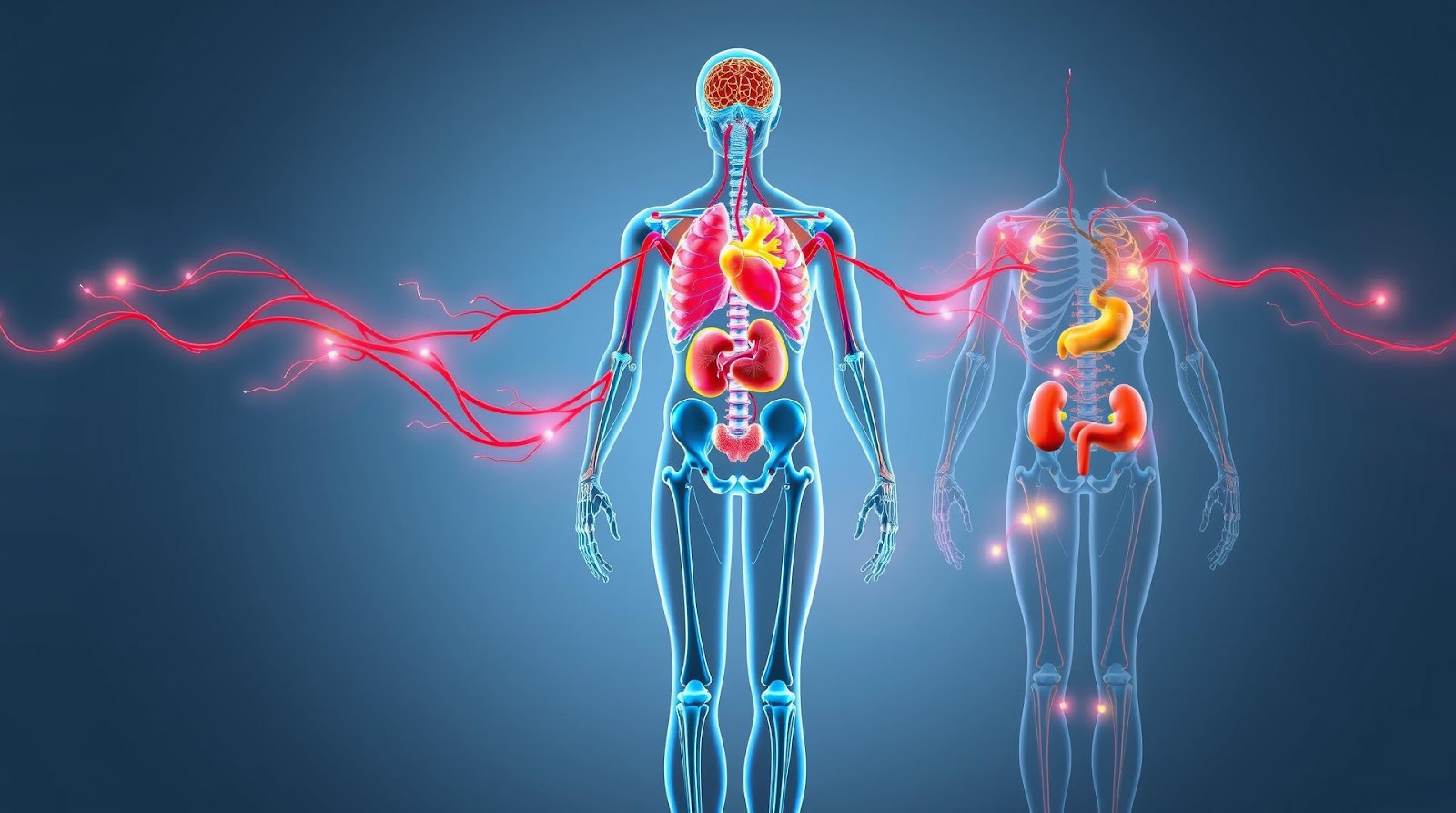
I still remember my first biology class in school. The teacher walked in and said, "Your body is like a cricket team." I thought she'd lost it. But then she explained: just like a cricket team has fielders, batsmen, bowlers, and a keeper all working together for one goal, your body has 11 different systems—each with a specific job, but all depending on each other to keep you alive.
That stuck with me. And honestly, it's the best way to think about human body systems when you're preparing for SSC CGL or UPSC.
See, most students memorize: "Circulatory system transports oxygen." But they forget to ask: "Why does oxygen matter? Where does it come from? What happens if it doesn't reach your brain?" Once you understand the *why*, everything clicks. The facts stop being random and start being a connected story. And that's when exams become easier.
Let me walk you through all 11 systems the way I teach them to my students—connecting the dots, using tricks you'll actually remember, and showing you why this matters beyond just scoring marks.
The Big Picture: What Are Body Systems?
Before we dive into the 11 systems, let's get clear on terminology because exams love this stuff.
A system in your body isn't like a computer system. It's a group of organs working together to perform a specific function. An organ is made of tissues, tissues are made of cells, and cells are made of molecules. This hierarchy matters because questions often test whether you know the difference between an organ and an organ system.
For example: your heart is an organ. But the heart, blood vessels, and blood together form the circulatory system. See the difference? That's a 1-mark question right there.
Now, here's something interesting that many textbooks gloss over: these systems don't work in isolation. Your nervous system controls your digestive system. Your endocrine system influences your reproductive system. Your circulatory system supplies oxygen to literally every other system. It's all interconnected, like a beautiful, messy web. And this is exactly what makes human biology both fascinating and—let's be honest—a bit overwhelming to study.
The 11 Systems: Breaking Them Down
1. The Skeletal System — Your Body's Framework
Think of your skeleton as the supporting cast of a Bollywood movie. Nobody really talks about them, but without that choreographer, musician, and light guy, the hero can't perform. Same logic.
Your skeletal system has 206 bones (in adults—babies are born with about 270 bones made of softer cartilage that ossify over time, which is why we say infants are more flexible). These bones do three things:
Support: They hold you up against gravity. Without a skeleton, you'd be like a jellyfish on land—basically a puddle of organs.
Protection: Your skull protects your brain. Your ribs protect your heart and lungs. Your vertebral column protects your spinal cord.
Movement: Bones work with muscles to create movement. But we'll talk about that in the muscular system.
Bonus function people forget: bone marrow produces blood cells and stores minerals like calcium. That's why the question "Where are red blood cells produced?" has the answer "bone marrow," not "heart."
2. The Muscular System — Your Body's Engine
There are three types of muscle tissue: skeletal, cardiac, and smooth. Let me give you my favorite mnemonic that I've taught thousands of students:
"Skeletal Muscles Can be Smooth" — and what that means is:
Skeletal muscles = voluntary, striated, attached to bones
Cardiac muscles = involuntary, striated, found only in the heart
Smooth muscles = involuntary, non-striated, found in organs like the stomach and blood vessels
Why does voluntary vs. involuntary matter? Because it tests whether you understand that you can control your skeletal muscles (raise your arm) but not your cardiac muscles (can't slow down your heartbeat just by thinking about it—though meditation can help a bit). This distinction appears in almost every competitive exam.
3. The Circulatory (Cardiovascular) System — The Delivery Network
Your heart pumps blood. Blood carries oxygen and nutrients. It reaches every cell in your body. This system is non-negotiable for survival—stop it for even 4 minutes, and your brain starts dying.
The circulatory system has two routes:
Pulmonary circulation: Heart → Lungs → Heart (to pick up oxygen)
Systemic circulation: Heart → Body → Heart (to deliver oxygen)
Now here's where students get confused. Blood flows: Deoxygenated blood from body → Right atrium → Right ventricle → Pulmonary artery → Lungs (picks up O₂) → Pulmonary vein → Left atrium → Left ventricle → Aorta → Body.
This is a common exam trap: "Which blood vessel carries deoxygenated blood?" Students panic and say "veins," but the *pulmonary artery* carries deoxygenated blood to the lungs. It's an artery, not a vein. The naming is based on function (arteries carry blood *away* from the heart), not on oxygen content. Sneaky, right?
4. The Respiratory System — Your Oxygen Supply Chain
Air enters through your nose (where it's filtered and warmed), travels through the trachea, splits into two bronchi, and reaches the lungs. Inside the lungs are millions of tiny air sacs called alveoli. This is where the magic happens: oxygen from air crosses into the blood, and carbon dioxide from the blood exits into the air.
This process is called gas exchange, and it's purely physical—oxygen molecules are small enough to diffuse through the alveolar membrane. Your lungs don't "pull" oxygen in; it's just physics.
One thing to remember: the diaphragm is a muscle that controls breathing. When it contracts, it expands your chest cavity, pressure drops, and air rushes in (inhalation). When it relaxes, your lungs contract and air goes out (exhalation). This is why you can hold your breath but eventually your brain forces you to breathe—the rising CO₂ triggers the respiratory center in your brain stem.
5. The Digestive System — Your Food Processing Plant
Food enters your mouth, gets broken down mechanically (chewing) and chemically (saliva contains the enzyme amylase). It goes down the esophagus, lands in the stomach where acids and enzymes break it further, then moves to the small intestine where most absorption happens, and finally the large intestine where water is absorbed.
One of my students once asked, "Why is the small intestine longer than the large intestine?" Great question. The small intestine is where nutrients are absorbed—it needs to be long to maximize surface area (which is increased by finger-like projections called villi). The large intestine's job is to absorb water and form stool. It's shorter because it doesn't need as much surface area.
The liver and pancreas are crucial accessory organs. The liver produces bile (breaks down fats), and the pancreas produces digestive enzymes and insulin. Both empty into the small intestine.
6. The Nervous System — Your Communication Network
The nervous system has two parts: the central nervous system (brain and spinal cord) and the peripheral nervous system (nerves branching throughout your body).
The brain has three main regions:
Cerebrum: Thinking, memory, consciousness
Cerebellum: Balance and coordination
Brain stem: Automatic functions like breathing and heart rate
Neurons carry electrical signals. A neuron has a cell body, dendrites (receive signals), and an axon (send signals). When neurons communicate, they release chemicals called neurotransmitters across the synapse (gap between neurons).
Here's something many students miss: the reflex arc. When you touch a hot stove, you pull your hand away *before* you consciously feel the pain. This is because the signal travels: sensory receptor → sensory neuron → spinal cord → motor neuron → muscle. Your brain finds out what happened after you've already moved. This is why reflexes are so fast—they bypass the brain.
7. The Endocrine System — Your Body's Hormone Control
While the nervous system uses electrical signals, the endocrine system uses chemical signals called hormones. Hormones are produced by glands and travel through blood to affect distant organs.
Key glands you need to know:
Pituitary gland: "Master gland" that controls other glands
Thyroid gland: Controls metabolism
Pancreas: Produces insulin (controls blood sugar)
Adrenal glands: Produce adrenaline (fight-or-flight response)
Ovaries/Testes: Produce reproductive hormones
A useful memory trick I give students: "The pancreas is both endocrine *and* exocrine." Why? Because it produces insulin (endocrine—goes into blood) but also digestive enzymes (exocrine—goes into ducts to the small intestine). This confuses many students.
8. The Integumentary System — Your Protective Barrier
Your skin. That's it. Well, also hair and nails, but mostly skin.
Skin has three layers:
Epidermis: Outermost, protects
Dermis: Contains blood vessels, nerves, hair follicles, sweat glands
Hypodermis: Innermost, fatty tissue, insulates
Your skin does four jobs: protection (from pathogens and UV), sensation (pressure, temperature, pain), thermoregulation (sweating when hot), and vitamin D production (when exposed to sunlight).
9. The Immune System — Your Body's Defense Force
This system protects you from pathogens. It has two branches:
Innate immunity: Your first line of defense. Includes skin, stomach acid, white blood cells like neutrophils and macrophages. No learning required—you're born with it.
Adaptive immunity: Learns to recognize specific pathogens. Includes B cells (make antibodies) and T cells (kill infected cells). This is why vaccines work—they teach your adaptive immunity.
Lymph nodes, thymus, and spleen are lymphoid organs where immune cells hang out and train.
10. The Excretory (Urinary) System — Your Waste Removal
Your kidneys filter blood. They remove waste (urea), excess water, and salts to form urine. This urine travels through ureters to the bladder, where it's stored until you urinate (through the urethra).
A cool fact: each kidney has about 1 million functional units called nephrons. Each nephron filters blood through three stages: filtration (in the glomerulus), reabsorption (useful stuff goes back to blood), and secretion (extra waste is removed). This process is why kidney disease is so serious—once nephrons are damaged, they can't regenerate.
11. The Reproductive System — The Future Generation
In males: testes produce sperm. In females: ovaries produce eggs. Both systems involve hormones from the endocrine system and are regulated by the nervous system. Pregnancy involves the uterus, where the fetus develops.
This system is often underrepresented in SSC exams but appears regularly in UPSC, especially in the context of reproductive health and fertility.
How These Systems Work Together: The Integration Story
Here's where it gets really interesting. Your body isn't 11 independent systems running in parallel. It's more like an orchestra where every instrument depends on every other instrument.
Let me give you an example: You see your friend and get excited (nervous system—brain). Your brain releases adrenaline (endocrine system). Your heart beats faster (circulatory system). Your breathing quickens (respiratory system). Your muscles tense (muscular system). Your digestive system slows down (why you can't eat when nervous). Your skin releases sweat (integumentary system). All of this happens in seconds because every system is listening to every other system.
This integration is tested in questions like: "A person exercises. Which systems are active?" The answer isn't just "muscular and circulatory"—it's also nervous (controlling the movement), endocrine (releasing hormones), respiratory (supplying oxygen), excretory (removing lactic acid waste), and integumentary (sweating to cool down).
Quick Revision Table
| System | Main Organs | Primary Function |
|---|---|---|
| Skeletal | Bones, cartilage, ligaments | Support, protection, movement |
| Muscular | Skeletal, cardiac, smooth muscles | Movement, maintaining posture |
| Circulatory | Heart, blood vessels, blood | Transport of oxygen and nutrients |
| Respiratory | Lungs, trachea, diaphragm | Gas exchange (O₂ in, CO₂ out) |
| Digestive | Mouth, stomach, small intestine, liver | Breakdown and absorption of food |
| Nervous | Brain, spinal cord, nerves | Communication and control |
| Endocrine | Pituitary, thyroid, pancreas, adrenals | Hormone production and regulation |
| Integumentary | Skin, hair, nails | Protection and temperature regulation |
| Immune | White blood cells, lymph nodes | Defense against pathogens |
| Excretory | Kidneys, bladder, ureters | Waste removal and water balance |
| Reproductive | Testes/ovaries, uterus | Reproduction and hormone production |
Final Tips for Exam Success
After teaching thousands of students, I've noticed that the ones who score well don't just memorize organs. They ask three questions about each system:
1. What is it? (Definition and components)
2. What does it do? (Function)
3. How does it connect to other systems? (Integration)
When you study the circulatory system, don't just learn "heart pumps blood." Ask yourself: "How does it work with the respiratory system to get oxygen into the blood?" and "What role does the endocrine system play in controlling heart rate?" This habit will transform how you approach biology.
Also, draw diagrams. Seriously. Your hand remembers what your eyes alone might forget. Even a rough sketch of blood flow through the heart is worth more than reading about it five times.
And finally, don't panic if you don't remember everything perfectly. Competitive exams test your understanding of *concepts*, not encyclopedic knowledge. If you understand *why* the heart pumps blood and *what happens* if it doesn't, you can answer 90% of related questions even if you forget the exact number of chambers.
Practice Questions
A) Aorta B) Pulmonary artery C) Pulmonary vein D) Vena cava
Answer: B) Pulmonary artery — This is the trick question students always get wrong. While veins usually carry deoxygenated blood, the pulmonary artery is the exception because it carries blood to the lungs (to pick up oxygen), not away from them.
A) Thyroid B) Pituitary C) Pancreas D) Adrenal
Answer: C) Pancreas — It produces insulin (endocrine function, goes into blood) and digestive enzymes (exocrine function, goes into ducts).
A) Spinal cord B) Brain C) Sensory neuron D) Motor neuron
Answer: B) Brain — In a reflex arc, the signal goes directly from sensory neuron to motor neuron via the spinal cord, bypassing the brain. This is why you pull your hand away from a hot stove before you consciously feel pain.
A) Stomach B) Small intestine C) Large intestine D) Mouth
Answer: B) Small intestine — Although the stomach breaks down food, the small intestine (with its villi for increased surface area) is where 90% of nutrient absorption happens.
A) Skeletal muscle B) Smooth muscle C) Cardiac muscle D) Striated muscle
Answer: C) Cardiac muscle — It's involuntary (you can't consciously control your heartbeat), striated (has bands), and found exclusively in the heart.
Hope this helped you understand human body systems better. Remember, biology isn't about memorizing—it's about understanding how your own body works. And honestly, that's way cooler than any exam score. Now go ace those questions!
Published by Dattatray Dagale • 15 June 2026
.jpg)
.png)



.png)


.png)


0 Comments