Introduction
Listen, I've been teaching SSC and UPSC candidates for over a decade now, and I can tell you with absolute certainty: if you don't understand cell biology properly, you're building a house on sand. It's that fundamental. Every single exam—whether it's CGL, CHSL, or UPSC—throws questions from this section, and the thing is, most students find it intimidating when it's actually quite logical once you see it the right way.
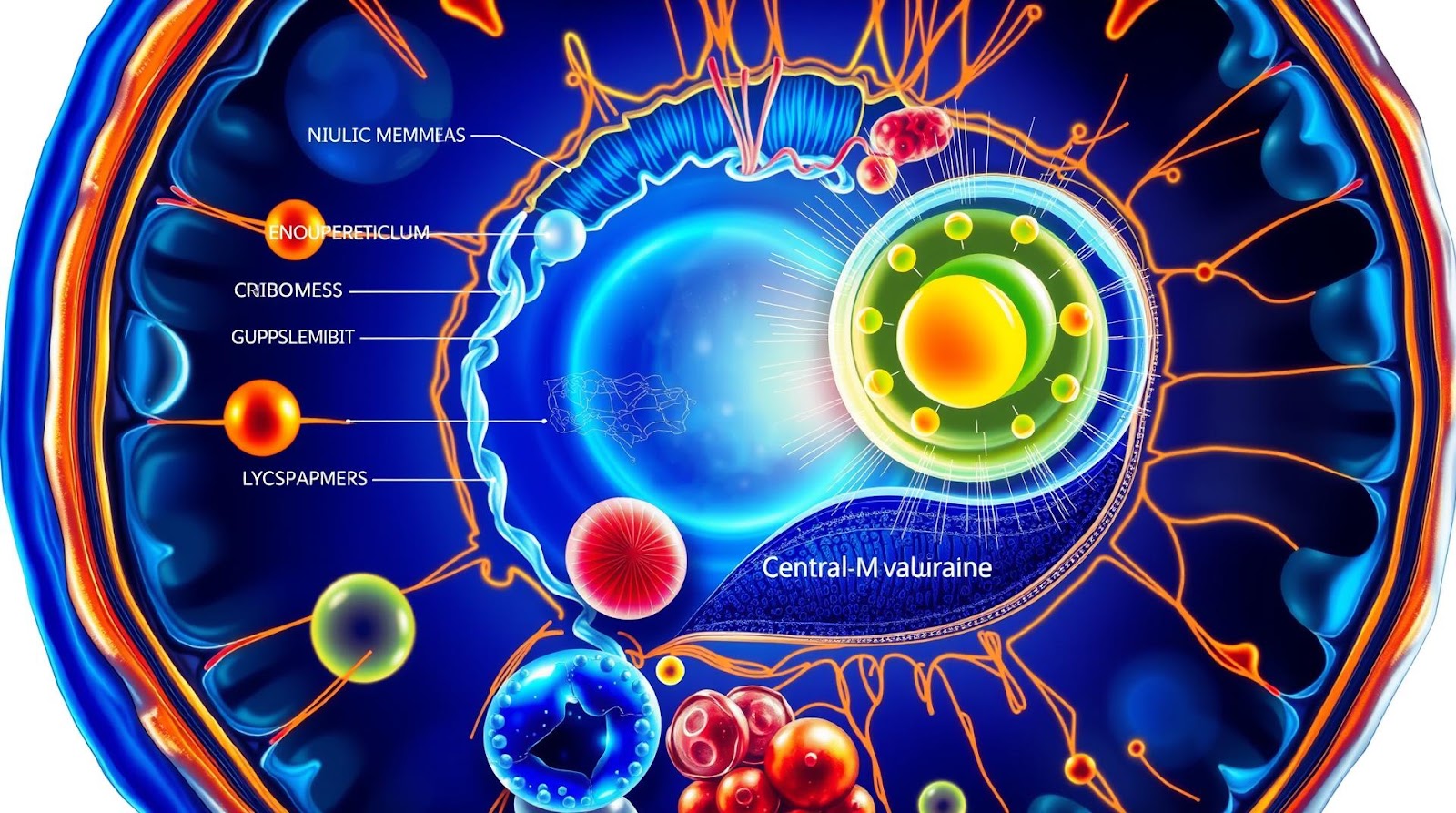
Think of a cell like a city. The nucleus is the municipal corporation office where all decisions are made. The mitochondria are the power plants. The endoplasmic reticulum is like the transport system. Once you start seeing it this way, everything clicks. And that's exactly what we're going to do in this post—make cell biology feel like second nature to you.
I remember a student, Priya from Delhi, who came to me completely panicked about biology. She said, "Sir, I have no interest in science at all." Six months later, she was scoring consistently in the 85th percentile in science sections. The difference? She stopped trying to memorize and started understanding. That's our goal today.
The Cell: Life's Basic Unit
What Makes a Cell, Well, a Cell?
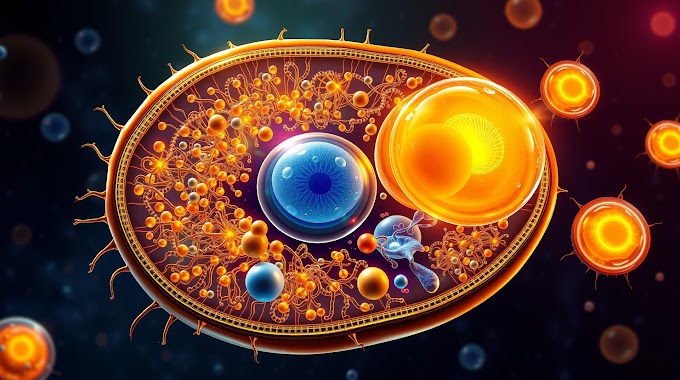
A cell is the smallest unit of life. Full stop. And here's what blows my mind every time I think about it: you have roughly 37 trillion cells in your body right now, and each one is doing its job 24/7. That's more than the number of stars in our galaxy, happening inside you.
Now, cells come in two main varieties—prokaryotic and eukaryotic. Prokaryotic cells (think bacteria) are simpler, like a small shop in your neighborhood—everything in one open space, no fancy departments. Eukaryotic cells (your cells, plant cells) are like a proper mall—organized, with dedicated stores for different functions, membrane-bound compartments everywhere.
Here's a memory trick I tell all my students: "Pro means simple, Eu means you (fancy)." Prokaryotes are simple. Eukaryotes are what "you" are made of—complex and organized.
The Cell Membrane: The Bouncer at the Club
The cell membrane is semi-permeable, which means it's selective. Not everything gets in, just like a bouncer at an exclusive club doesn't let everyone through. It's made of a phospholipid bilayer—imagine two rows of people sitting back-to-back. The "head" parts love water, the "tail" parts hate water. So they naturally arrange themselves this way.
Embedded in this membrane are proteins that act as channels, receptors, and transporters. These proteins are doing security checks, letting glucose in, keeping toxins out. It's an active, intelligent system, not just a passive barrier.
Organelles: The Departments of Your Cellular City
The Nucleus: The Command Center
The nucleus is where DNA lives. DNA is literally the instruction manual for your entire existence—how to build proteins, how to grow, how to reproduce. The nucleus is protected by a nuclear membrane (which has pores, interestingly—so it's not completely sealed off).
Inside the nucleus, you have chromatin, which is DNA wrapped around proteins. During cell division, this condenses into chromosomes. It's like when you pack your suitcase—normally your clothes are spread out in the closet, but when you're traveling, you compress them. Same principle.
Mitochondria: The Powerhouse (And Why You Need to Remember It)
Every single exam question about mitochondria seems to ask the same thing: "Which organelle is the powerhouse of the cell?" And then students answer it like it's some random fact they memorized. But here's why it actually matters: mitochondria take glucose and convert it to ATP (Adenosine Triphosphate), which is the energy currency of your cells.
Without mitochondria, you couldn't run, think, or even digest food. The brain alone uses about 20% of your body's ATP. This is why people with mitochondrial diseases are so affected—they literally don't have enough energy production happening.
Here's something cool: mitochondria have their own DNA and can reproduce independently. Scientists believe they were originally bacteria that got engulfed by early eukaryotic cells in what's called the endosymbiotic theory. Your cells are literally running on bacteria-powered engines. Wild, right?
The Endoplasmic Reticulum and Golgi Apparatus
The endoplasmic reticulum comes in two types: rough ER (with ribosomes attached, looks bumpy) and smooth ER (clean and smooth). The rough ER makes proteins. The smooth ER makes lipids and is involved in detoxification.
Think of it like a factory assembly line. The rough ER is where products are manufactured. Then these products go to the Golgi apparatus (which I call the "post office of the cell") where they're packaged, labeled, and shipped out to where they're needed.
My students always confuse which does what. Here's my memory trick: "Rough ER = Rough job (manufacturing). Golgi = Go-and-deliver (shipping)." Sounds silly, but it sticks.
Lysosomes and Vacuoles: The Cleanup Crew
Lysosomes are like the waste management department. They contain digestive enzymes that break down waste products. They're particularly important in immune cells, which use them to destroy pathogens. Vacuoles in plant cells store water, nutrients, and waste.
| Organelle | Main Function | Found In |
|---|---|---|
| Nucleus | DNA storage and regulation | Eukaryotes only |
| Mitochondria | ATP production (energy) | All eukaryotes |
| Ribosomes | Protein synthesis | All cells |
| Chloroplasts | Photosynthesis | Plant cells only |
| Lysosomes | Waste breakdown | Animal cells mainly |
| Golgi Apparatus | Packaging and shipping | Eukaryotes |
Life Processes: How Cells and Organisms Stay Alive
Metabolism: The Chemical Dance of Life
Metabolism is all the chemical reactions happening inside you right now. Right now. As you read this. It's not just about digestion—it's about every reaction your body does to stay alive.
There are two sides: catabolism (breaking things down, releasing energy) and anabolism (building things up, using energy). Your digestive system is catabolic—it breaks down pizza into glucose. Your muscles are anabolic—they build proteins. You need both in balance.
Photosynthesis vs. Respiration: The Ultimate Energy Story
Here's something that used to confuse me terribly when I was a student, so I know you might be confused too. Photosynthesis and respiration are basically opposites.
Photosynthesis happens in plant cells (in chloroplasts). Light energy + water + carbon dioxide = glucose + oxygen. Plants make their own food. This is why they're called autotrophs (auto = self, troph = nutrition).
Respiration happens in all living cells (in mitochondria). Glucose + oxygen = energy (ATP) + carbon dioxide + water. We break down food to get energy. This is why we're heterotrophs (hetero = different/other, troph = nutrition)—we need to eat.
The beautiful thing? Plants' waste (oxygen) is our food. Our waste (carbon dioxide) is their food. That's the cyclical nature of Earth's systems, and it's been this way for billions of years. This always gives me goosebumps when I explain it.
Growth and Development
Cells grow and divide. This happens through mitosis (for growth and repair) and meiosis (for making sex cells—sperm and eggs). In mitosis, one cell divides into two identical daughter cells. In meiosis, one cell divides into four non-identical sex cells, each with half the chromosomes.
This is why children look like their parents but aren't exact copies. During meiosis, chromosomes shuffle around (crossing over and independent assortment), creating genetic variation. It's like shuffling two decks of cards together—endless combinations.
Reproduction: The Drive to Continue
Organisms reproduce either asexually (one parent, genetically identical offspring—like bacteria reproducing by binary fission) or sexually (two parents, genetically diverse offspring—like humans). Each strategy has advantages. Asexual reproduction is fast but doesn't create genetic diversity. Sexual reproduction is slower but creates variation, which helps species adapt to changing environments.
Transport Mechanisms: How Stuff Gets In and Out
Things don't magically appear inside cells. They have to get across that semi-permeable membrane somehow. There are several ways this happens, and exams love asking about the differences.
Passive Transport requires no energy. Water moves by osmosis (across a partially permeable membrane to dilute concentrated solutions). Glucose moves by simple diffusion (from high concentration to low concentration). It's all about following the concentration gradient.
Active Transport requires energy (ATP). Imagine pumping water uphill against gravity—that's active transport. Cells do this to move substances against their concentration gradient. Your nerve cells use active transport to maintain the sodium-potassium balance, which is essential for nerve impulses.
Bulk Transport is for larger materials. Endocytosis is when the cell membrane wraps around something and pulls it in. Exocytosis is when vesicles burst open and release contents outside. This is how white blood cells engulf bacteria and how your neurons release neurotransmitters.
Final Quick Revision Table
| Life Process | What Happens | Where |
|---|---|---|
| Photosynthesis | Light energy → Glucose | Chloroplasts (plants) |
| Respiration | Glucose → ATP energy | Mitochondria |
| Mitosis | 1 cell → 2 identical cells | Nucleus |
| Meiosis | 1 cell → 4 sex cells (half chromosomes) | Nucleus |
| Osmosis | Water moves across membrane | Cell membrane |
You know what? Biology isn't scary. It's just really, really interesting when you stop treating it like a list of facts and start seeing it as a story—the story of how life works. Every question you'll see in your exam is just asking you to understand a different chapter of that story.
My honest advice: don't try to memorize everything. Understand the why. Understand the mechanism. Understand the logic. Do that, and the exams will feel like you're just answering questions about something you already know.
Practice Questions
A) Endoplasmic Reticulum B) Golgi Apparatus C) Mitochondria D) Ribosome
Answer: C) Mitochondria — This is where cellular respiration occurs and ATP is synthesized from glucose.
A) It becomes turgid B) It undergoes plasmolysis C) It undergoes hemolysis D) It swells and bursts
Answer: B) It undergoes plasmolysis — Water leaves the cell due to osmosis in a hypertonic solution, causing the cytoplasm to shrink away from the cell wall.
A) Ribosome B) Mitochondria C) Golgi Apparatus D) Nucleus
Answer: C) Golgi Apparatus — It modifies, packages, and ships proteins that are synthesized by the rough endoplasmic reticulum.
A) They are independent processes in different plants B) Light reactions produce ATP and NADPH used in Calvin cycle C) Calvin cycle produces glucose which is used in light reactions D) They occur at the same time in the same location
Answer: B) Light reactions produce ATP and NADPH used in Calvin cycle — The light reactions (thylakoid) generate energy carriers used by the Calvin cycle (stroma) to fix carbon dioxide.
A) Mitosis B) Binary Fission C) Meiosis D) Amitosis
Answer: C) Meiosis — Meiosis involves two divisions and produces four haploid (half-chromosome) gametes, unlike mitosis which produces two identical diploid cells.
Published by Dattatray Dagale • 09 July 2026
.jpg)
.png)



.png)



.png)
0 Comments