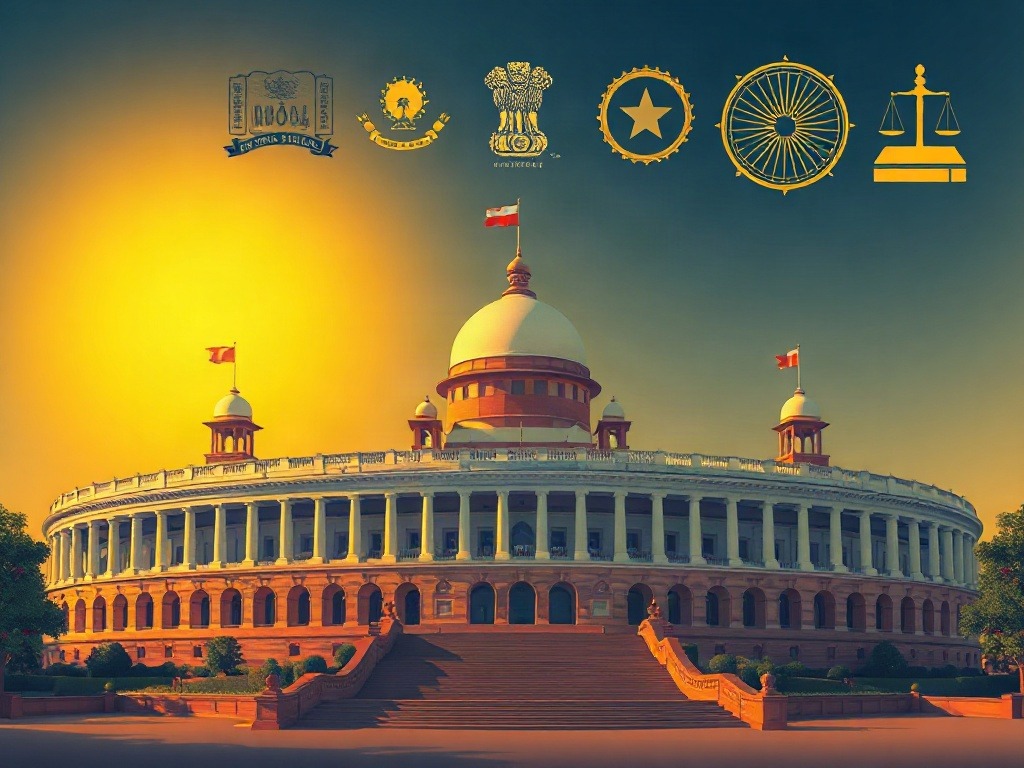
Why This Topic Matters More Than You Think
Listen, I've been teaching this chapter for over a decade, and I can tell you with absolute certainty—this is where most students stumble. Not because the topic is inherently difficult, but because we often treat the President and Governor like distant, ceremonial figures we see in photographs. We think "okay, they cut ribbons, sign bills, and that's it."
But here's what I've learned: understanding the President and Governor is actually understanding how India's constitutional machinery really works. It's the difference between knowing the rules of cricket and understanding why MS Dhoni made certain strategic decisions. The powers these offices hold, the checks and balances, the fine print in our Constitution—this is what separates a candidate who scores 45 marks in polity from one who scores 85.
And trust me, the examiner loves testing this. Every UPSC mains paper, every SSC CGL set, there's always that one tricky question about when the President can act on their own versus when they need ministerial advice. So let's break this down properly, the way I do it in my classroom.
The President: More Than Just a Ceremonial Head
Who Is the President, Really?
The President is the constitutional head of the Indian state. Article 52 of our Constitution says so. Now, you'll often hear people call this position "ceremonial," and technically, they're right in the sense that most powers are exercised on the advice of the Council of Ministers. But—and this is a big but—the President isn't powerless. Far from it.
Think of it this way: the President is like the ultimate authority figure in the classroom. The teacher (Prime Minister) runs day-to-day classes (day-to-day governance), but the Principal (President) can step in if something goes seriously wrong. The Principal's signature makes the degree valid, not just the teacher's.
Let me give you a personal example from my teaching experience. A student once asked me, "Sir, if the President's powers are ceremonial, why does the Constitution even mention them?" Brilliant question! The answer is: the President's powers become very real in times of crisis. Look at the President's role during emergency situations, or when governments fall.
Powers of the President: The Complete Picture
Executive Powers: The President appoints the Prime Minister (though in practice, it's the person with majority support in Lok Sabha). The President appoints the Council of Ministers, judges, governors, ambassadors, and the Election Commission. But here's the catch—all these are done on the advice of the PM and cabinet. The President can't just wake up and decide to remove the PM without following constitutional procedure.
Legislative Powers: This is where it gets interesting. The President summons, prorogues (adjourns), and dissolves Parliament. The President must give consent to bills for them to become law. Theoretically, the President could refuse assent, but this rarely happens because ministers advise against it. Here's a mnemonic I tell students: "SPADE"—Summon, Prorogues, Appoints, Dissolves, Enacts (laws)." Remember SPADE, and you've got the President's main legislative role.
Judicial Powers: The President has the power to grant pardons, reprieves, respites, or remissions of punishment. This is absolutely crucial! I've seen so many students miss questions about this. The President can reduce a sentence or even pardon someone. This power comes under Article 72.
Discretionary Powers: Now here's where it gets complex. In some situations, the President can act without ministerial advice. This happens during emergencies or in rare constitutional crises. For instance, if there's a breakdown in constitutional machinery (Article 356), the President can impose President's Rule on a state.
The Governor: The President's Representative in the States
Understanding the Governor's Constitutional Role
Here's something I tell students on day one: the Governor is to the state what the President is to the nation. The Governor is the constitutional head of the state, appointed by the President (Article 155). The Governor holds office for five years, like the President.
Now, the relationship between President and Governor is hierarchical. The President appoints the Governor, and technically, the Governor reports to the President. But in practice, the Governor answers to the state's Council of Ministers, just as the President answers to the national Council of Ministers. This dual structure is where many students get confused.
I once had a student ask: "Sir, if the President appoints the Governor, can the President remove them anytime?" Good question! The answer is: not arbitrarily. The Governor serves a fixed term and can only be removed through a formal process, though the President can request their resignation.
Governor's Powers and Functions
Executive Powers: The Governor appoints the Chief Minister (the person with majority in state assembly), appoints state cabinet ministers, judges of the High Court, and other state officials. Like the President, these powers are exercised on ministerial advice.
Legislative Powers: The Governor summons, prorogues, and dissolves the state assembly. The Governor gives assent to state bills. The Governor can also reserve certain bills for the President's consideration—this is called "withholding assent" and is a real power that gets tested often in exams.
Judicial Powers: Like the President, the Governor can grant pardons and reduce sentences under Article 161.
Special Powers: Here's where the Governor gets unique powers not given to the President. The Governor can issue ordinances when the state assembly is not in session (Article 213). This is a powerful tool, though it has been misused historically.
Let me share a teaching trick I use: "CLAIM"—Chief Minister appointment, Legislative functions, Article 356 powers, Issuing ordinances, Ministerial advice." This helps students remember the Governor's key functions.
| Power/Function | President | Governor |
|---|---|---|
| Constitutional Head | National Level | State Level |
| Appoints Executive | PM | CM |
| Pardoning Power | Article 72 | Article 161 |
| Emergency Powers | Articles 352-360 | Article 356 (President's Rule) |
| Issue Ordinances | No | Yes (Article 213) |
| Dissolve Legislature | Parliament (Lok Sabha) | State Assembly |
The Discretionary Powers: When They Act Without Advice
When Can the President and Governor Act Independently?
Now, this is the part where even good students make mistakes. I see it in every batch—students assume the President and Governor always need ministerial advice. They don't. There are specific situations where they can exercise discretion.
President's Discretionary Powers:
- Appointing a PM when there's no clear majority (this is discretionary judgment)
- Dismissing the PM or cabinet on constitutional grounds
- Declaring national emergencies (Article 352)
- Acting during a constitutional breakdown
Governor's Discretionary Powers:
- Appointing a CM when there's no clear majority (similar to President's role)
- Imposing President's Rule under Article 356
- Reserving bills for presidential assent
- Determining whether the CM has lost the confidence of the assembly
Here's something critical: the Supreme Court has held that even discretionary powers must be exercised reasonably and constitutionally. The President or Governor can't just act whimsically. This came up prominently in the S.R. Bommai v. Union of India case (1994), where the Court limited the President's power to dismiss state governments arbitrarily.
Practical Scenarios: Where This Matters
Let me give you real scenarios I've used in class to help students understand when these powers actually come into play.
Scenario 1: No Clear Majority in Lok Sabha After the 2019 elections, the BJP had a comfortable majority, but imagine if no party had 272 seats. The President would use discretion to invite the single largest party to form a government. The President essentially picks who gets to be PM first, hoping they can prove majority on the floor.
Scenario 2: A State Government Collapses Say in State X, the ruling party loses majority and the opposition claims numbers. The Governor can:
- Ask the CM to prove majority in the assembly
- If the CM can't, ask the opposition to form government
- If no one can form government, impose President's Rule (Article 356)
Scenario 3: Pardon Power in Action A death sentence convict applies to the President for mercy. The President can decide to grant pardon, reduce sentence, or reject the plea. This is absolute discretionary power. Once the President decides, it's final—the courts can't override it. This is why the Nirbhaya case and similar high-profile cases spend months in the President's office.
I always tell students: discretion doesn't mean unlimited power. It means the ability to choose between different constitutional options when the situation is ambiguous.
Common Exam Traps and How to Avoid Them
After years of marking answer sheets and reviewing exam papers, I can tell you exactly where students lose marks:
Trap 1: Thinking the President has no real power. Many students write "the President is purely ceremonial" and lose marks. The President has real powers, especially discretionary ones. The correct answer is: "The President exercises powers on ministerial advice, but has discretionary powers in constitutional crises."
Trap 2: Confusing President's Rule with President's Powers. President's Rule (Article 356) is when the President takes over state administration. The President's pardoning power (Article 72) is different. Don't mix these up!
Trap 3: Overlooking the Governor's ordinance power. Many students don't realize governors can issue ordinances. This is tested in almost every exam. Remember: President cannot issue ordinances; Governor can (Article 213).
Trap 4: Missing the constitutional amendments that modified these powers. The 91st and 101st Constitutional Amendments, which changed the way state governments work, are often tested. Know that President's Rule can't last more than 6 months without presidential proclamation.
My advice? Read the actual Constitutional articles—just the headings and opening lines. Article 52 (President), Article 155 (Governor), Article 163 (Governor's Council of Ministers), Article 213 (Ordinances). These are your foundation stones.
In closing, I want you to see the President and Governor not as distant ceremonial figures, but as constitutional anchors. They're there to protect the system when things go wrong. Understanding their powers—both real and theoretical—is understanding how India's democracy is designed to survive challenges. And that, my friend, is what makes this topic absolutely worth mastering.
Practice Questions: Test Your Understanding
A) Declaring national emergency B) Appointing judges to Supreme Court C) Issuing ordinances D) Removing the Prime Minister arbitrarily
Answer: A) Declaring national emergency. Article 352 gives the President discretionary power to declare emergency, though in practice, the cabinet must later approve it. The President cannot issue ordinances (that's the Governor's power), cannot arbitrarily remove PM, and appoints judges on advice.
A) Granting pardons B) Issuing ordinances C) Dissolving the legislature D) Appointing the executive head
Answer: B) Issuing ordinances. Article 213 allows the Governor to issue ordinances when the state assembly is not in session. The President has no such power at the national level.
A) Article 352 B) Article 356 C) Article 360 D) Article 365
Answer: B) Article 356. This article allows the President to assume state functions when there's a constitutional breakdown. Article 352 is for national emergency, Article 360 for financial emergency, and Article 365 for ensuring compliance with Union laws.
A) President must consult the courts B) President has absolute discretion C) President must follow judicial recommendations D) President can only grant pardons, not commute sentences
Answer: B) President has absolute discretion. Article 72 grants the President absolute power to grant pardons, reprieve, respite, or remission of punishment. Courts cannot review this decision, making it one of the President's most powerful absolute rights.
A) The President can dismiss state governments at will B) The President's power under Article 356 is unlimited C) The President's discretionary powers must be exercised reasonably and constitutionally D) States have no protection against President's Rule
Answer: C) The President's discretionary powers must be exercised reasonably and constitutionally. This landmark judgment limited arbitrary use of Article 356 and established that even discretionary powers are subject to constitutional scrutiny and judicial review.
Published by Dattatray Dagale • 22 August 2026
.jpg)
.png)


.png)




.png)
0 Comments