Introduction
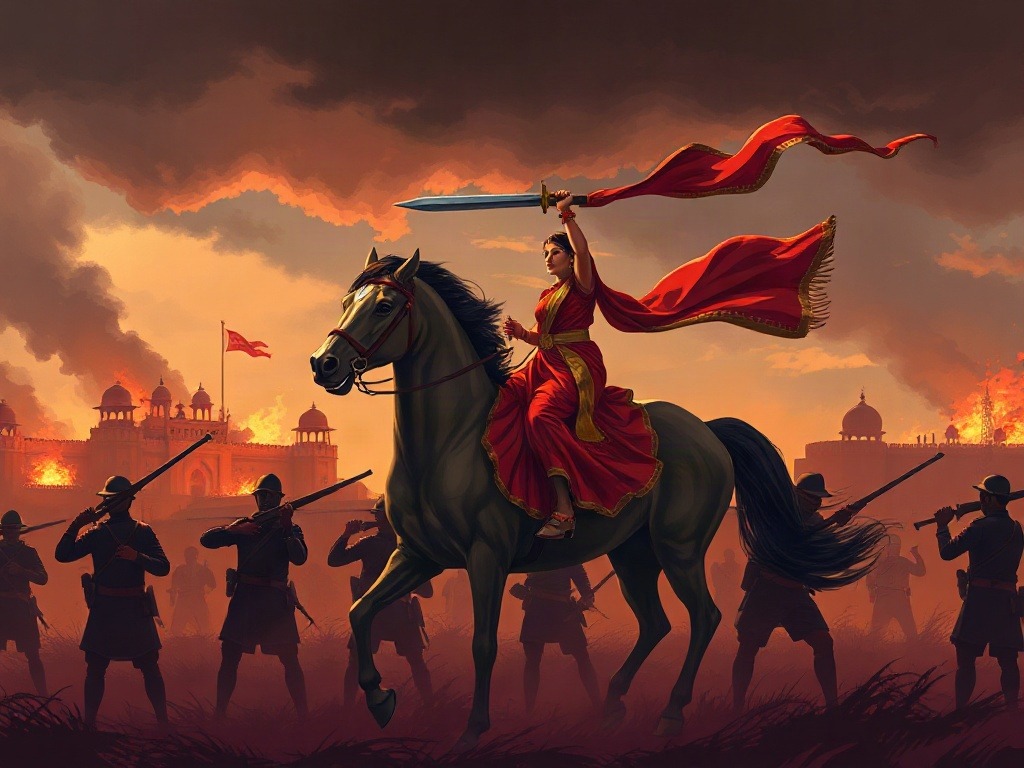
Let me start with something I ask every batch of mine on day one: "Why do we celebrate 15th August, not some other date?" Nine out of ten students mumble something about independence, but here's what most miss — that independence didn't just happen on one magical morning in 1947. It was born in the smoke and fire of 1857, a revolt so massive that the British Empire nearly lost India that year itself.
I've been teaching this topic for over a decade, and I can tell you honestly — 1857 is not just a chapter for your exam. It's the story of why India woke up. It's the moment when ordinary Indians, from farmers to soldiers to queens, decided they'd had enough. And if you understand 1857 properly, everything that comes after — Gandhi, Nehru, the entire freedom struggle — suddenly makes sense.
So grab your chai, settle in, and let's travel back to that pivotal year when a sepoy named Mangal Pandey pulled a trigger that changed the course of history.
What Led to the Powder Keg of 1857?
You know how sometimes a small incident causes a huge argument because frustration has been building for months? That's exactly what 1857 was. The Revolt didn't happen in a vacuum — there were decades of resentment, economic exploitation, and cultural humiliation brewing underneath.
The Economic Squeeze That Broke the Camel's Back
Here's what people don't often realize: the British didn't just conquer India politically. They systematically destroyed its economy. Between 1757 (Battle of Plassey) and 1857, India's share of global GDP collapsed from around 23% to less than 4%. Let me put that in perspective — imagine if India's economy today suddenly dropped to one-sixth of its size. That's the trauma Indians were living through.
The East India Company imposed heavy taxes on Indian goods, ruined our textile industry (which was world-famous, by the way), and drained wealth ruthlessly. The famous wealth transfers — things like the Kohinoor diamond or art treasures — that's just the flashy part. The real damage was in everyday economics. Indian farmers were forced to grow indigo and opium for British profit instead of crops they could eat. Famine became common. By 1850s, rural India was economically devastated.
I always tell my students: follow the money, and you'll understand any historical event. The 1857 Revolt was fundamentally about Indians saying, "We're starving while you're stealing our wealth."
Cultural Insult Meeting Military Grievance
Now here's where it gets interesting. The British weren't just exploiting India economically — they were also dismissive and insulting towards Indian culture. The Company's policies felt like a deliberate attack on Indian traditions. You had to be careful about caste, religion, food, everything.
Then came the immediate trigger: the rifle cartridges. In 1856, the British introduced new Enfield rifles, and the cartridges were said to be greased with cow and pig fat. For Hindu sepoys, touching cow fat was polluting. For Muslim sepoys, pig fat was haram. The British said "rumor," but by then, trust was already gone. A sepoy named Mangal Pandey refused to use these cartridges in March 1857 and was hanged. That execution? It was the spark.
The Revolt Itself: How It Unfolded
What amazes me most about 1857 is its spontaneity. This wasn't a carefully planned coup by educated revolutionaries with a manifesto (that came later with the freedom struggle). This was raw, widespread, people's rebellion. Let me walk you through how it happened.
From Meerut to a National Uprising
May 10, 1857. Meerut cantonment, near Delhi. Sepoys mutinied, killed their British officers, and marched towards Delhi. By the time they reached Delhi, local residents joined them. Within weeks, the rebellion had spread to almost the entire Gangetic plain — Kanpur, Lucknow, Jhansi, everywhere. What's crucial to understand is that this wasn't just military personnel rebelling. Peasants joined. Zamindars (landowners) joined. Even some princely rulers who'd lost their kingdoms to the British joined. It was genuinely a people's revolt.
The British were caught completely off-guard. For several months, it looked like they might actually lose India. Their armies were scattered, and reinforcements were far away in England. In places like Lucknow and Kanpur, the British were besieged. There were moments when the Company's rule seemed genuinely finished.
But here's the tragic part — and I want you to really absorb this — the revolt had no unified leadership. There was no grand strategy. Different regions fought separately. The rebels proclaimed Bahadur Shah Zafar (the last Mughal emperor) as their leader, but he was old and not really in control. This lack of coordination would ultimately be their undoing.
Key Centers of Resistance
Let me give you the main theaters of revolt, because examiners love asking about specific regions:
Kanpur (Cawnpore): Nana Sahib, an adopted son of the last Peshwa, led a fierce revolt here. The Siege of Kanpur lasted weeks and was extremely brutal on both sides. When the British retook Kanpur, they hanged everyone involved.
Lucknow: This became the symbol of resistance. Rani Lakshmi Bai wasn't directly involved here (she was fighting in Jhansi), but the Lucknow rebellion lasted months and required massive British reinforcements to crush.
Jhansi: And now, let me tell you about Rani Lakshmi Bai, because she deserves her own moment. When the British tried to annex Jhansi under the Doctrine of Lapse (we'll get to that), this 28-year-old widow took up arms. She fought with extraordinary skill and courage. The fact that she died fighting, refusing to surrender, made her immortal in Indian memory. "Kitni bahadur thi voh" — how brave she was — is what mothers tell their daughters even today.
Here's a memory trick I give my students: **"NAN-LU-JI"** — **N**ana Sahib at K**AN**pur, **LU**cknow's resistance, and **JI**hansi under Lakshmi Bai. These three are always in exam questions.
| Center of Revolt | Key Leader | Notable Outcome |
|---|---|---|
| Kanpur | Nana Sahib | Fierce resistance; British retaliation was severe |
| Lucknow | Begum Hazrat Mahal | Long siege; symbol of defiance |
| Jhansi | Rani Lakshmi Bai | Heroic resistance; died fighting in 1858 |
| Delhi | Bahadur Shah Zafar | Proclaimed emperor; later exiled |
| Awadh (Oudh) | Various local leaders | Peasant uprising; widespread participation |
Why the Revolt Failed (And This Is Important)
By 1858, it was over. The British brought in reinforcements, appointed strong commanders like Henry Havelock and Colin Campbell, and methodically crushed the rebellion. The last major resistance ended when Rani Lakshmi Bai fell in June 1858 near Gwalior. By September, it was officially declared suppressed.
Now, why did such a massive, widespread uprising fail? This is crucial for your exam, and also for understanding Indian history. Let me break it down:
No Unity: Different regions fought separately. There was no coordinated military strategy. The rebels couldn't even decide who should lead them beyond the symbolic Bahadur Shah Zafar.
Social Divisions: Not everyone joined. Sikhs didn't support (they'd fought against the Mughals before), and neither did some southern regions. The British were clever — they used loyal troops from regions that didn't rebel.
Technology and Resources: Let's be honest — the British had superior guns, better organization, and unlimited resources from their global empire. Indians had courage and fury, but not enough arms and ammunition.
No Clear Vision: The revolt was reactive, not proactive. They wanted to kick out the British, but what would come after? This question was never answered convincingly.
But here's what I always emphasize to my students: failure doesn't mean insignificance. The 1857 Revolt failed militarily, but it succeeded historically. It proved that Indians could fight back. It changed the British approach forever. And it planted the seed for what would become organized, political independence movements.
The Aftermath: How 1857 Changed Everything
When the dust settled in 1858, three massive changes happened:
The End of Company Rule: The British Crown directly took over India. The East India Company's monopoly was finished. Queen Victoria became the Empress of India (in 1876). This sounds like a small administrative change, but it meant direct British government control — which was even stricter in some ways.
Massive Reprisals and Reorganization: The British responded with brutal punishment. Thousands were executed. Villages were burned. But they also completely reorganized the army — reducing Indian soldiers and bringing in more British troops. The Indian Civil Service was reformed too.
A New Indian Consciousness: Here's the really important part that gets less attention. Even though the revolt failed, it created something the British hadn't planned for: an India that knew it could resist. Educated Indians started thinking politically. Within a few decades, the Indian National Congress was formed (1885). The organized freedom struggle we know about — with Gandhi, Nehru, and Ambedkar — that wouldn't exist without the memory and inspiration of 1857.
You could say 1857 was the Indian people's first political statement to the world: "We will not accept this forever."
The Bridge Between Two Worlds
Think of 1857 as a bridge. On one side was the old India — mughal memories, scattered resistance, no unified vision. On the other side was modern India — nationalist consciousness, organized movements, a vision for the future. The 1857 Revolt is that bridge.
For your exam, here's what you must remember: 1857 wasn't the beginning of resistance (resistance existed before), and it wasn't the end (more came after). But it was the turning point. It was when India collectively said "no" for the first time.
Quick Revision Checklist
Before we wrap up, let me give you a memory aid. I call it the **"CAUSES-REVOLT-EFFECT"** framework:
CAUSES: Economic drain, cultural insult, military discontent, cartridge incident
REVOLT: Meerut (May 1857), spread rapidly, multiple centers (Kanpur, Lucknow, Jhansi, Delhi)
EFFECT: Failed militarily, British rule strengthened, Indian consciousness awakened
Here's another one my students love: **"JHANSI KI LAXMI"** — this is the famous phrase, but for exam purposes, just remember that Jhansi's Lakshmi Bai represents the courage and sacrifice of 1857.
---A) The Doctrine of Lapse B) The cartridge greased with cow and pig fat C) Heavy taxation on peasants D) The execution of Tipu Sultan
Answer: B) The cartridge greased with cow and pig fat — though it combined with other grievances, this was the immediate spark.
A) Tipu Sultan B) Nana Sahib C) Bahadur Shah Zafar D) Rani Lakshmi Bai
Answer: C) Bahadur Shah Zafar, the last Mughal emperor, was made the symbolic head of the rebellion.
A) Lucknow B) Kanpur C) Madras D) Jhansi
Answer: C) Madras — the rebellion was concentrated in northern and central India. South India remained largely under control.
A) Lack of support from peasants B) Absence of unified leadership and coordination C) Agreement with British rulers D) Religious opposition
Answer: B) Absence of unified leadership and coordination — different regions fought separately without a common strategy.
A) More power given to the East India Company B) Direct British Crown rule over India C) Indian independence D) Formation of the Indian National Congress
Answer: B) Direct British Crown rule over India — the Crown took over from the East India Company in 1858.
Published by Dattatray Dagale • 11 September 2026
.jpg)
.png)



.png)



.png)

0 Comments