Introduction
Let me start with a confession. When I first taught chemistry, I made the biggest mistake possible — I treated elements and compounds like abstract concepts that existed only in textbooks. My students would nod politely during the lecture and then stare at me blankly when I asked a follow-up question. That's when I realized something important: chemistry isn't abstract at all. It's happening right now. In your breakfast. In the air you're breathing. In the phone you're holding.
Today, I want to change how you think about elements and compounds forever. This isn't about memorizing definitions — this is about understanding the building blocks of literally everything around you. And here's the beautiful part: once you get this right, so many chemistry concepts just fall into place like dominoes.
Elements: The Irreducible Champions
You know what an element really is? It's a substance that cannot be broken down into simpler substances by chemical means. That's it. That's the whole definition, but let me make it stick in your brain with something more useful.
Think of elements like the individual players on an Indian cricket team. You've got your openers, your middle order, your bowlers — each one is a distinct player who cannot be divided into two different players. Similarly, oxygen is oxygen. You can't break it down into something smaller and still call it oxygen. Once you do, it stops being oxygen.
Why Can't We Break Down Elements?
Here's where atoms come in. Every element is made of identical atoms. All the gold in the world — whether it's in a wedding ring or buried deep underground — is made of gold atoms. These atoms are the fundamental units of that element. Now, can we break an atom further? Sure, if you're a particle physicist with a massive machine, but chemically speaking, that's not happening. And for your SSC CGL and UPSC exams, chemistry is what matters.
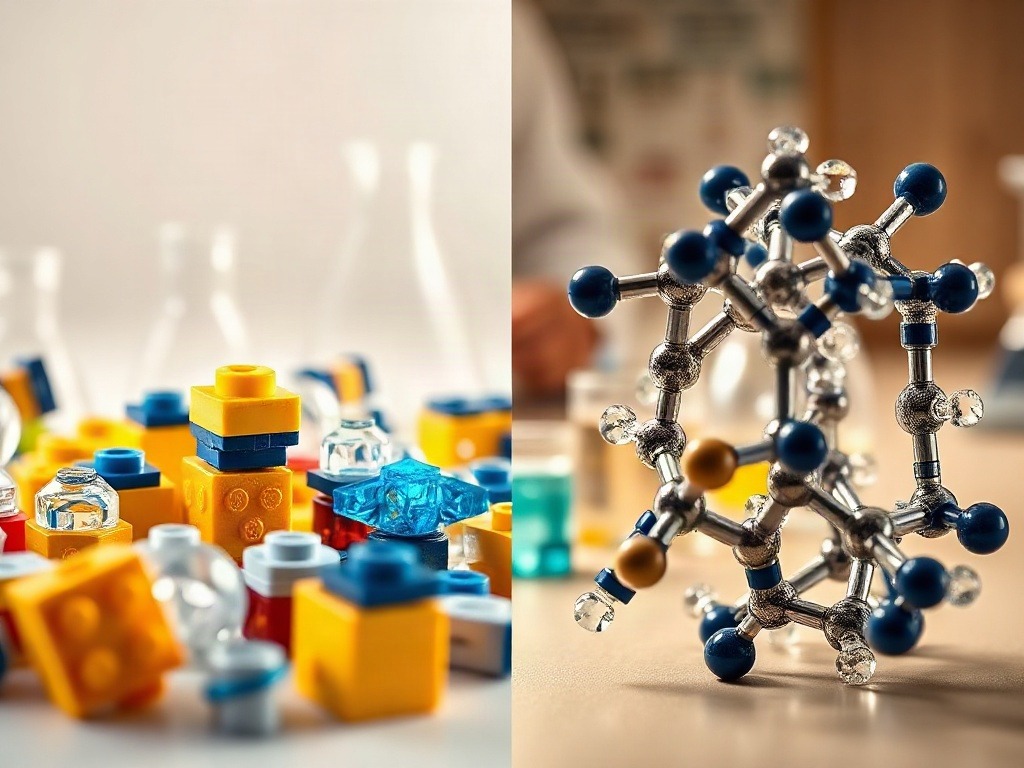
I tell my students this every year: imagine an element is like a LEGO brick of a specific color. You can't split that brick into smaller bricks of a different color. It stays the same color, the same shape. That's what chemical means here.
Types of Elements You Need to Know
Now, here's where it gets interesting. Elements are divided into three main types:
Metals: These are the show-offs of the periodic table. They shine, they conduct electricity, they conduct heat beautifully. Iron, copper, gold, aluminum — all the ones that make us go "wow, that's shiny." They're usually solid at room temperature (except mercury, which is the rebellious one).
Non-metals: These are the introverts. They don't conduct electricity well, they're dull, they don't have that metallic shine. Oxygen, nitrogen, sulfur, carbon — these are your non-metals. Most of them are gases at room temperature, some are solids.
Metalloids: These are the ambiverts of chemistry. Silicon and arsenic are examples. They have properties of both metals and non-metals. They're important for semiconductors and modern electronics, but honestly? For your exams, they don't get as many questions.
Let me give you a trick I've used with thousands of students: remember **"NONCOMS"** — Nitrogen, Oxygen, Nonmetals, Carbon, Oxygen, Metals, Sulfur. Actually, that doesn't work. Let me think... honestly, just remember that metals are approximately 80% of the periodic table. There are way more metals than non-metals. That's the only trick you need.
Compounds: When Elements Decide to Team Up
Now we're getting to the good stuff. A compound is a pure substance made of two or more elements chemically bonded together in a fixed ratio. This is where chemistry gets exciting because compounds are everywhere.
Think back to my cricket analogy. If elements are individual players, compounds are when you put two players together strategically. When Virat Kohli (element 1) partners with Rohit Sharma (element 2) for a batting partnership, something new emerges. Their combined strength creates something different from either of them alone. That's a compound.
Here's the critical part that confuses many students: a compound is not a mixture. When you mix salt and sugar, that's a mixture. You can separate them again relatively easily. But when sodium and chlorine chemically bond to form sodium chloride (table salt), they create a completely new substance with completely new properties. You cannot separate them with a spoon or even by dissolving in water. You need strong chemical reactions to break them apart.
The Fixed Ratio Thing — Why It Matters
Every compound has a specific, fixed ratio of elements. Water is always H₂O — two hydrogen atoms, one oxygen atom. Always. If you somehow create H₃O or H₁O, that's not water anymore. It's something else entirely.
Let me tell you why this matters for your exam. Sometimes you'll get questions like "Which of the following is a compound?" and one option might be "brass" (which is a mixture of copper and zinc). Because brass doesn't have a fixed ratio — you can make brass with different proportions of copper and zinc — it's not a compound. It's a mixture.
Here's my memory trick: **Fixed Ratio = Real Compound**. Just remember this rhyme. If you can vary the proportion and it's still called the same thing, it's a mixture. If changing the proportion changes what it is entirely, it's a compound.
Types of Compounds: Ionic and Covalent
Compounds are primarily formed through two types of bonding:
Ionic Compounds: These form when an electron is completely transferred from one atom to another. Think of it like a donation — atom A says "Here, take my electron" and atom B says "Thanks!" This usually happens between metals and non-metals. Sodium chloride (NaCl) is the classic example. Sodium donates an electron to chlorine, and boom — you have an ionic compound. These compounds are usually solid at room temperature, they conduct electricity when dissolved in water, and they often have high melting points.
Covalent Compounds: These form when atoms share electrons. It's more like a partnership than a donation. Non-metals usually form covalent bonds with each other. Water (H₂O) is covalent — the oxygen and hydrogen share electrons. These compounds are often gases or liquids at room temperature, they don't conduct electricity well, and they generally have lower melting points than ionic compounds.
This distinction is gold for your exams. You'll often see questions asking about properties, and if you know the type of bonding, you can predict the properties. Solid at room temperature and conducts when molten? Probably ionic. Gas or liquid and doesn't conduct? Probably covalent.
The Differences That Will Actually Help You in Exams
Let me be direct. The main difference between elements and compounds comes down to three things:
First, composition: Elements have only one type of atom. Compounds have two or more types of atoms. Oxygen gas (O₂) is an element — all oxygen atoms. Water (H₂O) is a compound — hydrogen and oxygen atoms together.
Second, properties: The properties of a compound are completely different from the elements that make it. This blows students' minds every single time. Sodium is a metal so reactive it explodes in water. Chlorine is a toxic gas. But put them together? You get table salt. A white crystalline solid that's safe to eat (in moderate amounts, obviously). The compound is nothing like either of its components. That's mind-bending, right?
Third, separation: You can't break down an element chemically. You can break down a compound — but you need a chemical reaction to do it. Electrolysis can break water into hydrogen and oxygen. Heat can break down many compounds. But simple physical methods? Nope.
| Property | Element | Compound |
|---|---|---|
| Number of types of atoms | One | Two or more |
| Can be broken down chemically? | No | Yes |
| Properties similar to components? | N/A | No (completely different) |
| Fixed composition? | Yes (single element) | Yes (fixed ratio) |
| Example | Iron (Fe), Oxygen (O₂) | Iron oxide (Fe₂O₃), Water (H₂O) |
Real-Life Applications That Make This Stick
You want to know why understanding this matters beyond the exam hall? Because the entire world is built on this distinction.
Pure iron is an element. But pure iron rusts easily because it reacts with oxygen to form iron oxide (a compound). That's why we make steel — a mixture of iron and carbon and other elements that has different properties. Builders understand this instinctively, but it all comes down to elements and compounds.
Or think about your phone's screen. It's made of silicon dioxide (SiO₂) — a compound made of silicon and oxygen. Silicon alone (the element) wouldn't have those optical properties. But the compound? It's transparent, strong, and perfect for screens.
Sugar is a compound (C₁₂H₂₂O₁₁). If you break it down (say, by burning it), you get carbon (an element). That black residue on burnt sugar? That's carbon. The compound broke down into its components.
This is why your chemistry teacher (me!) gets so excited about this topic. It's not just theory. It's the foundation of understanding literally every substance on Earth.
Quick Recap Before Your Exams
Here's what you absolutely must remember: Elements are pure substances made of only one type of atom. They cannot be broken down chemically. There are 118 known elements, most of them are metals. Compounds are pure substances made of two or more elements chemically bonded in a fixed ratio. They have completely different properties from their component elements, and they can be broken down through chemical reactions.
When you see an exam question, ask yourself: "Is this a single type of atom, or multiple types bonded together?" That single question will answer about 90% of elements vs. compounds questions.
One last thing I always tell my students: don't just memorize this. Understand it. Go look at the salt in your kitchen. That's sodium chloride — a compound made from sodium (a metal) and chlorine (a toxic gas). Mind-blowing, right? That's how you make chemistry stick.
Practice Questions to Test Your Understanding
A) Water (H₂O) B) Table salt (NaCl) C) Oxygen gas (O₂) D) Sugar (C₁₂H₂₂O₁₁)
Answer: C) Oxygen gas (O₂) — This is an element, not a compound, because it contains only one type of atom (oxygen).
A) Because it's too hard B) Because it's an element made of identical atoms C) Because it's protected by rust D) Because it conducts electricity
Answer: B) Because it's an element made of identical atoms — Elements cannot be broken down chemically because they're already in their simplest form.
A) Metals are always safer than non-metals B) Compounds have properties completely different from their component elements C) Ionic compounds are always edible D) Chemical reactions remove toxicity
Answer: B) Compounds have properties completely different from their component elements — This is the most fundamental principle about compounds.
A) Elements are solid, compounds are liquid B) Elements can be broken down chemically, compounds cannot C) Compounds can be broken down chemically, elements cannot D) Elements are always metals, compounds are always non-metals
Answer: C) Compounds can be broken down chemically, elements cannot — This is the core difference between them.
A) Because it's a metal B) Because it contains more than two elements C) Because it doesn't have a fixed ratio of components D) Because it can conduct electricity
Answer: C) Because it doesn't have a fixed ratio of components — Compounds must have a fixed, definite ratio. Mixtures like brass can vary.
Published by Dattatray Dagale • 20 October 2026












0 Comments