Introduction
You know what's funny? When I first started teaching, I used to dread the Five Year Plans chapter. Honestly. I'd think, "How am I supposed to make 1950s economic policy exciting to teenagers?" Then one day, a student asked me: "Sir, why did India need all these plans anyway?" And that question changed everything for me.
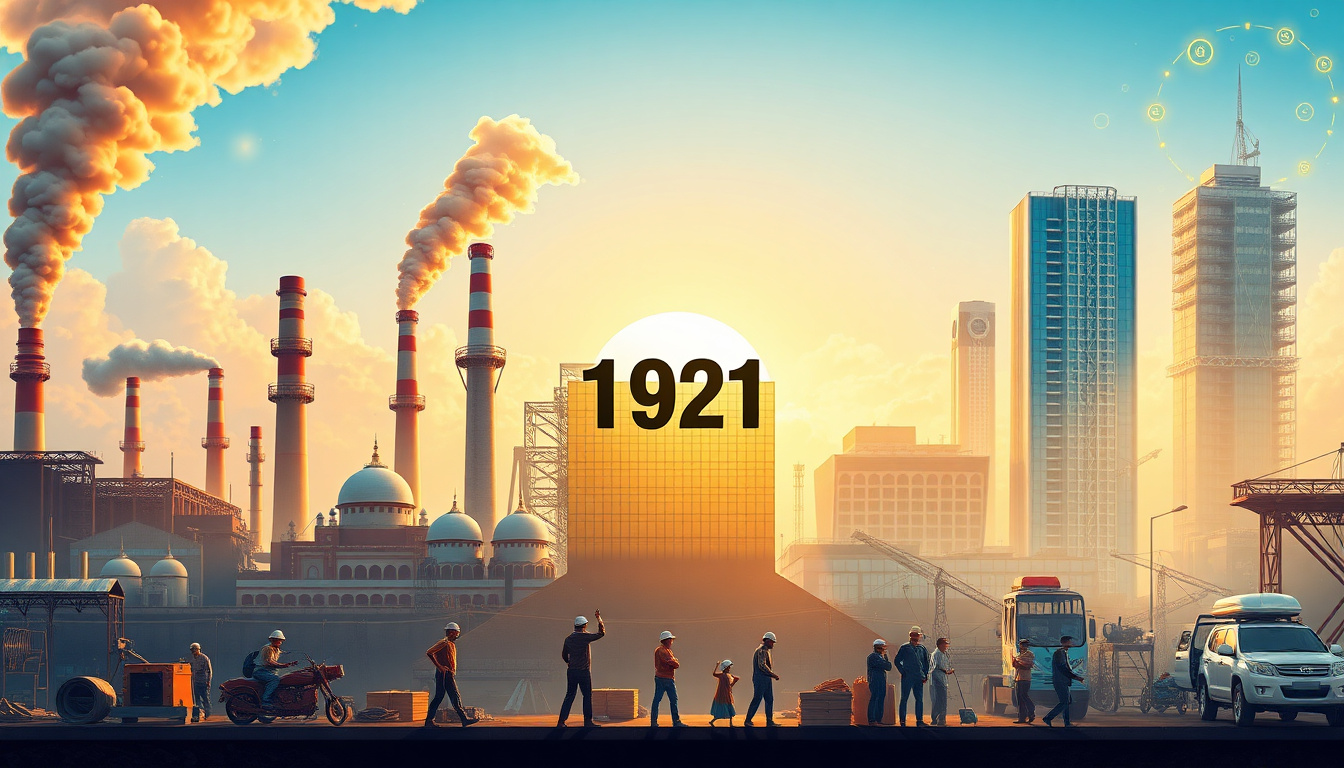
Here's the thing — Five Year Plans weren't just boring government documents. They were India's way of saying, "We're free now, we're building from scratch, and we're going to do this systematically." Imagine inheriting a house that's been neglected for 200 years, and you have limited resources. You can't fix everything at once, right? You plan: first the foundation, then the walls, then the roof. That's essentially what India did after Independence.
Today, as we discuss Five Year Plans and economic reforms, we're not just memorising dates and statistics. We're understanding how a newly independent, poor, largely illiterate nation transformed itself into a trillion-dollar economy. And more importantly, for your SSC CGL and UPSC exams, we're learning the logic behind these policies so you can answer any variation of questions they throw at you.
The Five Year Plans: India's Blueprint for Nation-Building
Why Did India Even Need Five Year Plans?
Let me set the stage: It's August 15, 1947. India just got freedom. But we're walking into a disaster — 90% illiteracy, zero industrial base, mass poverty, communal tensions, and about 350 million hungry people. Dr. B.R. Ambedkar and Pandit Jawaharlal Nehru had a massive challenge ahead.
Now, Nehru was influenced by Soviet Russia's model of planned economy. He believed that a free market alone wouldn't solve India's problems fast enough. So between 1950 and 1990, India launched 12 Five Year Plans (plus some interim plans). Each plan had specific targets for agricultural production, industrial growth, infrastructure, and employment.
Here's a trick I tell all my students: Remember the PRIME principle of Five Year Plans — Production, Resources, Investment, Manufacturing, Employment. Every plan, no matter which era, focused on these five things. That's your quick memory device.
The First Plan (1951-1956): Laying the Foundation
The First Five Year Plan under Jawaharlal Nehru is basically India saying, "Let's start with agriculture and irrigation." Makes sense, right? When 80% of your population is farming, you fix farming first.
The focus was on:
- Dams and irrigation projects — Bhakra-Nangal, Damodar Valley — these weren't just construction projects, they were symbols of independent India's confidence
- Land reforms — Abolishing zamindari system, redistributing land to peasants
- Agricultural extension services — Teaching farmers modern techniques
- Infrastructure rehabilitation — Railways, roads, ports that were damaged during Partition
This plan was partially successful. Agricultural output grew, but the pace was slower than hoped. Still, it established the fundamental mindset: planned, systematic development.
The Second and Third Plans: The Heavy Industry Dream
Now here's where Nehru's socialist leanings really showed up. The Second Plan (1956-1961) and Third Plan (1961-1966) had an ambitious goal: build a heavy industrial base. Steel factories, coal mines, power plants — the works.
Why? Because Nehru believed that heavy industry was the backbone of national independence. You can't stay poor and free for long. You need factories, steel, power. Sounds reasonable, actually.
The government set up Public Sector Undertakings (PSUs) like SAIL (Steel Authority of India), BHEL, and others. These became the lifeblood of India's industrial growth. Now, they're often criticized for inefficiency, but in the 1950s and 60s? They were building India.
Simultaneously, agriculture was kind of neglected, which led to the droughts of the 1960s and India having to import food from America (remember the "ship-to-mouth" embarrassing period?). This failure actually taught India a valuable lesson for the future.
The Green Revolution, Crises, and Shifting Strategy (1960s-1970s)
The 1960s weren't kind to India's economy. Poor harvests, wars with China and Pakistan, rapidly growing population. It felt like the planned economy model was hitting its limits.
But then something brilliant happened: the Green Revolution (1966 onwards). Dr. M.S. Swaminathan and his team introduced high-yielding variety (HYV) seeds, modern fertilizers, and irrigation techniques. Suddenly, Punjab and other regions became surplus producers. Within a decade, India went from begging for food aid to exporting wheat.
The 1970s plans shifted focus. The Fourth Plan (1969-1974) and Fifth Plan (1974-1979) tried to balance heavy industry with agriculture. Indira Gandhi added a new dimension with her focus on "removal of poverty" (Garibi Hatao). Prices were controlled, rationing happened, and there was strong government intervention in the economy.
But here's the catch: controlling everything sounds good in theory. In reality, the economy became incredibly rigid. To get a telephone installed, you'd wait years. To start a business, you needed licenses from multiple government bodies — hence the term "Licence Raj." Innovation suffered. Private enterprise was strangled.
The Great Break: Economic Liberalisation of 1991
Why Did India Need Reform?
By 1991, India was in crisis. Foreign exchange reserves were depleting. Inflation was spiralling. The Soviet Union, which was India's inspiration, had just collapsed. The planned economy model had run out of steam.
Enter P.V. Narasimha Rao and his Finance Minister, Dr. Manmohan Singh. These two men did something risky: they opened India's economy to the world. Imports were liberalised, foreign direct investment (FDI) was welcomed, license requirements were slashed, and the government started withdrawing from sectors where private enterprise could work.
It wasn't a big bang revolution in the sense of doing everything at once. It was strategic reform, but it fundamentally changed India's trajectory.
What Changed After 1991?
Before 1991: India was a closed economy. You couldn't easily import goods, foreign companies couldn't enter, private sector was limited to small industries, inflation was common, and growth was slow (around 3-4% per year — the "Hindu rate of growth").
After 1991: Borders opened, multinationals came in, private sector expanded, foreign direct investment increased, and growth accelerated (averaging 5-7% in the 2000s).
Now, not everything was smooth. Many workers in protected industries lost jobs. Small shops were threatened by big retail chains. There was real pain. But the economy grew, incomes increased, poverty reduced. The mobile phone revolution, the IT boom, the prosperity of the 2000s — all of that came from liberalisation.
You might be wondering: were the Five Year Plans a waste then? No. Here's my honest take: Plans gave India the foundation. Heavy industry PSUs, agricultural systems, basic literacy, infrastructure — without these, liberalisation wouldn't have had fertile ground to grow in. The Soviet model was too restrictive, but central planning gave India direction when it had none.
| Aspect | Planned Economy Era (1950-1991) | Liberalisation Era (1991 onwards) |
|---|---|---|
| GDP Growth Rate | 3-4% (Hindu rate) | 5-10% (post-2000s) |
| Foreign Investment | Heavily restricted | Welcomed and encouraged |
| Private Sector Role | Limited and controlled | Expanded and competitive |
| Price Controls | Extensive rationing and controls | Market-driven pricing |
| Poverty Rate | ~55% (1950) → 36% (1991) | 36% (1991) → 21% (2011) |
Key Economic Reforms and Their Impact
Let me break down the major reforms that happened post-1991, because this is where the real story is:
1. Trade Liberalisation: Quantitative restrictions on imports were removed, tariff rates were reduced. This meant Indian companies had to compete globally, which made them efficient. Ever notice how Indian IT companies suddenly became world-class? That's partly because of this competition.
2. FDI in Services: Before 1991, foreign companies couldn't easily set up in India. After reforms, multinationals flocked in. Your phone bill, your airline ticket, your eating at McDonald's — these became possible because of FDI liberalisation. The mobile revolution transformed India from having 1 million phones in 1997 to over 1 billion by 2020.
3. Financial Sector Reforms: Banking and insurance were opened up. The Reserve Bank of India gradually allowed private banks. This increased competition, reduced lending rates, and made credit more accessible. Your parents' generation needed to know someone to get a loan; your generation can get a loan online in minutes.
4. Disinvestment of PSUs: The government started selling stakes in public sector companies. Not fully privatising, but bringing in professional management and private sector discipline. Some PSUs like SAIL struggled, others like NTPC remained strong.
5. Tax Reforms: A modern tax system was introduced. Indirect taxes became GST (Goods and Services Tax) in 2017, which simplified the byzantine tax system.
Now, I'll be honest: liberalisation created winners and losers. Small traders were threatened by big retail. Workers in inefficient industries lost jobs. Regional inequality increased. But it also created 500 million new jobs in the services sector, especially IT, BPOs, and retail.
What You Need to Remember for Your Exams
Alright, let's get practical. In SSC CGL and UPSC, you'll see questions about Five Year Plans and reforms. Here's my strategy for tackling them:
For Five Year Plan Questions: Remember the era, the focus, and one key achievement. First Plan = Agriculture. Second/Third = Heavy Industry. Fourth/Fifth = Green Revolution + Balance. Sixth onwards = More liberal policies. The eighth plan (1992-97) officially introduced market mechanisms.
For Reform Questions: Remember the KEY TRIO — 1991 = Manmohan Singh + Narasimha Rao + Liberalisation. Know that liberalisation had three components: import liberalisation, FDI liberalisation, and financial sector reforms. Be ready to discuss both positives (growth, employment, technology) and negatives (inequality, job losses in some sectors).
One last memory trick I swear by: Think of India's economy as a patient. Five Year Plans were like giving him vitamins — systematic, planned nourishment. But by 1991, the patient was dying. Liberalisation was like emergency surgery — risky, but necessary. Since 1991, the patient has been growing. Sometimes there are complications, but the overall health is much better. That's the narrative.
You see, once you understand the "why" behind these policies, the dates and names stick naturally. You're not memorising; you're understanding a story. And that's how you crack exam questions, especially the ones that ask you to analyse or compare.
Practice Questions
A) Rajiv Gandhi and Yashwant Sinha B) P.V. Narasimha Rao and Dr. Manmohan Singh C) Atal Bihari Vajpayee and Jaswant Singh D) Narendra Modi and Arun Jaitley
Answer: B) P.V. Narasimha Rao and Dr. Manmohan Singh
A) Heavy industry and steel production B) Agricultural development and irrigation C) IT sector growth D) Nuclear energy development
Answer: B) Agricultural development and irrigation
A) White Revolution B) Green Revolution C) Golden Revolution D) Blue Revolution
Answer: B) Green Revolution
A) The rule of kings in pre-independence India B) The system of extensive government licensing and control over private enterprise C) The period of the Green Revolution D) The five-year plan era
Answer: B) The system of extensive government licensing and control over private enterprise
A) Agriculture B) Textile manufacturing C) Information Technology (IT) D) Coal mining
Answer: C) Information Technology (IT)
There you have it. From Nehru's dream of heavy industry to Manmohan Singh's bold gamble on liberalisation — India's economic journey is a story of learning, experimenting, and adapting. And that's what makes it so fascinating to study. Good luck with your preparation, and remember: understand the story, the facts will follow.
Published by Dattatray Dagale • 01 August 2026
.jpg)
.png)



.png)


.png)


0 Comments