Introduction
Listen, I've been teaching students for over a decade now, and I can tell you with absolute certainty: human body systems questions are the sneakiest part of General Science. Not because they're hard—they're not—but because students approach them like they're memorizing a phone directory instead of understanding a living, breathing system.
Let me set the stage. You're sitting in an exam, and you encounter a question: "Which organ is responsible for filtering blood?" Now, you might know it's the kidney. But do you know why the kidney filters blood? Do you understand what happens to that filtered blood? Can you explain what goes wrong when kidneys fail? That's the difference between scoring 3 marks and 10 marks.
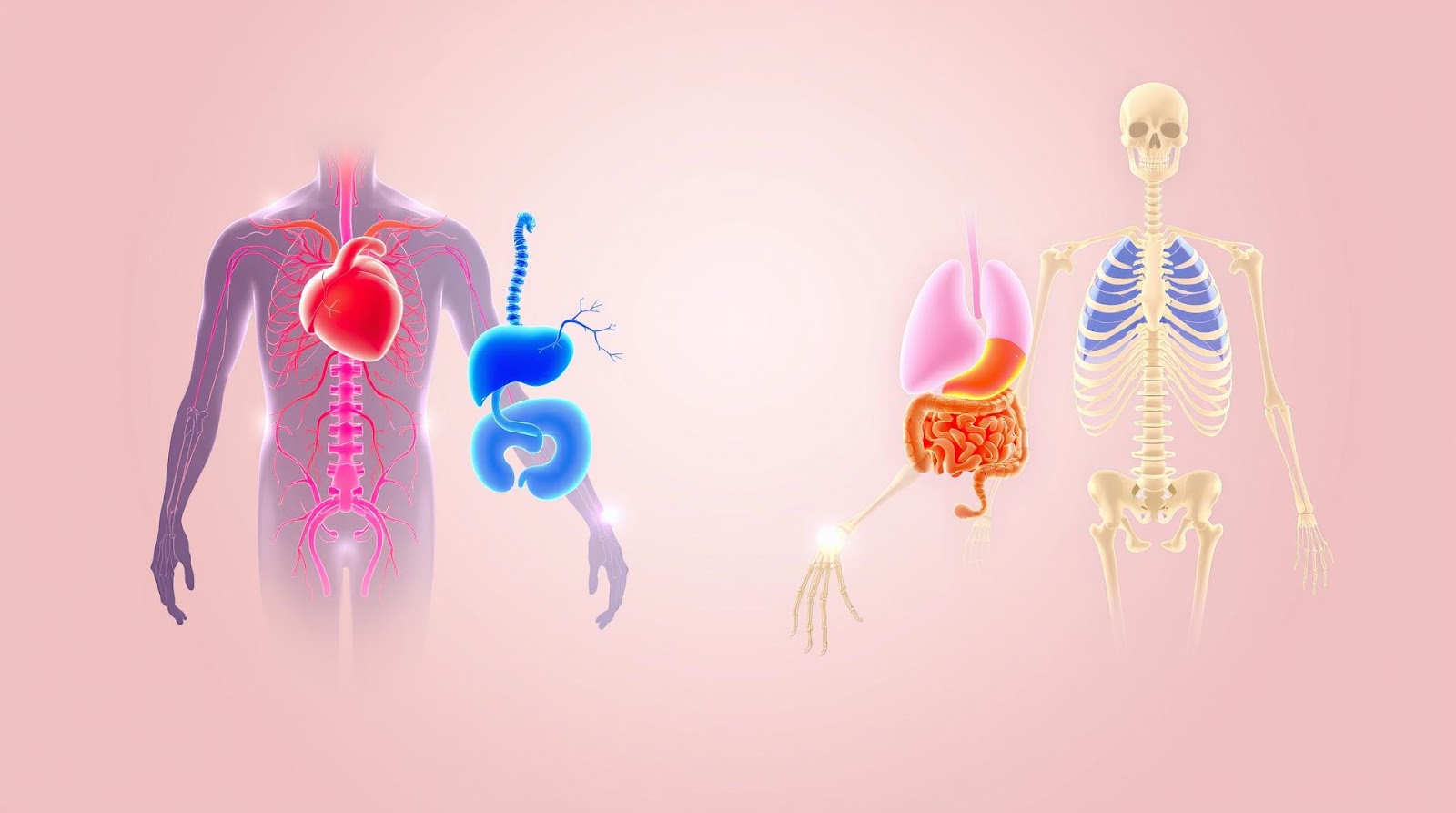
Today, I'm going to walk you through the human body's 11 major systems in a way that'll make you never forget them. We'll use context, we'll use tricks, and most importantly, we'll understand how everything connects. Because here's the beautiful thing about the human body: it's not 11 separate systems. It's one magnificent orchestra, and each system is an instrument playing in harmony.
The Foundation: The Big Picture First
Before diving into individual systems, let me give you a framework. Your body needs to do five fundamental things to stay alive:
1. Take in energy and materials (digestive system)
2. Transport those materials everywhere (circulatory system)
3. Use oxygen and release waste (respiratory system)
4. Respond to changes in the environment (nervous and endocrine systems)
5. Support and move your body (skeletal and muscular systems)
Everything else—your excretory system, reproductive system, immune system, integumentary system, and lymphatic system—are all there to support these five basic functions. When you memorize systems in this framework, they stop being random facts and become a coherent story.
A Trick That Actually Works: The "DNERIKS" Method
Here's a mnemonic I tell all my students. To remember all 11 systems, use: D-N-E-R-I-K-S-C-M-E-L
D = Digestive
N = Nervous
E = Endocrine
R = Respiratory
I = Integumentary (skin)
K = Skeletal
S = Muscular
C = Circulatory
M = Muscular (wait, we already said this... let me fix)
E
L = Lymphatic + Immune
Actually, you know what? The best mnemonic is one you create yourself because you'll remember it. So let me just give you the 11 systems list:
Digestive, Respiratory, Circulatory, Nervous, Endocrine, Muscular, Skeletal, Integumentary, Excretory, Lymphatic, and Reproductive.
Write them down. Say them three times. Now move on.
The Three Systems You'll See Most in Exams
1. The Digestive System: Breaking Down to Build Up
I call this the "assembly line in reverse." Think of it like this: you eat a samosa. That samosa is just a bunch of proteins, carbs, and fats all jumbled together. Your digestive system's job is to break it down into tiny molecules that can actually enter your bloodstream.
Here's the path (and this gets asked constantly): Mouth → Esophagus → Stomach → Small Intestine → Large Intestine → Rectum → Anus.
But where's the real action? The small intestine, baby. This is where 90% of absorption happens. Why? Because the small intestine has millions of tiny finger-like projections called villi. These villi dramatically increase the surface area, so more nutrients can be absorbed. It's like the difference between a smooth wall and a textured wall—the textured wall catches way more light.
The stomach's job gets oversold. Yes, it churns food and produces digestive enzymes. But here's what people miss: the stomach stores food temporarily and regulates how fast it goes into the small intestine. It's a traffic controller, not the main factory.
2. The Respiratory System: The Oxygen Exchange Program
This is where students get confused. They think the lungs produce oxygen. No. The lungs are just the meeting point where your blood says hello to oxygen and goodbye to carbon dioxide.
The path: Nose → Trachea → Bronchi → Bronchioles → Alveoli.
The alveoli—there are 300 million of them—are where the magic happens. They're tiny air sacs surrounded by blood capillaries. Oxygen diffuses from the air into the blood. Carbon dioxide diffuses from the blood into the air. That's it. It's simple diffusion.
Now here's what catches students: the diaphragm. It's a muscle below your lungs. When it contracts, it pulls down, creating more space in your chest cavity. This lowers the pressure inside your lungs, so air rushes in. When it relaxes, the lungs compress, and air goes out. You're breathing right now because of your diaphragm, not because you're thinking about it.
Why does this matter for exams? Because questions often ask: "What controls breathing?" The answer isn't "your brain thinks about it." The answer is "the medulla oblongata in your brain monitors CO2 levels in your blood and automatically adjusts your breathing." Your breathing is automatic, even though you can override it temporarily (try holding your breath—eventually, your brain says "nope" and makes you breathe).
3. The Circulatory System: The Highway Network
I like to imagine this as a UPS delivery network. Your heart pumps blood through arteries (which carry blood away from the heart—both start with 'a'). Blood delivers oxygen and nutrients to every cell. Then veins carry deoxygenated blood back to the heart (veins and venus both start with 'v'... okay, that's a bad mnemonic, but you get it).
The heart has four chambers: two upper chambers called atria (singular: atrium) and two lower chambers called ventricles. Here's the flow:
Deoxygenated blood comes in from the body → enters the right atrium → flows to the right ventricle → gets pumped to the lungs → oxygenated blood returns → enters the left atrium → flows to the left ventricle → gets pumped to the entire body.
The left side pumps more forcefully because it needs to push blood all the way around the body. This is why the left ventricle is thicker than the right.
Now, here's a detail that stumps students: blood doesn't get oxygenated in the lungs and then immediately go to the rest of the body. Instead, it makes a separate loop. Pulmonary circulation goes to the lungs. Systemic circulation goes to the rest of the body. This is why we call it a "double circulation" system.
Why does this matter? Because if you understand the double circulation, you understand why the pulmonary artery (which goes to the lungs) carries deoxygenated blood even though it's an artery. Most students think arteries always carry oxygenated blood. Wrong. Arteries carry blood away from the heart. Period.
| System | Primary Function | Key Organ |
|---|---|---|
| Digestive | Break down food and absorb nutrients | Small intestine |
| Respiratory | Exchange oxygen and carbon dioxide | Lungs (alveoli) |
| Circulatory | Transport blood and nutrients | Heart |
| Nervous | Transmit signals for coordination | Brain and spinal cord |
| Excretory | Remove nitrogenous waste | Kidneys |
The Control Systems: Your Body's Managers
The Nervous System: Electricity in Your Body
Your nervous system is like the internet of your body. It's divided into two parts: the Central Nervous System (CNS)—your brain and spinal cord—and the Peripheral Nervous System (PNS)—all the nerves branching out to your limbs and organs.
Here's something that blows students' minds: your nervous system can send signals incredibly fast because of something called myelination. Nerve cells have an insulation layer made of myelin. This insulation acts like the rubber coating on an electrical wire. Without it, signals travel slowly. With it, signals jump from one segment to the next like they're teleporting. This is why a reflex (like pulling your hand away from a hot stove) happens so fast—the signal goes to the spinal cord and back out to your muscles without waiting for your brain's permission.
The brain has three main regions: the cerebrum (thinking and voluntary movement), the cerebellum (balance and coordination), and the brainstem (automatic functions like breathing and heart rate). Remember: if the brainstem is damaged, you can't survive. If the cerebrum is damaged, you might not be "you" anymore, but you'll keep breathing.
The Endocrine System: Chemistry in Your Body
If the nervous system is electricity, the endocrine system is chemistry. Instead of using electrical signals, it uses hormones—chemical messengers that travel through the bloodstream.
The pituitary gland is the boss. It's tiny (about the size of a pea), but it controls growth, reproduction, and water balance. It has two parts: the anterior pituitary (the hormone factory) and the posterior pituitary (the storage unit for hormones made elsewhere).
Then you have the thyroid (controls metabolism), the pancreas (controls blood sugar), the adrenal glands (produces adrenaline for the fight-or-flight response), and the ovaries/testes (produce sex hormones).
The key difference between nervous and endocrine? Nervous system is fast but short-lived. Endocrine is slower but long-lasting. When you get scared, your nervous system makes your heart race instantly. When you run a marathon, your endocrine system gradually kicks in hormones to keep you going.
The Support Systems: Structure and Function
The skeletal and muscular systems work together. Bones provide structure and protect organs. Muscles pull on bones to create movement. Pretty straightforward. The skeleton also produces blood cells in the bone marrow and stores minerals like calcium.
The integumentary system (your skin) is your barrier against the world. It has three layers: the epidermis (outer), the dermis (middle, where blood vessels are), and the hypodermis (inner, mostly fat). Your skin also helps regulate temperature and provides the sense of touch.
The excretory system removes nitrogenous waste—the toxic byproducts of protein metabolism. Your kidneys filter blood, produce urine, and maintain your water and electrolyte balance. This is more important than most students realize. Your kidneys are doing heavy lifting.
The lymphatic system is like the body's drainage system. It collects excess fluid from around your cells and returns it to the bloodstream. It also fights infection through lymph nodes (those little lumps in your neck when you're sick) and the spleen.
Finally, the reproductive system's job is clear: make babies. But here's what's cool: the reproductive hormones (like testosterone and estrogen) do WAY more than just reproduction. They affect bone density, muscle mass, mood, and metabolism. This is why puberty changes so much about you.
Final Wisdom for Exam Day
As I wrap this up, I want to leave you with the most important insight: no system works in isolation. Your digestive system can't function without your nervous system to regulate it. Your respiratory system works for nothing if your circulatory system doesn't transport the oxygen. Your endocrine system controls your reproductive system, which produces hormones that affect your bones.
When you study, don't memorize individual systems. Study the connections. Ask yourself: "If this system failed, what would happen to the other systems?" That's how you move from rote learning to genuine understanding. And that's how you go from passing to scoring consistently high marks.
You've got this. Now go ace that exam.
Practice Questions
A) It is longer than the large intestine but narrower in diameter B) Absorption of nutrients occurs mainly in the large intestine C) It produces insulin to regulate blood glucose D) It is the primary site of protein digestion
Answer: A) It is longer than the large intestine but narrower in diameter. The small intestine is approximately 20 feet long and is the primary site of nutrient absorption, not the large intestine.
A) It is damaged and cannot carry oxygenated blood B) Arteries always carry deoxygenated blood C) It carries blood away from the heart before it reaches the lungs D) The lungs convert oxygen into a toxic form
Answer: C) It carries blood away from the heart before it reaches the lungs. Arteries carry blood away from the heart by definition. The pulmonary artery carries deoxygenated blood to the lungs for oxygenation.
A) Pancreas B) Thyroid C) Adrenal D) Pituitary
Answer: B) Thyroid. The thyroid gland produces thyroid hormones that regulate metabolic rate. The pituitary controls the thyroid but doesn't directly regulate metabolism.
A) The reflex doesn't involve the nervous system B) The signal travels to the spinal cord and back without involving the brain C) Reflex arcs use hormones instead of nerves D) The muscles don't need a signal to react
Answer: B) The signal travels to the spinal cord and back without involving the brain. A reflex arc is a direct pathway from sensory neurons to motor neurons via the spinal cord, bypassing the brain entirely, making it much faster.
A) Producing hormones that control blood sugar B) Filtering blood and regulating water and electrolyte balance C) Producing antibodies to fight infection D) Breaking down food particles
Answer: B) Filtering blood and regulating water and electrolyte balance. The kidneys filter metabolic wastes and excess water from blood, forming urine, while also regulating critical electrolyte concentrations and water balance.
Published by Dattatray Dagale • 10 July 2026
.jpg)
.png)



.png)




.png)

0 Comments