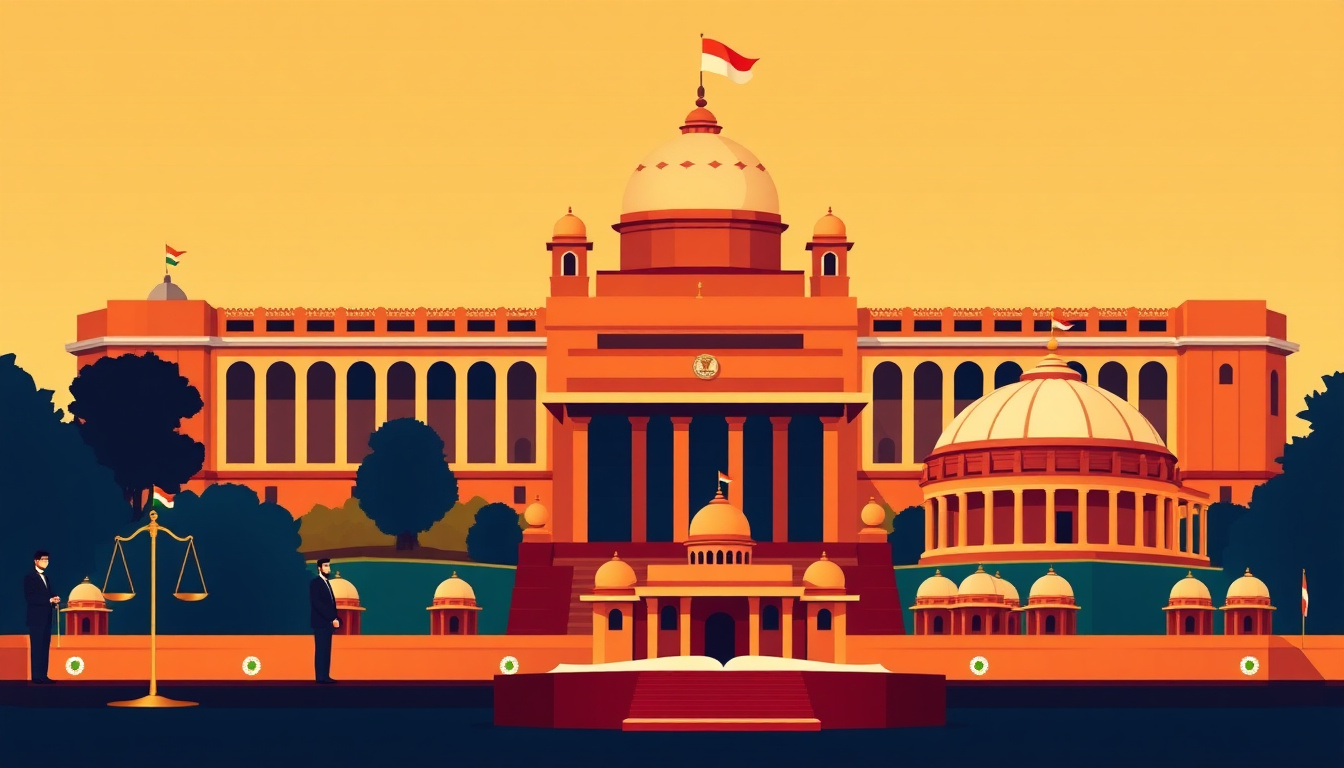
Introduction
Let me start with a question I asked my students just last week: "Who's more powerful — the President of India or the Chief Minister of a state?" Almost everyone said the President. Then I asked, "Then why can't the President stop a Chief Minister from doing something illegal in their state?" Confused silence. Perfect.
This is where most students get polity wrong. They memorize that the President is the "head of state" and the Governor is the "constitutional head" of a state, but they never really understand what these titles mean in practice. It's like knowing Virat Kohli's jersey number but not understanding cricket strategy.
After teaching this topic to thousands of SSC CGL and UPSC students, I've realized that the confusion stems from one simple thing: we confuse constitutional position with actual executive power. The President looks powerful on paper. The Governor too. But the real action? That happens elsewhere. Today, I'm going to demystify this for you — no fluff, just solid understanding you can actually use in your exam.
Understanding the President: Head of State vs Head of Government
Who Is the President and What Makes Their Position Special?
The President of India is the constitutional head of the entire nation. Article 52 of our Constitution gives the President this role. Now, here's what I tell my students: being "constitutional head" is like being the captain of a cricket team written on paper, but the actual batting strategy is decided by the coach (the Prime Minister).
The President is elected indirectly — not by the general public, but by an electoral college consisting of members of both houses of Parliament and members of state legislative assemblies. This is deliberate. The founders didn't want the President to have a direct popular mandate, because a directly elected President would demand more power. Smart design, honestly.
But here's where students always get confused: The President doesn't govern. The Prime Minister and the Cabinet govern. The President is above the daily politics. Think of it like this — the President is like the honor code of the Constitution walking around, while the Prime Minister is the actual decision-maker.
The President's Real Powers (And Trust Me, They're Real)
Don't mistake "not governing" for "no power." The President has enormous powers, but they're meant to be used carefully and, in most cases, on the advice of the Cabinet.
Let me break down the key powers:
Executive Powers: The President appoints the Prime Minister (though in practice, they appoint whoever commands a majority in Lok Sabha). They appoint the judges of the Supreme Court and High Courts. They appoint governors, ambassadors, and senior government officials. These aren't small things — these appointments shape the entire country's future.
Legislative Powers: Every bill passed by Parliament becomes law only when the President signs it. The President can send a bill back to Parliament for reconsideration (called a pocket veto, though technically it's a "President's veto"). The President also has the power to promulgate ordinances when Parliament isn't in session — these are like emergency laws.
Judicial Powers: The President has the power to pardon convicts. I once had a student ask, "Sir, can the President just free a criminal?" Technically yes, but politically, it would be suicide. This power is rarely used, and when used, it's always on advice.
Emergency Powers: This is where the President gets real teeth. Under Articles 352, 356, and 360, the President can declare three types of emergencies: National Emergency (external war or internal disturbance), President's Rule in a state (when a state government fails), and Financial Emergency. Once declared, these give the President sweeping powers.
The Governor: The President's Representative in the State
What Exactly Does a Governor Do?
A Governor is to a state what the President is to the nation. Article 153 establishes the office of the Governor. Each state has one Governor (except for the union territories, which don't have governors — they have administrators or lieutenant governors). The Governor is appointed by the President on the advice of the Prime Minister.
Here's a trick I teach all my students to remember the Governor's role: G.O.V.E.R.N.O.R. = Guardian On Vigilant Executive Representation Necessitating Official Responsibility. (Okay, I'm cheating a bit with the mnemonic, but it helps students remember that the Governor is supposed to be a watchdog.)
Now, the Governor is supposed to represent the President in the state. But here's the reality check: in Indian federalism, states have considerable autonomy. The Governor can't just overrule the Chief Minister or the state government in day-to-day matters. If they could, there would be a revolt!
Governor's Powers: Constitution vs Practice
The Governor has powers over executive matters, legislative matters, and judicial matters in the state — but almost always exercised on the advice of the Chief Minister and the state Cabinet.
Executive Powers: The Governor appoints state officials, university vice-chancellors, and judges of the High Court (joint recommendation with the Chief Justice). But again, largely ceremonial or done on advice.
Legislative Powers: The Governor gives assent to state bills. The Governor can send bills back for reconsideration. The Governor can also promulgate ordinances when the state assembly isn't in session.
Discretionary Powers: This is where things get interesting. The Governor has certain powers that don't require Cabinet advice. Article 163(1) of the Constitution says the Governor shall act on the "aid and advice" of the Cabinet, BUT Article 163(2) lists situations where the Governor may act in their discretion. These include:
- Deciding whether to ask the Chief Minister to prove their majority in the assembly
- Dismissing the Chief Minister if they've lost the confidence of the House
- Recommending President's Rule in the state
These discretionary powers are CRUCIAL for your exam. A weak Chief Minister or a hung assembly can lead to Governor's intervention, and this is where constitutional law gets spicy.
Here's a teaching tip: Remember the 1998 Sikandarabad case? The Governor of Uttar Pradesh asked the Chief Minister to prove their majority within 10 days. The Chief Minister couldn't, and the Governor recommended President's Rule. This is a real example of the Governor's discretionary power at work. For UPSC, you need to know such cases.
When Things Get Complicated: Special Situations
President's Rule (Article 356)
When a state government breaks down — either the government loses majority, or the Governor believes the state can't be governed according to the Constitution — the Governor recommends to the President that President's Rule be imposed. Once the President approves, the state assembly is dissolved, the Chief Minister is sacked, and the President rules through an administrator, typically the Governor themselves.
This sounds like a dictatorship, but it's actually a safety valve. Imagine a state where the government collapses and no one can form a majority. Someone has to run the administration — can't leave schools and hospitals without governance, right?
However, President's Rule has been massively misused in Indian politics. Let me be frank with you: sometimes, a Governor with political bias has recommended President's Rule to topple a government that's actually stable but politically inconvenient to the ruling party at the center. The 1992-93 episode when multiple state governments were dissolved overnight is a classic example. This is why the 44th Amendment added checks.
The Governor's Role in Government Formation
If there's a hung assembly (no party has a clear majority), the Governor has a critical role. The Governor invites the largest single party to form the government, gives them 10 days to prove their majority, and so on. The Governor's discretion here is crucial. A fair Governor follows the rules; a biased one can delay invitations to the "wrong" party and give time to a smaller party to poach MLAs.
The Maratha Morcha government in Maharashtra in 2019, the Karnataka government in 2018 — both saw Governors playing crucial roles in government formation. These are exam-worthy cases because they show how discretionary powers work in reality.
| Power | President | Governor |
|---|---|---|
| Appoints Head of Government | Prime Minister | Chief Minister |
| Appoints Judges | Supreme Court & High Court | High Court (joint) |
| Veto Power | Can send bills back to Parliament | Can send bills back to Assembly |
| Ordinance Power | When Parliament adjourned (Art. 123) | When Assembly adjourned (Art. 213) |
| Emergency Powers | Articles 352, 356, 360 | Recommends President's Rule (Art. 356) |
| Discretionary Powers | Limited, checked by Cabinet | Wider in govt. formation |
The Real Power Play: Where Theory Meets Practice
Here's something they don't teach you in most coaching classes, but it's absolutely crucial for UPSC: The President and Governor are powerful on paper but constrained in practice.
The President can't just start signing executive orders like an American President. Every major decision requires Cabinet approval. The President can't appoint judges without the Chief Justice's recommendation. The President can't declare an emergency without Cabinet support and parliamentary approval.
Why? Because our Constitution is built on the principle of checks and balances. The framers didn't want a powerful executive at the top who could dictate to everyone else. They wanted the Prime Minister to have the real power, and the President to be a guardian of the Constitution.
Similarly, a Governor can't just run a state like a dictator. The Chief Minister and the state Cabinet make most decisions. But when things break down — when there's political instability or constitutional crisis — the Governor steps in. That's the design.
Let me give you a real example. When the Karnataka government collapsed in 2019 and there was a fight over who should form the government, the Governor's role became crucial. The Governor's decisions on whether to accept resignations, when to invite which party to form the government, and how much time to give them — these decisions shaped the outcome. This is where the Governor's discretionary power actually matters.
For your exam, remember this: Don't just memorize what the President and Governor "can do" — understand when and why they do it, and what stops them from overusing their power.
One last trick I use: Think of the President as a constitutional referee and the Prime Minister as the coach. The referee has the power to call fouls and even throw players out, but the referee doesn't play. The coach plays. Similarly, the President watches for constitutional violations, but the PM runs the game.
A) Determining whether the Chief Minister commands the majority
B) Recommending President's Rule
C) Approving the state budget
D) Deciding when to send a bill back to the assembly
Answer: C) Approving the state budget — this is done on Cabinet advice, not discretion
A) Cabinet
B) Parliament
C) Both Cabinet and Parliament
D) Chief Justice of India
Answer: A) The President can initially declare an emergency on Cabinet's written recommendation, but Parliament's approval within 2 months is required to continue it (post-44th Amendment)
A) 42nd Amendment
B) 44th Amendment
C) 45th Amendment
D) 52nd Amendment
Answer: B) The 44th Amendment (1978) made emergency powers subject to Cabinet recommendation and parliamentary approval
A) Chief Minister
B) Prime Minister
C) Chief Justice of India
D) State Cabinet
Answer: B) The Prime Minister advises the President on Governor appointments
A) The Governor automatically forms the government
B) The Governor has discretion in determining which party to invite to form government
C) The President directly intervenes
D) President's Rule is automatically imposed
Answer: B) The Governor has discretion to invite the largest party first, check their majority, and decide on government formation
Remember, students: understanding the President and Governor isn't about memorizing their powers. It's about understanding why our Constitution designed their roles the way it did. That's what separates a 90-percentile answer from a 50-percentile one. Keep questioning, keep thinking — that's how you truly master Indian Polity.
Published by Dattatray Dagale • 28 July 2026
.jpg)
.png)



.png)



.png)
0 Comments