Introduction
Let me start with a confession: when I first started teaching, I used to think writs were just some legal mumbo-jumbo that only lawyers needed to worry about. How wrong I was! Then one day, a student of mine — Priya, who was preparing for SSC CGL — asked me a simple question: "Sir, what happens if the police arrest my father without proper reason?" That's when it clicked for me. Writs aren't just legal concepts. They're your lifeline when the system itself becomes unfair.
Today, I want to take you on a journey through the Indian judiciary and the writs system — and I promise to make it as clear and memorable as possible. Whether you're sitting for SSC CGL, UPSC, or any other competitive exam, understanding this will not only help you score but will genuinely help you understand your fundamental rights as an Indian citizen.
The Indian Judiciary: The Backbone of Our Democracy
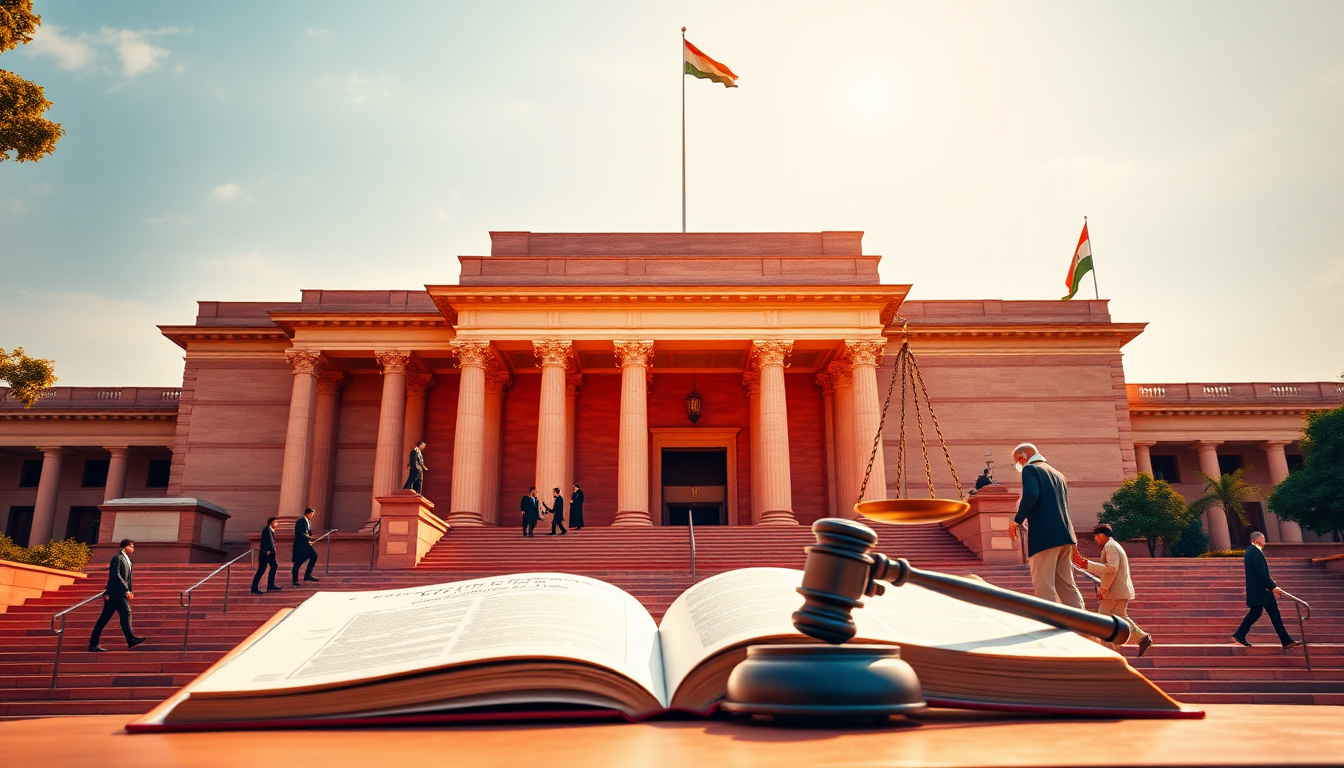
Before we dive into writs, we need to understand the structure of the Indian judiciary because writs are essentially the tools it uses to protect citizens. Think of the judiciary as a three-tier pyramid, with each level having its own power and responsibility.
The Three-Tier Judicial Structure
At the base, we have the District and Subordinate Courts. These handle most of your everyday cases — property disputes, criminal matters, civil issues. Then we climb to the High Courts — each state has one (or sometimes shares one like Delhi High Court). The High Courts act as guardians of the Constitution within their jurisdiction. Finally, at the apex sits the Supreme Court of India, the ultimate authority.
Now here's the interesting part: only the High Courts and Supreme Court can issue writs. The lower courts cannot. This is because writs are extraordinary remedies — they're the judicial equivalent of calling in the special forces when regular police can't handle the situation.
Independence of the Judiciary
One crucial thing about our judiciary is its independence. Judges can't be removed on a whim. It takes impeachment for that. They have security of tenure, fixed salaries, and they report to no one except the Constitution itself. This independence is what allows judges to issue writs even against the government — because they don't fear losing their jobs. Brilliant design, honestly.
Enter the Writs: Your Constitutional Guardians
So what exactly is a writ? A writ is a formal order issued by a court directing someone (usually a government official) to do something or stop doing something. The word comes from Old English and literally means "written order." In the Indian Constitution, writs are mentioned in Articles 32 and 226, and they're your ultimate weapon against governmental abuse.
Let me give you a trick I tell all my students to remember the five types of writs: "HABEAS MANDAMUS PROHIBITION CERTIORARI QUO" — or think of it as "HMP-CQ" if you want it shorter. There are actually five writs, and I'll explain each one with real Indian examples that will stick in your mind.
The Five Writs Explained Simply
1. Habeas Corpus — "You Shall Have the Body"
This is probably the most famous writ, and honestly, it's the most important for protecting your fundamental right to personal liberty. "Habeas corpus" literally means "you shall have the body." What it does is simple: if someone (usually the government) is illegally holding you in custody, you can file for habeas corpus and the court will order your release.
Real example: Remember those cases where people were held without charges for months? Habeas corpus is what gets them out. A family member can file it on behalf of the imprisoned person. The burden of proof shifts to the government — they have to show why they're holding you, not the other way around.
2. Mandamus — "We Command"
Mandamus is used when a government official refuses to do their duty. It's a court order that literally says, "We command you to do your job!" This is incredibly useful in our Indian context where, let's be honest, bureaucratic delays are legendary.
Example: A teacher's pension isn't being released for months? Mandamus. A passport application is stuck in the system? Mandamus can push it forward. A Municipal Corporation refusing to issue a certificate? Mandamus. I've actually seen students use this to resolve admission issues with colleges.
3. Prohibition — "We Forbid"
This is the opposite of mandamus. Where mandamus says "do it," prohibition says "don't do it." A court issues a prohibition order to prevent a lower court or tribunal from going ahead with something illegal or without jurisdiction.
Example: If a lower court is about to sentence someone in a matter where it has no authority, the High Court can issue prohibition to stop them.
4. Certiorari — "We Are Informed"
This writ brings a case from a lower court to a higher court for review. It's used to quash or cancel a decision of a lower court, tribunal, or quasi-judicial body if that decision was made without proper authority or was illegal.
Example: A school dismisses a teacher without following proper procedure. The teacher can file for certiorari, and the High Court will examine whether the school followed the law. If not, the decision gets quashed.
5. Quo Warranto — "By What Authority"
This writ questions someone's right to hold a particular public office. It's like the court asking, "By what authority are you sitting in this chair?" This is pretty rare in practice but important to know for exams.
Example: If someone fraudulently claims a position or if someone unqualified holds an office, quo warranto can be filed to challenge it.
| Writ Type | Used For | Simple Meaning |
|---|---|---|
| Habeas Corpus | Illegal detention or unlawful imprisonment | Release from unlawful custody |
| Mandamus | Forcing officials to perform their duty | Do your job! |
| Prohibition | Stopping illegal actions by lower courts | Stop that action! |
| Certiorari | Reviewing and quashing illegal decisions | Cancel that decision |
| Quo Warranto | Questioning right to hold public office | Who gave you that position? |
Key Differences Between Article 32 and Article 226 Writs
You might be wondering why I kept mentioning that Supreme Court has Article 32 and High Courts have Article 226. There's actually an important difference, and this comes up in nearly every competitive exam.
Article 32 vs Article 226: What's the Difference?
Article 32 (Supreme Court) covers only violations of Fundamental Rights. You can go to the Supreme Court only if your Article 12-35 Fundamental Rights have been violated. The Supreme Court has a dedicated Fundamental Rights division.
Article 226 (High Court) is much broader. You can file for writs not just for Fundamental Rights violations, but for any illegal action, any abuse of power, any violation of statutory duties. This is why Article 226 is actually more powerful in practice!
Here's a memory trick I gave to my student Aditya, and he aced the exam: "32 is Fundamental, 226 is Fundamental PLUS more." Article 32 is a fundamental right itself (to file for writs), while Article 226 is just a power of the High Court.
Important Principles and Limitations You Must Know
Now here's where it gets interesting. Writs aren't just magical solutions. There are principles and limitations that courts follow religiously. Understanding these can make the difference between a 10/10 answer and a 7/10 in your exam.
When Won't Courts Issue Writs?
1. Exhaustion of Remedies: Before you go running to the High Court with a writ, you need to try other legal remedies first. If there's an appeal process or an administrative remedy available, you have to exhaust that first. The court won't help you if you're being lazy about following proper channels.
2. Locus Standi: You need proper standing to file a writ. Generally, the person directly affected by the government action files the writ. However, the Supreme Court and High Courts have expanded this concept significantly. Now even public interest litigation (PIL) can be filed by anyone if it's in the public interest. A famous example is environmental cases where NGOs have filed writs.
3. Mootness: If the issue has already been resolved or the crisis has passed, the court might refuse to hear the writ. Why? Because there's no relief left to give!
4. No Writ Against Private Persons: This is crucial. Writs can only be issued against government officials or quasi-judicial authorities. If your boss (in a private company) treats you illegally, you can't file a writ directly. You'd have to file a regular civil case.
Why Judges Take Writs Seriously
I remember sitting in on a case once where a judge said something that stuck with me: "The writ is the Constitution's own weapon against tyranny." That's exactly it. Judges understand that writs exist to protect democracy itself. That's why they don't take writs lightly. But they also don't grant them without proper justification.
The Supreme Court has set a high bar for itself. It says it will only intervene in matters of public importance or when fundamental rights are clearly violated. Otherwise, it would become a super-tribunal reviewing every administrative decision, and that's not its role.
Real Cases That Changed Everything
Let me share some landmark cases that actually changed how writs work in India. These are the ones that always come in exams, and more importantly, they show you how powerful writs truly are.
Menaka Gandhi vs Union of India (1978): This case expanded what "procedure established by law" means. The Supreme Court said that the procedure has to be reasonable and just, not just technically valid. This case opened the door to PIL and made writs much more accessible.
Kesavananda Bharati vs State of Kerala (1973): Not exactly a writ case, but it established that the Constitution itself has a basic structure that can't be amended. This affects how courts use writs to protect constitutional values.
Various PIL Cases: Cases like the forest conservation PIL, the Taj Mahal pollution PIL — these showed that writs aren't just for individuals fighting persecution. They're tools for protecting society itself.
These cases matter because they show that our judiciary isn't just following rules mechanically. They're interpreting the Constitution in a way that serves justice and protects citizens. That's the spirit of writs.
Why This Matters for Your Exam (and Your Life)
Look, I get it. You're studying for an exam. You need to score well. But I want you to understand something deeper here. The writ system is what separates democratic countries from dictatorships. In countries without strong judicial systems, if the government arrests you illegally, there's nothing you can do. In India, you can file habeas corpus and get justice.
In your exam, you'll get questions like "Which writ is used for..." or "Under which article can you file for a writ?" Practice these, sure. But also understand the why behind each writ. That's what helps you answer tricky questions that aren't straightforward. That's what gets you 15/15 on the polity section instead of 10/15.
And in your life, knowing this stuff genuinely protects you. If you or anyone you know faces illegal government action, you know exactly what to do. That's powerful knowledge to have.
---Quick Revision Checklist
Before moving on, make sure you can answer these:
- What's the difference between Article 32 and Article 226?
- Name all five writs and give one example for each.
- Why can't you file a writ against a private person?
- What does "exhaustion of remedies" mean?
- Which writ is used to force someone to do their duty?
If you can answer all these confidently, you're ready for exam questions on this topic!
---Practice Questions
A) Habeas Corpus B) Mandamus C) Prohibition D) Certiorari
Answer: B) Mandamus — This writ literally commands officials to do their duty. The name means "we command."
A) Article 14 B) Article 21 C) Article 32 D) Article 226
Answer: C) Article 32 — This article gives the Supreme Court the power to issue writs when Fundamental Rights are violated. It's also itself a Fundamental Right!
A) Quo Warranto B) Certiorari C) Prohibition D) Mandamus
Answer: A) Quo Warranto — This literally means "by what authority" and questions the legal right to hold an office. It's rare but important for competitive exams.
A) Reviewing illegal decisions B) Stopping illegal actions C) Releasing persons held illegally D) Forcing officials to do duty
Answer: C) Releasing persons held illegally — Habeas Corpus protects your right to personal liberty by ensuring you're not unlawfully detained.
A) Private persons B) Government officials C) Private companies D) All of the above
Answer: B) Government officials — Writs are extraordinary remedies against governmental action only. Against private persons, you file regular civil suits.
Published by Dattatray Dagale • 29 July 2026
.jpg)
.png)



.png)



.png)


0 Comments