Introduction
Let me start with a confession — when I first started teaching medieval history, Delhi Sultanate used to intimidate me. So many dynasties, so many similar-sounding names, dates that seem to jump around like a restless student in class. But then something clicked. I realized that the Delhi Sultanate isn't just a bunch of dates and kings to memorize. It's actually a fascinating story of cultural collision, political ambition, and how an entire civilization transforms itself.
See, here's what most textbooks get wrong: they present the Delhi Sultanate like it's one monolithic thing. It's not. Think of it like India's cricket evolution — you wouldn't lump T20, ODI, and Test cricket together, right? Each has its own flavor, strategy, and timeline. The Delhi Sultanate is exactly the same. We're talking about five distinct dynasties spanning over 300 years, each leaving their own fingerprint on Indian history.
In this post, I'm going to walk you through this period the way I teach it in my classroom — not as isolated facts, but as a connected narrative. By the time you finish reading, you'll understand not just the "what" and "when," but the "why" — and that's what makes the difference between passing an exam and actually understanding your own country's history.
What Was the Delhi Sultanate, Really?
Here's the most important thing to understand first: the Delhi Sultanate was not a single continuous empire. It was a period of Muslim rule in North India, roughly from 1206 to 1526 CE, when various dynasties (mostly of Turkish, Afghan, and Central Asian origin) controlled the Delhi throne. They didn't all come with the same vision or methods — that's key.
The term "Sultanate" itself comes from the Arabic word "Sultan," meaning a ruler with political and military authority. What made these rulers different from their predecessors in India? They brought with them Islamic administrative systems, Persian court culture, and a completely different approach to governance than the kingdoms they replaced.
Now here's something I tell my students that really helps them remember the structure: imagine Delhi as a throne that gets passed around, but each king who sits on it changes the furniture and the house rules. Same throne, different vibes. That's your Delhi Sultanate.
The Five Dynasties — A Simple Framework
Let me give you the memory trick I've used for years, and I promise it works better than any list:
STMA — Slave, Tughlaq, Mamelukes... no wait, that doesn't work.
Actually, here's what works: "SLY KHILJI SAY TUGHLAQ LODI"
Breaking it down for you:
- S = Slave Dynasty (1206-1290)
- K = Khilji Dynasty (1290-1320)
- T = Tughlaq Dynasty (1320-1414)
- S = Sayyid Dynasty (1414-1451)
- L = Lodi Dynasty (1451-1526)
Get that mnemonic down, and you've already won half the battle. Seriously, I've had students tell me three years after graduating that they still remember this phrase.
The Slave Dynasty: When the Outsiders Became Kings
This one's the most interesting because it sounds like a Bollywood plot. Imagine being bought as a slave, training to become a military warrior, and then literally becoming the Sultan of India. That's exactly how Qutb-ud-Din Aibak's story goes.
The Slave Dynasty (1206-1290) wasn't called that because they were slaves to anyone — they were called that because the early sultans were originally slave-soldiers (called Mamluks) in the Turkish military system. Qutb-ud-Din Aibak was the general of Muhammad of Ghor, an Afghan conqueror. When Muhammad died, Aibak took over Delhi and established his own dynasty.
Key Players and Their Contributions
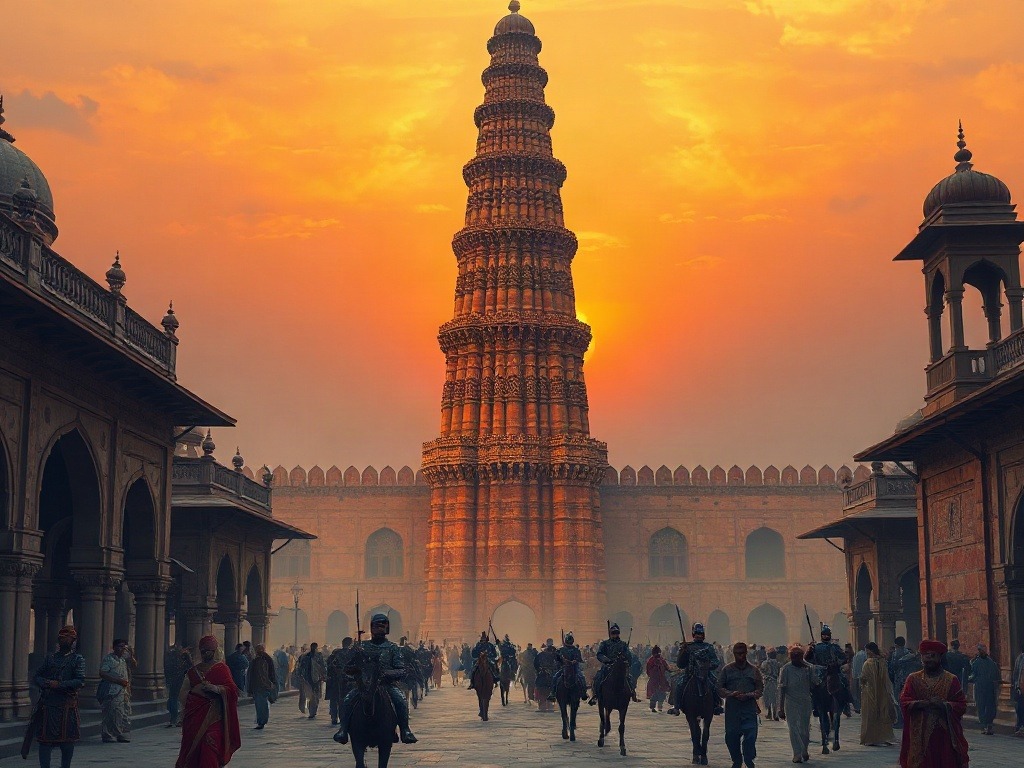
Qutb-ud-Din Aibak (1206-1210): The founder. He gave us two major things — the Qutb Minar (yes, that famous monument in Delhi) and the foundation of Turkish sultanate culture in India. When I take students to see Qutb Minar, I always point out how it's this beautiful blend of Islamic architecture on Indian soil. That's literally what the Slave Dynasty was — a blend.
Iltutmish (1211-1236): This guy is underrated in most textbooks. While Aibak laid the foundation, Iltutmish actually consolidated power and organized the administration properly. He reorganized the military into a proper system, created a new coin (the "tanka"), and stabilized the kingdom. Think of him as the manager who takes over a startup and actually makes it profitable.
Razzia (1236-1240): Now here's someone who gets my students excited — Razzia was a female sultan, and she ruled competently for four years. In a period when women having authority was unheard of, she managed the kingdom, fought battles, and maintained stability. Sadly, her reign ended due to opposition from the nobility, but her legacy proves that leadership isn't determined by gender.
The Slave Dynasty essentially gave us the template for how a sultanate operates in India. They established administrative departments, created a feudal military system, and introduced Persian as the court language. That's huge.
The Tughlaq Dynasty: Ambition and Chaos
If the Slave Dynasty was about foundation-building, the Tughlaq Dynasty (1320-1414) was about a ruler trying to do too much, too fast. It's like watching someone attempt five different projects simultaneously and failing at all of them.
Muhammad bin Tughlaq is one of my favorite historical figures to teach because he's such a complex personality. He was intelligent, educated, multilingual, and had grand visions for his empire. But he was also impulsive, stubborn, and had this tendency to make decisions without thinking through the consequences.
Muhammad bin Tughlaq's Ambitious Experiments
Let me tell you about his most famous (and disastrous) decisions:
The Token Currency Experiment: Muhammad decided to replace gold and silver coins with bronze tokens. On paper, this sounds smart — it would save precious metals and make currency more abundant. But in execution? Total disaster. People just melted down the tokens and used them as metal. Inflation went crazy, the economy suffered, and eventually, he had to reverse the decision. It's like someone today saying, "Let's replace money with Monopoly notes." The concept fails because the fundamental trust isn't there.
The Shift of Capital from Delhi to Daulatabad: Muhammad decided to move his capital from Delhi to Daulatabad in the Deccan region. Sounds fine, except he ordered the entire population to move. Imagine if tomorrow your government ordered everyone in Delhi to shift to, say, Nagpur. The administrative chaos, the human suffering, the economic disruption — it was immense. Eventually, people started drifting back to Delhi, and he allowed them to return.
But here's what's important: despite these failures, Muhammad bin Tughlaq wasn't a bad administrator. He actually strengthened the sultanate's military, attempted administrative reforms, and expanded the empire's boundaries. His problem was overconfidence and not listening to advisors. Sound familiar? We've all known someone like that, right?
Firoz Shah Tughlaq: The Pragmatic Administrator
After Muhammad's erratic rule, his cousin Firoz Shah Tughlaq (1351-1388) took over, and honestly, it was like everyone collectively sighed in relief. Firoz was stable, practical, and focused on actual governance rather than grand experiments. He's known for founding cities (like Firozabad), building water channels, and establishing hospitals. He was also a patron of learning and culture.
The Tughlaq Dynasty essentially showed us what happens when ambition meets poor execution. It's a lesson in leadership that still applies today.
The Khilji Dynasty and Others: A Quick Tour
I'm going to condense these because while they're important, they're shorter and less complex than what we've already covered.
The Khilji Dynasty (1290-1320): The Aggressive Expansionists
Alauddin Khilji is the star here. This man was ambitious, ruthless, and strategic. He expanded the Sultanate's territory more than anyone before him, conquered Gujarat, Malwa, and launched campaigns in the Deccan and South India. He was also innovative — he implemented price controls on essential commodities, reformed the military, and created a sophisticated intelligence system.
The interesting thing about Alauddin? He knew he was adopting Persian-style absolute monarchy, and he didn't hide it. He wanted to be treated like the Persian kings — with complete obedience and authority. It was a different style of rule compared to the Slave Dynasty's more consultative approach.
The Sayyid Dynasty (1414-1451) and Lodi Dynasty (1451-1526): The Sunset Years
These dynasties, to be honest, were in decline. The Sayyids were moderately capable but didn't have strong military backing. The Lodis were stronger militarily but faced constant regional challenges. They were essentially holding on to power rather than expanding it.
The Lodi Dynasty's last ruler, Ibrahim Lodi, was defeated by Babur at the Battle of Panipat in 1526, which marks the end of the Delhi Sultanate and the beginning of the Mughal Empire. It's a clear end-point, which is actually helpful for memorization.
Cultural and Administrative Legacy
Now let me tell you something that most students miss, and it's crucial for understanding medieval India: the Delhi Sultanate wasn't just about political power. It fundamentally changed Indian culture, architecture, administration, and language.
Think about it this way — before the Sultanate, North India had various Hindu kingdoms following Sanskrit administrative traditions and Hindu cultural practices. The Sultanate introduced Persian language, Islamic law and governance systems, new architectural styles (Indo-Islamic architecture emerged here), and new military tactics. It wasn't replacement — it was synthesis. Over time, Hindu and Islamic cultures began to blend, creating something new.
This is why you see Indo-Islamic architecture, why Persian became the court language, why later dynasties (like the Mughals) could build on these foundations. The Delhi Sultanate created the cultural and administrative template that future empires used.
In terms of administration, the Sultanate created sophisticated systems: departments for military affairs, revenue collection, royal correspondence, and justice. They divided the empire into provinces (iqtas), each with a governor. They established a postal system and a intelligence network. These weren't revolutionary concepts in the Middle East or Central Asia, but in India, they represented a different approach to governance.
| Dynasty | Period | Key Ruler | Main Contribution |
|---|---|---|---|
| Slave Dynasty | 1206-1290 | Qutb-ud-Din Aibak, Iltutmish | Foundation of sultanate, Qutb Minar, Administrative system |
| Khilji Dynasty | 1290-1320 | Alauddin Khilji | Territorial expansion, Military reforms, Price controls |
| Tughlaq Dynasty | 1320-1414 | Muhammad bin Tughlaq, Firoz Shah | Attempted reforms (mixed results), Cultural patronage |
| Sayyid Dynasty | 1414-1451 | Muhammad Shah | Consolidation, Limited expansion |
| Lodi Dynasty | 1451-1526 | Ibrahim Lodi | Military strengthening, Ended at Panipat (1526) |
Quick Revision: What You Must Remember
Alright, let me give you the ultra-condensed version for last-minute revision:
- 1206: Delhi Sultanate begins with Qutb-ud-Din Aibak
- 1290-1320: Alauddin Khilji's aggressive expansion
- 1351-1388: Firoz Shah Tughlaq's stable rule
- 1526: Sultanate ends with Battle of Panipat, Mughal Empire begins
- Key concepts: Indo-Islamic synthesis, Persian language adoption, administrative sophistication, regional expansion
For MCQs, watch out for tricky questions about "who did what" — the dynasties sometimes blur together. My advice? Create a simple timeline on a piece of paper and practice dating events. That's often where students lose marks.
A) Qutb-ud-Din Aibak B) Iltutmish C) Alauddin Khilji D) Razzia
Answer: C) Alauddin Khilji was the founder of the Khilji Dynasty, not the Slave Dynasty
A) Abolishing the feudal system B) Introduction of token currency C) Banning trade D) Dismantling the military
Answer: B) Introduction of token currency — it led to inflation and economic chaos, and he had to reverse it
A) SLKTS B) SLY KHILJI SAY TUGHLAQ LODI C) SLAVE-KHILJI-TUGHLAQ D) None of these
Answer: B) SLY KHILJI SAY TUGHLAQ LODI (Slave, Khilji, Tughlaq, Sayyid, Lodi)
A) She conquered the entire Deccan B) She was the first female Sultan of Delhi C) She introduced the tanka coin D) She moved the capital to Daulatabad
Answer: B) She was the first (and one of very few) female Sultans and ruled competently for four years (1236-1240)
A) The death of Firoz Shah Tughlaq B) The fall of Muhammad bin Tughlaq C) The Battle of Panipat in 1526 D) The revolt of local zamindar
Answer: C) The Battle of Panipat in 1526, where Babur defeated Ibrahim Lodi, marking the beginning of the Mughal Empire
There you have it — the Delhi Sultanate, explained the way I'd explain it to a friend over chai. The key takeaway? This period wasn't just about kings and battles. It was about cultural transformation, about how two civilizations (Islamic and Indian) came into contact and created something entirely new. That's what makes medieval history fascinating, and that's what you need to carry into your exam. Good luck, and feel free to drop your questions in the comments. I read every single one.
Published by Dattatray Dagale • 09 September 2026
.jpg)
.png)



.png)




.png)


0 Comments