Introduction
Let me start with a confession: when I first began teaching Indian history, I found the Vedic period absolutely overwhelming. Too many Sanskrit names, too many kings with similar-sounding names, and textbooks that read like they were written in a language only linguists could decode. But then something clicked for me, and I realized this era is actually the most fascinating foundation story you could possibly study.
Here's why it matters for you: if you're preparing for SSC CGL or UPSC, the Vedic period isn't just another chapter to memorize. It's the DNA of Indian civilization. Almost every institution, social structure, and philosophical concept that defines modern India has roots in this period. I've seen countless students struggle because they treat Vedic history as disconnected facts, when really it's a living, breathing story of how a people migrated, settled, and created one of the world's oldest continuous civilizations.
So let's dive in the way I explain it to my students over chai—no unnecessary jargon, just clear explanations that'll stick with you.
What Exactly Is the Vedic Period, and Why Should You Care?
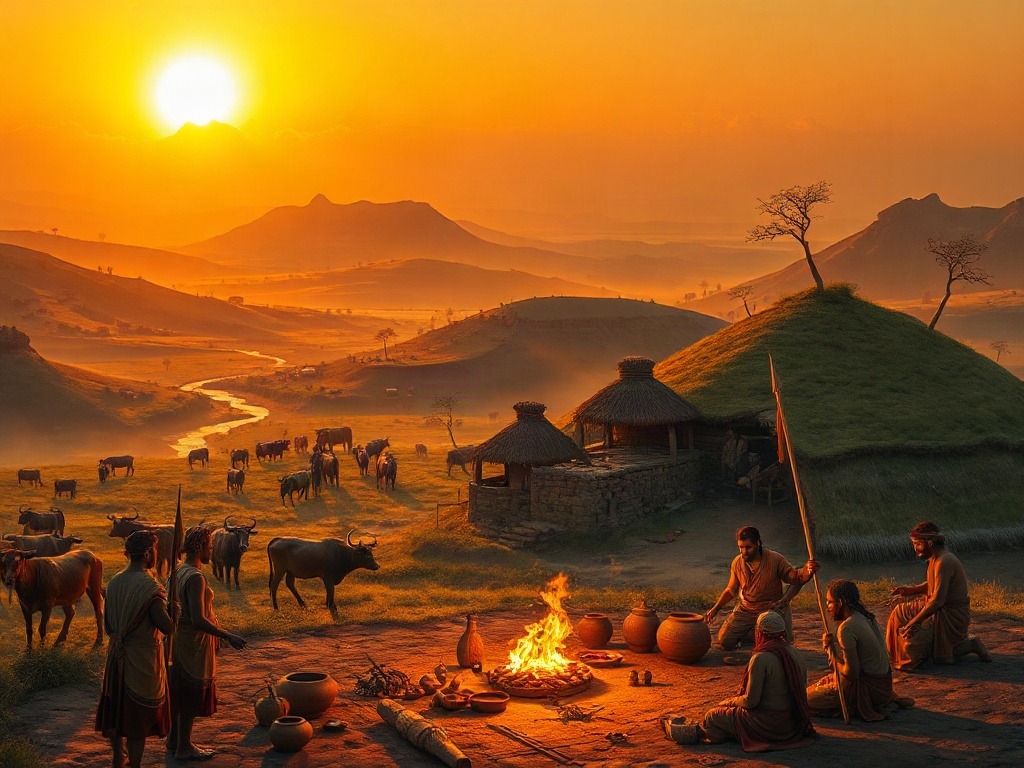
The Vedic period is roughly dated between 1500 BCE and 600 BCE. Now, I know what you're thinking—"How do historians date something so old without written records?" Good question. Unlike the Indus Valley Civilization we studied before this, the Vedic period left us the Vedas themselves, which are our primary sources. These aren't history books as we'd write them today; they're collections of hymns, rituals, and philosophical reflections. Think of them like ancient podcasts that got passed down orally for centuries before being written.
The period gets its name from these four Vedas: Rigveda, Yajurveda, Samaveda, and Atharvaveda. The Rigveda is the oldest and the most historically valuable. Here's something that blew my mind when I first learned it: the Rigveda is one of humanity's oldest surviving texts. We're talking older than Homer's works, older than most ancient civilizations' written records.
Now here's the thing—and this is crucial for your exams—the Vedic period saw the transformation of the Aryans from pastoral nomads into settled agrarian societies. This wasn't a sudden change; it was gradual, spanning roughly a thousand years. And this transformation shaped everything: the caste system, the Vedic religion (which evolved into Hinduism), social structures, and even economic systems.
Who Were the Aryans, Really?
I get asked this question constantly, and I understand why—there's so much misinformation out there. Let me be clear: the Aryans were Indo-European pastoral people who migrated into the Indian subcontinent around 1500 BCE. They weren't an ethnic group as we understand it today; "Aryan" literally means "noble" in Sanskrit, and it was a cultural and linguistic designation.
Here's the part I emphasize to my students: the Aryans didn't "invade" India like an army with tanks and guns. They migrated gradually, probably through the Khyber Pass, over many generations. They brought with them their language (Sanskrit), their gods (Indra, Varuna, Agni), their cattle-herding economy, and their ritual practices. Over centuries, they mixed, interacted, and eventually merged with the local Dasyu and Dasa populations (whom the Vedas mention). This wasn't conquest in the Hollywood sense; it was coexistence and cultural synthesis.
Let me give you a memory trick I tell all my students: **ARY = ANimals, Rituals, Yajnas**. Remember the Aryans through this—they were pastoral (animals), deeply ritualistic, and their whole society was organized around performing yajnas (sacrifices).
The Two Phases of the Vedic Period: Early and Later
Historians divide the Vedic period into two distinct phases, and understanding this division will make everything clearer for your exams.
Early Vedic Period (1500–1000 BCE)
This phase is dominated by the Rigveda. The society here was tribal, pastoral-focused, and organized around cattle wealth. If you had cows, you were rich. If you didn't, you worked for someone who did. It's that simple. The political structure consisted of small tribal kingdoms called "janapadas," but these were loose, fragmented groups led by rajas (chiefs).
The economy was primarily pastoral. Agriculture existed, but cattle formed the backbone of wealth and trade. Wars were fought over cattle and pastures. The god Indra, portrayed as a war god and cattle-stealer, was hugely popular in this period—which tells you something about the society's values, doesn't it?
Society was relatively simple. The Rigveda mentions some social divisions, but the rigid caste system hadn't crystallized yet. There were Brahmins (priests), Kshatriyas (warriors), and Vaishyas (commoners), but movement between these was still somewhat possible.
Later Vedic Period (1000–600 BCE)
Now this phase marks a massive transformation. We move from the Rigveda into the other three Vedas and the Brahmanas (commentary texts). The society shifted from pastoral to agrarian. People started settling down, farming became the primary economy, and this changed everything.
With settled agriculture came several major developments. First, the population grew—more stable food meant more mouths could be fed. Second, society became more complex and hierarchical. The caste system hardened. A new fourth varna, the Shudras, were clearly defined as the servant class. Social mobility practically disappeared.
Politically, the janapadas became more organized kingdoms. You start seeing names of actual kingdoms like Kuru, Panchala, and Kosala emerging as power centers. The Vedic texts mention conflicts like the Battle of the Ten Kings, which suggests inter-kingdom rivalry was intensifying.
Religiously, there was a major shift from the warrior gods of the Rigveda to more philosophical and ritualistic concerns. The Brahmanas focused obsessively on the correct performance of rituals. This is where Brahminical authority really solidified—if you needed a Brahmin to perform the rituals correctly for your prosperity, Brahmins became indispensable to society.
The Four Pillars of Vedic Civilization: Economy, Society, Religion, and Knowledge
The Economic System: From Cattle to Crops
I always tell my students that understanding economy is the key to understanding any civilization. In the Early Vedic period, "wealth" was literally measured in cattle. The word "go" (cow) and "artha" (wealth) were almost synonymous. Bride price was paid in cattle. Gifts and tributes were in cattle. Gambling, which appears in the Rigveda, was done with cattle stakes.
The Later Vedic period saw a shift. As agriculture stabilized, land became valuable. You started seeing references to defined territories, agricultural produce as taxes, and a more complex trade system. Artisans—blacksmiths, weavers, potters—began emerging as specialized classes. This economic diversification is crucial because it directly led to the crystallization of the varna system.
Social Structure: The Varna System Takes Shape
Here's where I need to be very careful and clear. The Vedic varna system and the later caste system are not identical, though one evolved into the other. "Varna" literally means "color," and most scholars agree it originally referred to social functions, not birth-based castes.
By the Later Vedic period, we see the famous Purusha Sukta hymn describing society as emerging from the cosmic sacrifice of Purusha: the Brahmins from the mouth, Kshatriyas from the arms, Vaishyas from the thighs, and Shudras from the feet. This was a powerful ideological justification for hierarchy, and it's the earliest textual reference to a four-fold social order.
The Brahmins secured their position as intermediaries between humans and gods. The Kshatriyas were warriors and rulers. The Vaishyas were traders, farmers, and artisans. The Shudras served the other three varnas. Women, interestingly, had more freedom in the Early Vedic period—they could attend assemblies and some texts mention female scholars. But by the Later Vedic period, their status was significantly restricted.
Religious Evolution: From Gods to Philosophy
The Rigveda paints a picture of a religion dominated by personified natural forces. Indra is the rain and storm god. Varuna is the cosmic order keeper. Agni is fire. Surya is the sun. These gods were powerful, sometimes jealous, sometimes helpful. The way to please them was through rituals and sacrifices.
The sacrificial ritual, the yajna, became the central religious practice. By the Later Vedic period, yajnas had become incredibly elaborate and expensive. The Ashvamedha (horse sacrifice) and Rajasuya (royal consecration) ceremonies could take months and require enormous resources. Only kings could afford them, which conveniently made Brahminical expertise indispensable to political power.
But here's the philosophical twist: even as ritualism reached its height, the Upanishads—composed around 800-500 BCE at the end of the Vedic period—began questioning it all. They introduced concepts like Brahman (ultimate reality), Atman (eternal self), and the idea that true knowledge comes through understanding these, not through ritual performance. This tension between ritual and knowledge shaped Indian philosophy forever.
| Aspect | Early Vedic (1500–1000 BCE) | Later Vedic (1000–600 BCE) |
|---|---|---|
| Economy | Pastoral, cattle-based wealth | Agrarian, land-based wealth |
| Political Structure | Tribal janapadas, chieftains (rajas) | Organized kingdoms, hereditary monarchy |
| Society | Relatively simple, three-fold division | Hierarchical, rigid four-fold varna system |
| Religion | Nature worship, simple rituals | Elaborate yajnas, Brahminical authority, Upanishadic philosophy |
| Women's Status | Relatively more freedom and participation | Restricted access to education and public life |
The Vedic Legacy: Why This Still Matters Today
You know what's fascinating? Almost 3,500 years later, we're still living in the shadow of the Vedic period. The concepts that crystallized during this era—the caste system, joint family structures, the importance of rituals, the reverence for the Brahmins and learning—these persist in modern India.
The philosophical questions the Upanishads raised—about the nature of reality, the purpose of life, and the relationship between the individual and the universe—became the foundation for all major Indian philosophical schools. Buddhism, Jainism, and later schools of Hinduism all emerged as responses to or developments of Vedic thought.
Even constitutionally, modern India grapples with the legacy of the varna system through policies on caste and reservation. You can't understand modern Indian politics and society without understanding where these concepts originated.
Here's one last memory trick for exam day: **VVVV = Vedas, Varnas, Vedic gods, Vocabularly (Sanskrit)**. These four V's are what define the Vedic period. Lock them in, and you've got the core of this era.
Common Exam Pitfalls and How to Avoid Them
After grading thousands of exam papers, I've noticed the same mistakes over and over. First, students confuse the Vedic period with the Indus Valley Civilization. Remember: Indus Valley (2300–1750 BCE) ended before the Vedic period (1500 BCE onwards) really took off in the mainstream. They overlapped briefly, but they're distinct civilizations with different sources and characteristics.
Second mistake: treating the Aryans as a monolithic group. They weren't a unified empire; they were dispersed tribes that gradually settled. The Vedic period is about their slow integration into the Indian subcontinent, not a sudden invasion.
Third: getting lost in Sanskrit names and dates. Focus on the big picture first—the transition from pastoral to agrarian, from tribal to organized kingdoms, from simple society to the varna system. Once you have this framework, the details fall into place.
Fourth: ignoring the Upanishads. Many students treat them as a separate topic, but they're the culmination of Vedic thought and mark the transition to classical Hindu philosophy. They appear in UPSC papers constantly.
A) Historical narratives of ancient kingdoms B) Hymns and rituals dedicated to Vedic gods C) Legal codes and administrative guidelines D) Philosophical treatises on the nature of reality
Answer: B) Hymns and rituals dedicated to Vedic gods. The Rigveda is a collection of 1,028 hymns praising various gods. It's not a history book but a religious and ritualistic text.
A) From agriculture to pastoral economy B) From pastoral to agrarian economy C) From barter to monetary systems D) From hunting to settled communities
Answer: B) From pastoral to agrarian economy. The Later Vedic period (1000–600 BCE) saw a crucial shift from cattle-herding to agriculture as the primary economic base.
A) A caste system based purely on birth B) A four-fold social division based primarily on function and occupation C) A gender-based classification system D) An economic class system based on wealth
Answer: B) A four-fold social division based primarily on function and occupation. While it later became hereditary, the early varna system was based on social functions—Brahmins were priests, Kshatriyas were warriors, etc.
A) Rejected all religious practices B) Questioned the necessity of elaborate rituals and emphasized knowledge and understanding C) Introduced the concept of multiple gods D) Focused exclusively on political governance
Answer: B) Questioned the necessity of elaborate rituals and emphasized knowledge and understanding. The Upanishads shifted focus from ritual perfection to philosophical inquiry into the nature of reality (Brahman and Atman).
A) Land ownership B) Possession of cattle C) Military victories D) Educational qualifications
Answer: B) Possession of cattle. Cattle formed the primary measure of wealth. Wars were fought over pastures and cattle, and bride price was paid in cattle.
Alright, my friend, that's the Vedic period in a nutshell. It's a fascinating era that built the foundation of everything we call "Indian civilization today." When you sit for your exam, remember: this isn't just about memorizing dates and names. It's about understanding how a people migrated, adapted, settled, and created a complex society that has survived millennia. That's what makes history beautiful.
Study well, stay focused, and come back if you have questions. I'm always here!
Published by Dattatray Dagale • 08 September 2026
.jpg)
.png)



.png)


.png)


0 Comments