Introduction
Let me start with a confession: when I first taught the Vedic period, I made it sound like a dusty museum exhibit. My students looked at me the way you'd look at a cricket match commentary in Sanskrit. But here's what changed everything for me—I realized the Vedic period isn't just ancient history. It's the birth certificate of Indian civilization itself. It's where our languages came from, our social structures, our gods, our philosophies. It's literally *us*, just 3,500 years ago.
Now, I won't lie to you. The Vedic period is dense. There are no dramatic battles like the Mahabharata (well, not that we know of), no grand empires with capitals and coins. What you get instead are texts—incredibly sophisticated texts—and the gradual transformation of a society. But if you're preparing for SSC CGL or UPSC, understanding the Vedic period properly will actually make everything that comes after feel like connected dots instead of random facts.
So let's dive in together. I'm going to walk you through this like I'm explaining it over chai, because honestly, that's the only way this stuff sticks.
What Exactly Was the Vedic Period, and When Did It Happen?
First things first: chronology. The Vedic period spans roughly from 1500 BCE to 500 BCE. But here's where it gets tricky for exam purposes—scholars actually divide it into two phases.
Early Vedic Period (1500–1000 BCE): The Rig Vedic Age
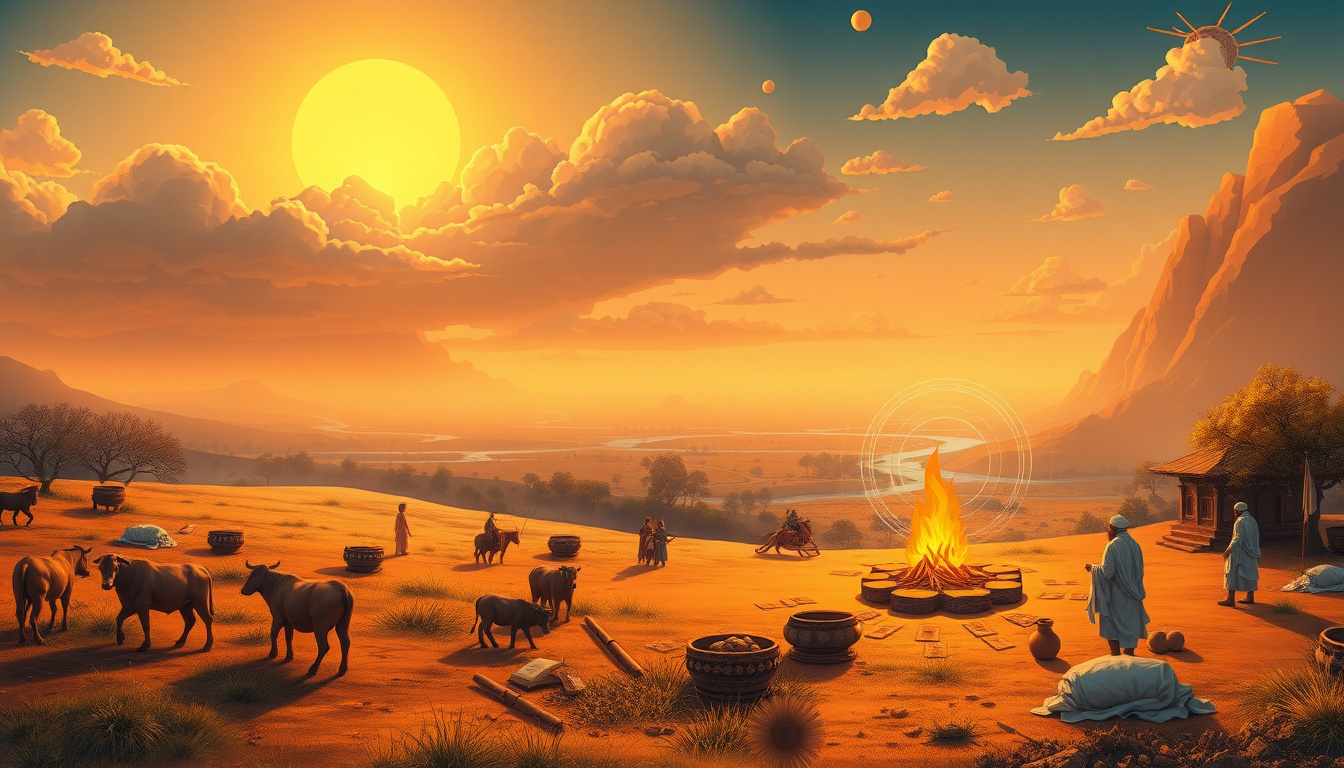
This is when the Aryans (yes, that word again—and no, it doesn't mean what the Nazis thought it meant; let's keep moving) migrated into the Indian subcontinent. They came with horses, chariots, and a pastoral economy. They brought their language, which eventually became Sanskrit, and their religious texts, the Vedas.
Think of this phase like this: imagine a new group of people arrives in your city, they speak a different language, worship different gods, and gradually settle down. That's what happened. The early Vedic period was marked by migration, settlement, and the composition of the Rig Veda—the oldest of the four Vedas and probably the oldest surviving religious text in the entire world. Let that sink in. We're talking 3,500-year-old poetry.
The society was organized into tribes (called *janas*), led by kings (*rajas*). There were priests, warriors, herders, and commoners. It was still relatively egalitarian compared to what came later. People valued cows and horses—not just economically, but culturally. A man's wealth was measured in cattle. Even today, we have the word "go-dana" (gift of cows) in Sanskrit. The family (*kutumba*) was the basic unit, and life was largely pastoral.
Later Vedic Period (1000–500 BCE): Expansion and Consolidation
By 1000 BCE, things started changing. The Aryans moved eastward, into the Gangetic plains. Agriculture became more important than pastoralism. Iron tools arrived, which meant better farming. Population grew. Settlements became towns. And most importantly, the rigid caste system started taking shape.
This is when the other three Vedas were composed—the Yajur Veda, Sama Veda, and Atharva Veda. Along with them came the Upanishads, which introduced more philosophical thinking. Kings became more powerful. Rituals became more elaborate and expensive. And the brahmins (priests) became the top of the social hierarchy.
You might be wondering: what's the key difference to remember? Here's a mnemonic I tell all my students: RIG = RISE AND GROW. Rig Vedic period = Rise (Aryans arrive), Later Vedic = Grow (they expand and multiply).
The Four Vedas: Your Quick Deep-Dive
Okay, let me make this super practical because exams *love* asking about the Vedas. But instead of just listing them, let me tell you what each one actually *does*.
Rig Veda: The Hymn Book
This is the oldest. It contains hymns praising various gods and goddesses. Indra (the king of gods), Agni (fire), Varuna (cosmic order), Soma (a ritual plant, possibly hallucinogenic)—they all get their praises sung here. Most importantly, the Rig Veda gives us our first picture of Vedic society. From reading it, we know what they ate, how they fought, what they valued. It's like an ancient documentary.
Yajur Veda: The Ritual Manual
If the Rig Veda is the "what," the Yajur Veda is the "how." It contains instructions for performing rituals and sacrifices (*yajna*). It's more practical than poetic. Got an exam question asking about ritual procedures? This is your source.
Sama Veda: The Musical Score
This one's basically a collection of melodies and chants derived mostly from the Rig Veda. It shows that music was integral to Vedic rituals. Interestingly, it's the shortest of the four Vedas.
Atharva Veda: The Practical Knowledge
This is the rebel Veda. While the first three were composed by the priestly elite, the Atharva Veda contains more practical, everyday knowledge—healing, magic, spells, charms. It's got medical knowledge, mathematical concepts, and information about common people. It was composed last and sometimes wasn't even considered a "true" Veda by orthodox brahmins. But it's incredibly valuable for understanding actual Vedic life.
| Veda | Main Focus | Key Feature | Quick Tip for Exam |
|---|---|---|---|
| Rig Veda | Hymns and praises to gods | 1,028 hymns; oldest text | Source for Early Vedic society |
| Yajur Veda | Ritual procedures and sacrifices | Instructional; practical guidance | For questions on yajna and rituals |
| Sama Veda | Musical chants and melodies | Shortest Veda; musical format | Rarely asked in detail; know it exists |
| Atharva Veda | Practical knowledge, healing, magic | Latest composed; contains everyday wisdom | Shows common people's life and concerns |
The Social Structure: The Birth of the Caste System
Here's where it gets sensitive and important. The Vedic period didn't have the rigid caste system we know from later centuries. But it had the seeds of it. Let me explain how it evolved.
In the Early Vedic period, there were basically two divisions: the Aryans (the "noble ones") and the Dasas or Dasyus (the non-Aryans, basically the indigenous people they encountered and sometimes conquered). This was more of a social/ethnic division than a hereditary caste system.
As time progressed, especially in the Later Vedic period, society became more stratified. By the time you reach the end of the Vedic period, you see the emergence of four *varnas* (literally "colors," but really meaning classes):
Brahmins (priests and scholars) – At the top, performing rituals and studying the Vedas. They had a monopoly on religious knowledge.
Kshatriyas (warriors and rulers) – The second tier. Kings and their armies. Interesting note: in the Early Vedic period, many kings were actually performing their own sacrifices. Later, they had to hire brahmins to do it.
Vaishyas (merchants, herders, farmers) – The third group. The productive class. They paid taxes and supported the other two.
Shudras (laborers and servants) – The fourth varna. These were largely the indigenous people who were incorporated into the system in a subordinate position.
Now, here's what's crucial to understand: this was *not* the same as the caste system of later periods. It was more fluid initially. You could theoretically change your position. A wealthy merchant could become a warrior. But over time, especially after the Vedic period, it became rigid and hereditary. That's a key distinction exams often test.
One more thing—there was also a fifth group, Ativarnas (outside the varna system), who were considered "untouchable." This is where the seeds of untouchability were sown, though it became far more rigid and cruel in later periods.
Here's a memory trick: BKVS = Brahmins, Kshatriyas, Vaishyas, Shudras. Sounds like a B-movie title, I know, but it works!
Economy, Culture, and Daily Life in the Vedic Period
The Economy: From Pastoral to Agricultural
Early Vedic economy was pastoral. Cattle were wealth. When the Rig Veda talks about wars, they're often about cattle raids. A king's power was measured in the herds he owned. Interestingly, cows were so valuable that they became the standard for exchange—like currency. In Sanskrit, the word for "interest" (*vrihi*) literally refers to the increase in cattle herds.
By the Later Vedic period, agriculture took over. With iron tools, farming became more productive. People settled in fixed villages. Surplus production meant you could support non-farming classes like priests and warriors. Trade also developed. We see mentions of merchants (*pani*) and even early forms of guild-like organizations.
Religion and Philosophy
The Vedic religion wasn't about temples and idols—not yet, anyway. It was about rituals, sacrifice, and maintaining cosmic order (rita or rta). The Vedic people believed that performing the right rituals at the right time, with the right words, could influence the gods and maintain universal harmony. Every ritual had a purpose—to ensure good harvests, victory in war, offspring, health.
As the Later Vedic period progressed, more philosophical questions started emerging. The Upanishads (which technically come at the end of the Vedic period or just after) began asking: What is the ultimate reality? What happens after death? Who am I, really? This shift from ritual-focused religion to philosophy-focused religion is huge and will come up in your UPSC mains if you're aiming for history optionals.
Family and Women
The Vedic family was patriarchal, but women had more freedom than in later periods. Women could attend sacrifices, participate in religious discussions, and even compose hymns (yes, there are female composers in the Rig Veda!). A woman was called *Arya*, same as a man, indicating she had social standing.
However—and this is important—by the Later Vedic period, you see restrictions increasing. The practice of child marriage appears. Women's access to education becomes limited. By the end of the Vedic period, many of the restrictive practices that would define women's status in later Hindu society were beginning to take root. This is a classic UPSC question: "Discuss the status of women in the Vedic period." Make sure you differentiate between Early and Later Vedic.
Marriage itself was an important institution. There were eight types of marriages (*ashta vivaha*) described in the Dharma Shastras that came later, but even in the Vedic period, marriage was seen as a sacred bond. Dowry doesn't appear to have been a practice initially, but gifts were exchanged.
The Vedic Gods and Belief System
The Vedic pantheon is fascinating because it's so different from later Hinduism. You won't find Shiva or Vishnu worship in the Rig Veda. Instead, you have gods who represent natural forces and cosmic principles.
Indra is the supreme god in the Rig Veda—the king of the gods, god of thunder and war. He's depicted as a warrior, fighting demons, creating order from chaos. He's mentioned more than any other god in the Rig Veda (around 250 hymns!). Later, he loses prominence, which is interesting from a historical perspective—it shows how religious beliefs evolve.
Agni (fire) is equally important because he's the messenger between gods and humans. Every sacrifice involves fire, so Agni is essential to Vedic ritual.
Varuna represents cosmic order and is associated with the sky and water. He's the guardian of rita (cosmic law). He's depicted as stern and somewhat fearsome, unlike the gentle gods of later Hinduism.
Soma is interesting—it's both a god and a ritual plant. The Soma ritual involved pressing a plant and drinking its juice to achieve divine connection. What exactly Soma was? Still debated by scholars. Some say it's a hallucinogenic mushroom, others say a plant, some say it's metaphorical. For your exam, just know it was central to Vedic ritual and was believed to grant immortality.
Surya (sun), Maruts (storm gods), **Mitra** and **Aryaman** (gods of contracts and friendship)—there are dozens more, but these are the heavy hitters.
The religion was polytheistic but with an undercurrent of something deeper. Some scholars see hints of monism (belief in one ultimate reality) even in the Rig Veda, especially in hymns like the Nasadiya Sukta, which questions the origin of creation itself. This is the philosophical foundation that will bloom fully in the Upanishads.
Language, Literature, and the Preservation of Knowledge
Let's talk about something remarkable: the Vedas were preserved orally for centuries, maybe even over a thousand years, before being written down. How? Through an incredible system of memorization and transmission.
Vedic Sanskrit was the language of the Vedas—and it's different from Classical Sanskrit. It's more archaic, with different grammar rules. For linguists, studying Vedic Sanskrit helps us understand the evolution of the entire Indo-European language family. That's why the Vedas are studied not just by Indians but by scholars worldwide.
The oral tradition was so sophisticated that there were different ways of reciting the Vedas to ensure no word was lost or changed. The *Samhita Path* (normal recitation), *Pada Path* (word-by-word), *Krama Path* (combinations)—these were different techniques to ensure accuracy. When it was finally written down, scholars were amazed at how perfectly it matched what had been preserved orally. This is a remarkable achievement in human history.
Besides the Vedas themselves, the Vedic period also saw the composition of auxiliary texts:
Brahmanas – Prose texts explaining the ritual meanings. They're huge—the Shatapatha Brahmana has 100 chapters! If you want to understand how Vedic rituals were performed and why, the Brahmanas are your source.
Aranyakas – "Forest texts." They mark a transition toward more philosophical inquiry and were often studied in forest retreats.
Upanishads – The philosophical culmination of Vedic thought. There are over 200 Upanishads, though only 13 are considered principal. The Upanishads ask deep questions about the nature of reality (*Brahman*), the self (*Atman*), and their relationship. They're the foundation of Vedantic philosophy.
Together, these texts—Vedas, Brahmanas, Aranyakas, and Upanishads—form what's called the *Shruti* (what is "heard"), i.e., divine revelation. This is distinct from *Smriti* (what is "remembered"), which includes epics and law books composed by humans.
Key Takeaways for Your Exam
Let me give you the ultra-concentrated version that you can use as last-minute revision:
Time Period: 1500–500 BCE (Early: 1500–1000 BCE; Later: 1000–500 BCE)
Main Feature: Composition of the Vedas; Aryan migration and settlement; rise of agriculture in Later Vedic period
Social Structure: Evolution toward the four-varna system (Brahmins, Kshatriyas, Vaishyas, Shudras)
Economy: Pastoral in Early Vedic, transition to agriculture in Later Vedic
Religion: Polytheistic nature worship; ritual-focused; later becomes philosophical (Upanishads)
Gender: Women had relatively more freedom in Early Vedic; restrictions increase in Later Vedic
Key Texts: Four Vedas (Rig, Yajur, Sama, Atharva), Brahmanas, Upanishads
Philosophy: Emphasis on Rita (cosmic order) and Yajna (sacrifice); later, pursuit of Brahman-Atman unity
One final thought before we dive into the practice questions: The Vedic period is often called the "foundation of Indian civilization," but don't take that to mean it was perfect or that everything started here. The Vedas are a product of their time—they contain prejudices, assumptions, and limitations. They also contain incredible wisdom, philosophy, and poetry. As you study them, try to see both. That's what makes for a truly nuanced UPSC answer.
Practice Questions
A) Zend Avesta B) Rig Veda C) Bible D) Torah
Answer: B) The Rig Veda, composed between 1500–1200 BCE, is older than the other texts mentioned.
A) Gold coins B) Land ownership C) Cattle herds D) Grain stores
Answer: C) Cattle were the standard measure of wealth in pastoral Vedic society. The word for interest (vrihi) literally refers to the increase in herds.
A) Rig Veda B) Yajur Veda C) Sama Veda D) Atharva Veda
Answer: D) The Atharva Veda was the latest composed and contains practical knowledge for common people, not just priestly ritual.
A) The conquest of India by Alexander B) The shift from pastoral to agricultural economy C) The rise of Buddhism D) The construction of the first temples
Answer: B) The Later Vedic period saw the Aryans move into the Gangetic plains and shift from pastoral to agricultural economy with the introduction of iron tools.
A) Karma B) Dharma C) Rita/Rta D) Moksha
Answer: C) Rita represented the cosmic law and order that Vedic peoples believed rituals and proper conduct maintained. This is distinct from the later concept of Dharma.
Published by Dattatray Dagale • 14 August 2026
.jpg)
.png)


.png)


.png)


0 Comments