Introduction
Let me be honest with you — when I first started teaching the Vedic period to students, I noticed something remarkable. Almost every single one of them would groan and say, "Sir, this is just ancient history. Why do we need to know about people who lived 3,500 years ago?" And then, without fail, by the end of the chapter, they'd realise: the Vedic period isn't just history. It's the DNA of Indian civilisation. Everything — our caste system, our philosophy, our rituals, our languages, our very way of thinking — traces back to these Vedic centuries.
The Vedic period, roughly spanning from 1500 BCE to 600 BCE, is perhaps the most crucial phase of ancient Indian history. It's when the Indo-Aryans settled in the Indian subcontinent, composed the Vedas, and laid down the intellectual, spiritual, and social foundations that would define Indian culture for millennia. For exam purposes — whether you're targeting SSC CGL, UPSC, or any competitive exam — the Vedic period is non-negotiable. But here's the thing: it's not as dry as it sounds.
Stick with me, and I promise you'll see why this era genuinely matters.
Who Were the Vedic Aryans and Why Do They Matter?
The Great Migration and Settlement
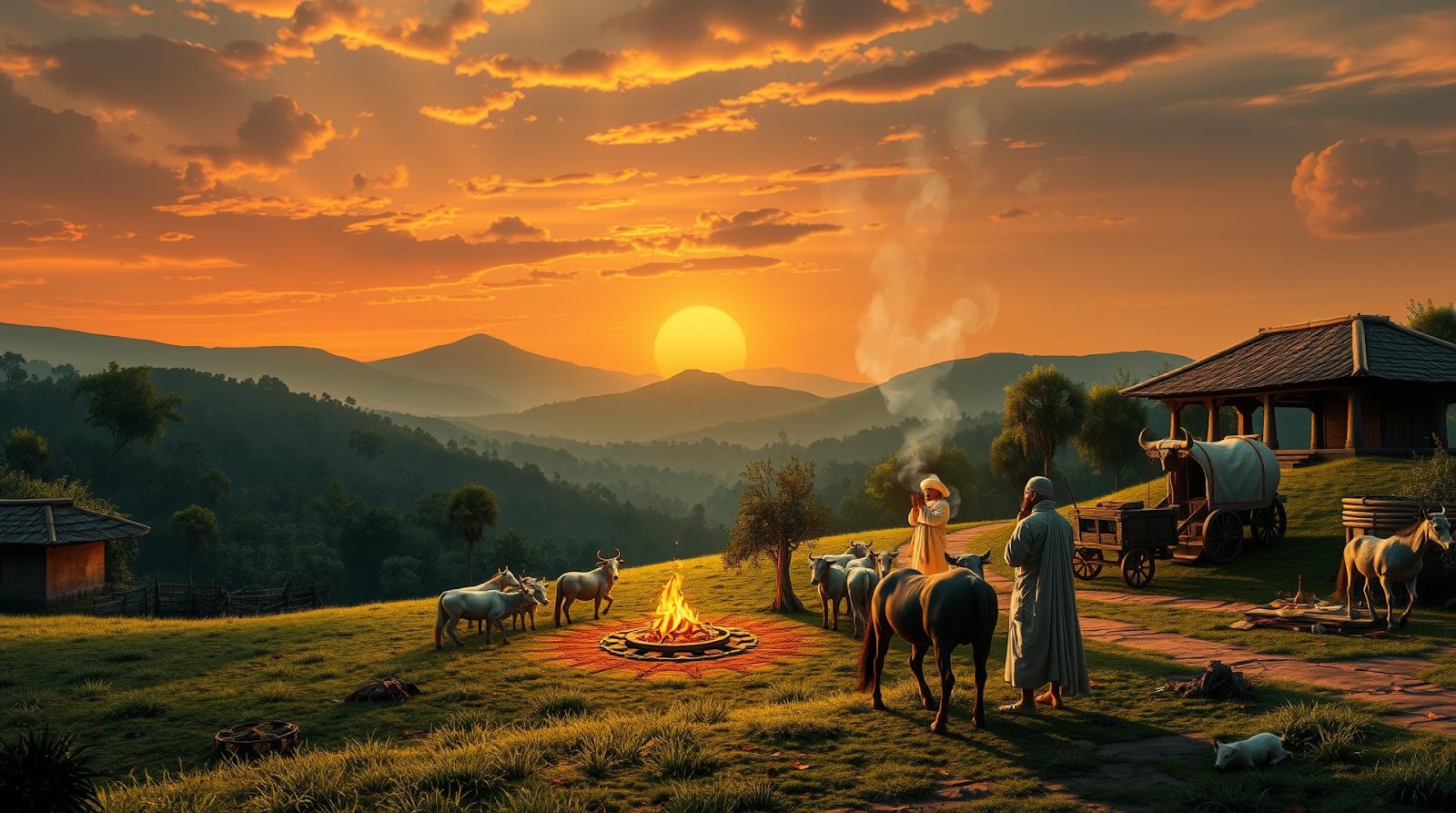
Around 1500 BCE, a group of pastoral, semi-nomadic people called the Indo-Aryans entered the Indian subcontinent from Central Asia (likely through the Khyber Pass in what's now Afghanistan). Now, before you ask — no, this wasn't a military conquest like you might imagine. It was more like a slow, gradual migration, almost like seasonal herders expanding their grazing areas. They brought horses, chariots, and a specific language — Sanskrit — which would become the language of the gods in Hindu tradition.
Here's where it gets interesting for your exam prep. The Vedic Aryans weren't the "first" people in India — the Indus Valley Civilisation had already declined by this time. But the Aryans' culture, beliefs, and traditions proved so influential that they essentially reshaped the subcontinent's demographic and cultural landscape. Think of it like this: if the Indus Valley was the first act of a play, the Vedic period was the second act that became the blockbuster everyone remembers.
Let me give you a mnemonic I use with all my students to remember the Vedic chronology:
"RIG-YAJUR-SAMA-ATHARVA = 1500-to-600 BCE" — This helps you remember not just the period, but also the four Vedas in order of their composition. The Rig Veda came first (around 1500-1200 BCE), followed by the Yajur, Sama, and Atharva Vedas.
Aryan Society — The Foundation of Varna System
The Vedic Aryans were organised into a society based on occupation and birth. Early on, this wasn't as rigid as the caste system that came later, but the seeds were there. The Rig Veda mentions the famous "Purusha Sukta" hymn, which describes society as having different varnas (literally "colours" or categories): Brahmins (priests and scholars), Kshatriyas (warriors and rulers), Vaishyas (merchants and farmers), and Shudras (servants). There was even talk of a Panchama (fifth varna) for those outside the system, though this wasn't formalised yet.
Now, here's something I always emphasise: early Vedic society was relatively more fluid than what came later. Vertical mobility existed. A skilled person could shift varnas. It was occupation-based, not purely hereditary yet. But over time — and this is critical for understanding Indian history — this became calcified into the rigid caste system. For your exam, remember: the Vedic period planted the seed; later periods watered it into what became the caste system as we know it today.
The Vedas — The Sacred Texts That Changed Everything
If the Vedic period is the foundation, the Vedas are the blueprints. These aren't just religious texts — they're windows into the lives, beliefs, and knowledge systems of ancient India. Let me walk you through them because understanding the differences is absolutely essential for any exam question.
The Four Vedas and Their Characteristics
The Rig Veda is the oldest and most important. Composed around 1500-1200 BCE, it's a collection of 1,028 hymns praising various deities. If you read it (and I recommend you do, at least summaries), you'll find hymns to Indra (king of gods), Agni (fire god), Soma (a sacred plant), and many others. What's brilliant about the Rig Veda is that it's not just religious fluff — it contains descriptions of Vedic life, social customs, warfare, and even early scientific observations about the cosmos.
The Yajur Veda came next (1200-1000 BCE approximately). It's more ritualistic than the Rig Veda. While the Rig Veda is mostly hymns of praise, the Yajur Veda contains mantras and instructions for performing sacrifices. It's more procedural — like a manual for priests. Two branches existed: the Black Yajur Veda (more commentary-heavy) and the White Yajur Veda (cleaner and more systematic).
The Sama Veda (1200-1000 BCE) is the melodic one. It's mostly verses from the Rig Veda rearranged for singing in rituals. Think of it as the "music edition" of Vedic knowledge. Not as frequently tested as the Rig Veda, but still important.
Finally, the Atharva Veda (1000-800 BCE approximately) is the youngest. It's different in character — it contains magical formulas, spells, medical knowledge, and everyday wisdom. It's actually quite fascinating because it deals with practical matters like curing diseases and ensuring prosperity. Often overlooked by students, but examiners love asking about the Atharva Veda's unique content.
The Vedic Literature: More Than Just Hymns
Now here's what many students miss: the Vedas weren't alone. Around each Veda developed supplementary literature. The Brahmanas were prose commentaries on rituals (very boring, but crucial for understanding priestly thinking). The Aranyakas were philosophical treatises meant for forest hermits studying in solitude. And the Upanishads — ah, the Upanishads! — these were the philosophical pinnacle, composed around 800-500 BCE, dealing with the nature of Brahman, Atman, and the meaning of existence. The Upanishads are where Indian philosophy truly takes flight.
For exam strategy: Rig Veda questions are most common. But always keep the key characteristics of each in mind.
| Veda | Period (Approx) | Content Type | Key Features |
|---|---|---|---|
| Rig Veda | 1500-1200 BCE | Hymns of praise | 1,028 hymns; deities like Indra, Agni, Varuna; most important |
| Yajur Veda | 1200-1000 BCE | Ritual mantras | Instructions for sacrifices; Black and White divisions |
| Sama Veda | 1200-1000 BCE | Melodic verses | Rig Veda verses rearranged for music/chanting |
| Atharva Veda | 1000-800 BCE | Magic, medicine, everyday wisdom | Spells, healing formulas, practical knowledge |
Vedic Economy, Religion, and Daily Life
Economy: From Pastoralism to Agriculture
Early Vedic society (1500-1000 BCE) was pastoral. The Aryans were cattle herders, and cattle was their primary wealth. The word "go" means both cow and wealth in Sanskrit — that's how central cattle were. Wealth was measured in cows, and raiding for cattle (called "gaudan") was a common practice. Indra, the chief god, is often celebrated for winning cows in the Rig Veda.
But here's the beautiful part: by the Later Vedic period (1000-600 BCE), agriculture became dominant. The Aryans settled down, cleared forests (you see references to clearing forests called "aranya"), and began farming. This shift had massive social consequences — it led to permanent settlements, the rise of kingdoms, and eventually the emergence of the Mahajanapadas (great kingdoms) that we see in the next historical period. The economy became more complex, barter gave way to some early forms of exchange, and occupational specialisation increased.
Religion and the Vedic Gods
Vedic religion wasn't Hinduism as we know it today, but it was its ancestor. The gods were powerful, natural forces personified. Indra was the storm god and warrior (king of gods). Agni was fire, essential for sacrifice. Varuna was the cosmic order and upholder of truth. Surya was the sun. Soma was a sacred intoxicating plant used in rituals.
What's crucial: sacrifice (yajna) was the central religious act. Priests would perform elaborate sacrifices, offering ghee, grains, and animals to the gods, believing the gods would reciprocate with favours — victory in battle, fertile rains, healthy cattle. This isn't charity; it's a transaction. "Do ut des" — I give so that you give. This ritualistic framework became increasingly elaborate over the Vedic period and eventually crystallised into Hindu puja practices.
One more thing I always tell students: early Vedic religion didn't have temples or idols. It was a religion of rituals and mantras, not images. The transition to idol worship came much later, around 500-400 BCE onwards.
Family and Social Life
The family was patriarchal. The father (pitri) was the head. Women had a respected position — they could participate in rituals and there are hymns addressed to wives — but they weren't equal to men. Child marriage wasn't a thing yet; girls were usually married after puberty. Widows could remarry (unlike later practices).
Education was oral and meant primarily for boys of upper varnas. A boy underwent the Upanayana (sacred thread ceremony) around age 8-12, after which he'd study with a guru. The concept of Gurukulvasa (living with a teacher) originated here.
Property was inherited patrilineally, and there was a concept of private property, though communal grazing lands existed. Political authority was held by kings who were advised by councils of nobles.
Key Transitions: Early to Later Vedic Period
I always divide the Vedic period into two phases for my students, and this distinction is absolutely gold for understanding the period's evolution:
Early Vedic Period (1500-1000 BCE): Pastoral, semi-nomadic, multiple small kingdoms, Rig Veda dominant, sacrificial religion in its formative stage, society relatively more egalitarian (within varnas).
Later Vedic Period (1000-600 BCE): Agricultural, settled, larger kingdoms emerging, Yajur and other Vedas composed, rituals becoming incredibly elaborate and expensive (creating priestly power), varna system hardening, hierarchies deepening, philosophical inquiry beginning (Upanishads).
The Later Vedic period is when you see the "16 Mahajanapadas" beginning to take shape — kingdoms like Kuru, Panchala, Kosala, and Magadha that would dominate the next historical period. This transition is why some historians mark 600 BCE as the end of the Vedic period; by then, the Iron Age had arrived, and historical kingdoms with proper administrative structures were forming.
Why the Vedic Period Still Matters Today
Let me end with something personal. When I teach the Vedic period, I always ask my students: "Why should you care?" And the answer is profound.
Every Hindu ritual performed today — from the Upanayana thread ceremony to Diwali to weddings — traces its roots back to Vedic practices. The philosophical concept of Karma, Dharma, Atman, and Moksha that permeates Indian thought? Vedic origins. The Sanskrit language, which still influences Indian languages? Vedic Sanskrit. Even the concept of "Bharat Mata" (Mother India) as a cultural identity rather than a political one? It originates in the Vedic notion of "Aryavarta" — the land of the Aryans.
For your competitive exam, mastering the Vedic period means understanding the foundation of Indian thought and society. Questions will come — not just about dates and kings, but about social structures, religious practices, the evolution of language, and philosophical ideas. The student who understands this deeply will ace those questions not through rote memorisation, but through genuine comprehension.
Now, let me give you one final memory device I created specifically for exam revision:
"RIG-YAJUR-SAMA-ATHARVA | BRAHMINS-KSHATRIYAS-VAISHYAS-SHUDRAS | INDRA-AGNI-VARUNA-SOMA" — The four Vedas, four varnas, and four major Vedic deities. If you can remember these three groups of four, you have the skeleton of the entire Vedic period memorised.
Trust me, I've seen students go from failing this topic to scoring full marks using these kinds of connections. The key is to see the Vedic period not as disconnected facts, but as a coherent civilisational project that changed history.
Practice Questions for You
A) Rig Veda B) Yajur Veda C) Sama Veda D) Atharva Veda
Answer: D) Atharva Veda — This is the youngest Veda and deals with practical, everyday matters including spells and healing.
A) Idol worship B) Yajna (sacrifice) C) Pilgrimage D) Meditation
Answer: B) Yajna — Sacrifice was the fundamental religious practice, based on the principle of "do ut des" (I give so that you give).
A) Agriculture B) Pastoralism (cattle herding) C) Trade D) Mining
Answer: B) Pastoralism — Early Vedic society was pastoral; cattle was their primary wealth. The shift to agriculture happened in the Later Vedic period.
A) Monarchy B) Democracy C) Varna system D) Feudalism
Answer: C) Varna system — The Purusha Sukta describes how society is divided into Brahmins, Kshatriyas, Vaishyas, and Shudras based on occupation.
A) Indra B) Varuna C) Brahma D) Agni
Answer: C) Brahma — Brahma, the creator god, became important in later Hindu theology (Puranic Hinduism). In Vedic times, Indra, Varuna, Agni, and Soma were the major deities.
Published by Dattatray Dagale • 25 June 2026
.jpg)
.png)



.png)


.png)
0 Comments