Introduction
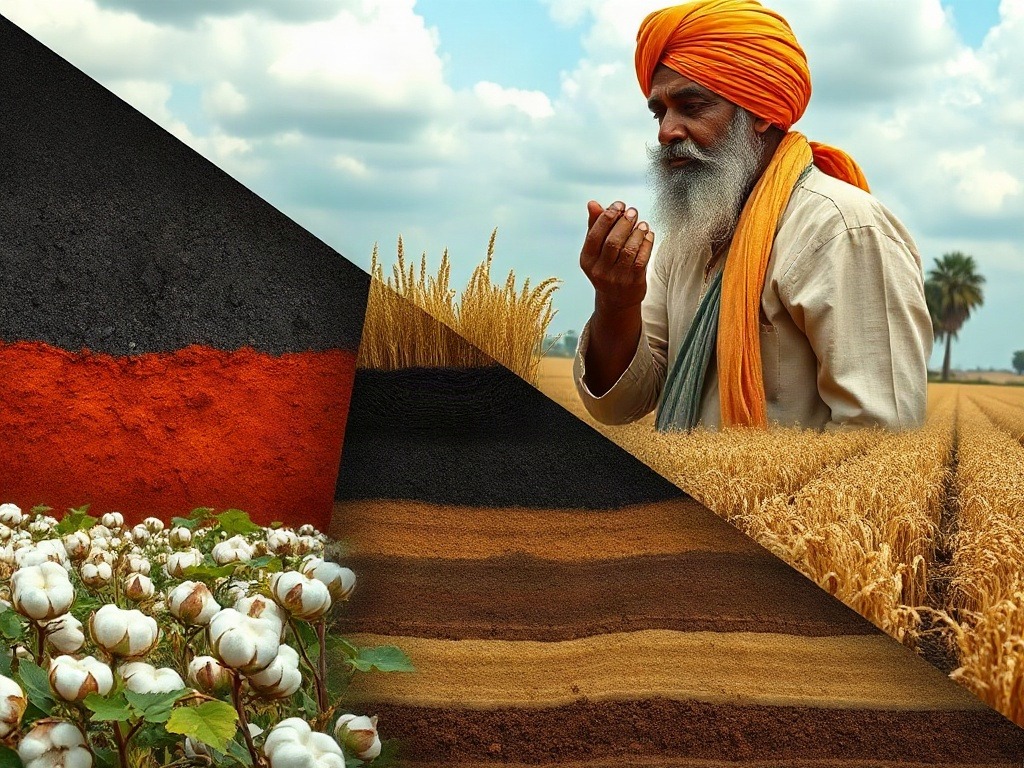
You know, I've been teaching geography for over a decade now, and I've noticed something fascinating: most students can rattle off the names of soil types, but they can't tell you why Punjab grows wheat while Kerala grows coconuts. That's the real disconnect. Geography isn't just memorization—it's about understanding why things happen the way they do.
Here's what I want you to realize: every grain of rice that reaches your plate, every cotton shirt you wear, every potato in your curry—all of it is deeply connected to the soil beneath our feet and the climate above our heads. And if you understand this connection, not only will you crack the exam, but you'll actually understand India. That's the beauty of studying agriculture and soils together.
So let's dive in. By the end of this post, you'll know exactly which soils grow which crops, and more importantly, why.
The Five Soil Types of India: Know Your Foundation
India has five major soil types, and I'm going to give you a trick I use with all my students. Think of it like this: "AAL LAR"—no, not the cricket term, but a mnemonic:
Alluvial, Arid, Lateral (Red), Laterite, Aacid (Podzol), Regur (Black).
Now let me break this down properly.
Alluvial Soils: India's Workhorse
These are India's golden child soils. I call them workhorse because they're found in about 40% of our country and produce about 50% of our food. No pressure, right?
Alluvial soils are deposited by rivers—basically, they're the leftover from thousands of years of river flooding. You'll find them in the Indo-Gangetic Plains (which, honestly, is like India's pantry), the Brahmaputra Valley, and along the river systems of South India.
Here's what makes them special: they're young soils, nutrient-rich, and perfect for agriculture. But—and this is important—they lose nitrogen quickly because they're porous and water drains through them rapidly. This is why we need to keep adding fertilizers. The color varies from grey to brown, and they're found mostly in lowland areas.
Think of alluvial soils as nature's gift that keeps on giving, but you have to keep feeding it.
Black Soils (Regur): The Premium Choice
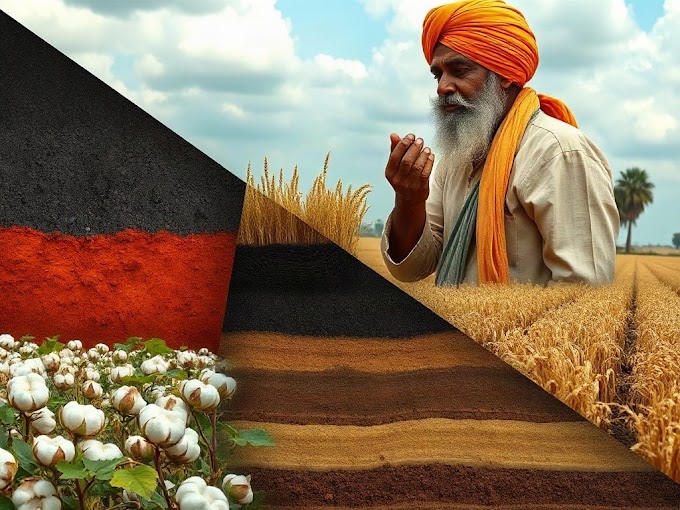
Now, if alluvial is the workhorse, black soil is the premium racer. These soils are packed with minerals, especially clay minerals like montmorillonite. They're formed from the weathering of lava rocks (trap rock), which is why you find them majorly in the Deccan Plateau.
What I find amazing about black soils is their water retention capacity. They absorb water like a sponge and release it slowly, which is perfect for crops that don't need constant watering. Cotton, sugarcane, jowar, and pulses absolutely love black soils. Maharashtra, Karnataka, and Madhya Pradesh—these states are sitting on literal goldmines of black soil.
The catch? They're harder to work with. When it rains, they become sticky and waterlogged. When it's dry, they form cracks that can be 2-3 feet deep. It's like dealing with a beautiful but temperamental partner.
Red and Laterite Soils: The Problematic Siblings
Red soils are found in the Deccan Plateau, parts of South India, and some areas in the east. They get their color from iron oxide—basically, rust. The irony? Despite being iron-rich, they're actually low in nutrients like nitrogen and phosphorus. It's like having a fancy car with no fuel.
They're acidic soils, which means they need lime application before cultivation. They're found in areas with moderate rainfall and are okay for groundnuts, millet, and pulse crops.
Laterite soils are their more problematic cousin. Found in high-rainfall areas (Kerala, coastal regions), they're heavily leached—meaning all the good nutrients have been washed away by heavy rain. They're mostly aluminum oxide and iron oxide, with very little that plants actually want. Not great for agriculture, which is why you'll see laterite areas used more for building material.
Arid and Forest Soils: The Extremes
Arid soils, found in Rajasthan and similar desert regions, are poor quality. They're low in organic matter, have high salinity, and minimal nutrients. Agriculture in these regions requires massive irrigation and soil amendment. That's why the Green Revolution had such an impact—suddenly, desert could produce crops.
Forest soils (podzols) are acidic and poor, found in hilly and forested regions. They're not really suitable for regular agriculture, which is why these areas traditionally practiced shifting cultivation.
The Soil-Crop Connection: Why Geography Matters
Now here's the interesting part that actually makes sense of all this: different crops have specific soil requirements, and farmers in different regions have figured this out over centuries of trial and error.
I remember visiting my cousin's farm in Punjab, and he told me something that stuck with me: "We don't choose what to grow. The soil chooses for us." That's profound in its simplicity.
Major Crops and Their Soil Preferences
Rice is the ultimate soil flexibility champion. It grows in alluvial soils primarily, but also in laterite and acid soils if you manage them right. Rice needs waterlogging—basically, it wants to sit in water, which is why it thrives in high-rainfall areas and plains where water can be held.
Wheat is the alluvial soil's best friend. It grows in the Indo-Gangetic Plains where alluvial soils dominate. It needs well-drained soil, moderate rainfall, and cool winters. That's why you see the wheat belt in Punjab, Haryana, and Uttar Pradesh.
Cotton absolutely loves black soil. The clay content and water retention make it perfect. Maharashtra and Gujarat are cotton capitals because their black soil is exceptional. Cotton also grows in red soils with proper management.
Sugarcane is a heavy feeder—it takes a lot from the soil. It grows best in alluvial soils of the Indo-Gangetic Plains and in black soils. Places like Uttar Pradesh, Karnataka, and Maharashtra are sugarcane hubs.
Pulses (daal—our protein source) are grown in various soils but prefer black and red soils. They're less nutrient-demanding than cereals and often grown in rotation to improve soil quality.
Groundnuts and Oil Seeds prefer red and laterite soils. They're drought-resistant and can handle the nutrient-poor conditions better than other crops.
Jowar and Bajra (millets) are the desert warriors. They thrive in arid and semi-arid soils with low rainfall. Rajasthan and parts of Karnataka produce tons of these hardy crops.
| Crop | Preferred Soil Type | Key Regions | Climate Needs |
|---|---|---|---|
| Rice | Alluvial, Laterite | Punjab, West Bengal, Odisha | High rainfall, waterlogging |
| Wheat | Alluvial (well-drained) | Punjab, Haryana, UP | Moderate rain, cool winters |
| Cotton | Black Soil | Maharashtra, Gujarat | Moderate rainfall, warm |
| Sugarcane | Alluvial, Black | UP, Karnataka, Maharashtra | High rainfall, warm temp |
| Pulses | Black, Red Soil | Madhya Pradesh, Karnataka | Moderate, well-drained |
| Groundnuts | Red, Laterite | Tamil Nadu, Andhra Pradesh | Low-moderate rainfall |
| Jowar/Bajra | Arid, Red Soil | Rajasthan, Karnataka | Low rainfall, drought-hardy |
Soil Conservation and Modern Agricultural Challenges
You know what I tell my students? Soil is like your health—you don't realize how important it is until you lose it. And we're losing soil at an alarming rate.
India loses about 16.4 tons of soil per hectare every year due to erosion. That's massive. Soil that took centuries to form is disappearing in decades. This is where soil conservation becomes not just an exam topic, but a real crisis.
The major threats are:
Soil Erosion: Caused by water (in hilly areas) and wind (in arid regions). Heavy rainfall in the Western Ghats and Northeast causes massive erosion. The solution? Contour plowing, terracing, and maintaining vegetation cover.
Soil Degradation: Overuse of chemical fertilizers has depleted soil nutrients in many areas. You'll see this especially in Punjab, ironically the state that benefited most from the Green Revolution. Decades of intensive farming have exhausted the soil.
Salinization: In arid regions and places with poor irrigation management, salt accumulates in soil, making it infertile. Parts of Rajasthan and Gujarat struggle with this.
Waterlogging: In areas with excessive irrigation or poor drainage, soil becomes waterlogged, which kills root systems.
The modern solution? Sustainable agriculture practices: crop rotation, organic farming, mulching, and minimum tillage. States like Kerala and parts of South India are moving toward these methods.
Connecting the Dots: Geography, Climate, and Agriculture
Here's what makes Indian agriculture so geographically interesting: everything is connected. You can't study crops without understanding monsoons, can't understand monsoons without knowing about soils, and can't talk about soils without considering relief (hills vs. plains).
The Southwest Monsoon brings 80% of India's rainfall, mostly between June and September. This determines where we can grow what. High-rainfall areas get rice and coconut. Low-rainfall areas get millet and pulses. Medium-rainfall areas grow wheat and cotton.
Temperature also matters hugely. Wheat needs cool winters (which is why it's grown in North India), while sugarcane loves warmth. Spices like pepper and cardamom need the Western Ghats' specific climate and soil conditions.
What I love about teaching this is that it all makes logical sense. There's no randomness. Punjab grows wheat because of alluvial soils, winter rains, and cool temperatures. Kerala grows coconut because of tropical climate, high rainfall, and laterite soils. Tamil Nadu grows groundnuts because of red soils and semi-arid conditions.
Once you see these patterns, exam questions become easy. Because the examiner is usually just asking you: "Do you understand why this crop grows in this region?" And now, you do.
Quick Memory Tricks for Exam Day
Let me give you two more mnemonics that have helped my students score well:
For Soil Types and their characteristics: "BLACK SOIL IS PREMIUM FOR COTTON" (versus red soil which is budget, arid which is wasteland, laterite which is leached).
For crop-soil matching: "RICELY WHEAT COTTON BLACK" (Rice in alluvial, Wheat in alluvial, Cotton in Black). Adjust the second one for your region.
Also, remember: Alluvial = Rivers = Plains = Wheat, Rice, Sugarcane. Black Soil = Deccan = Cotton, Jowar. Red Soil = Deccan edges = Groundnut, Millet. Laterite = Western Ghats = Coconut, Spices.
Practice Questions
A) Black Soil B) Alluvial Soil C) Red Soil D) Laterite Soil
Answer: B) Alluvial Soil — These are the nutrient-rich soils of the Indo-Gangetic Plains, India's agricultural heartland.
A) Alluvial Soil B) Arid Soil C) Regur (Black) Soil D) Podzol Soil
Answer: C) Regur (Black) Soil — The clay content and water retention capacity of black soil make it ideal for cotton cultivation, particularly in Maharashtra and Gujarat.
A) Excessive salinity B) Heavy leaching and nutrient loss C) Waterlogging only D) Too much organic matter
Answer: B) Heavy leaching and nutrient loss — Laterite soils in high-rainfall areas are heavily leached, causing depletion of essential nutrients.
A) 4-1-2-3 B) 2-4-1-3 C) 1-2-4-3 D) 4-3-2-1
Answer: B) 2-4-1-3 — Wheat (alluvial), Sugarcane (alluvial/black), Rice (alluvial/laterite), Bajra (arid/red). This reflects soil quality from most to least fertile for intensive agriculture.
A) Punjab B) West Bengal C) Maharashtra D) Assam
Answer: C) Maharashtra — The Deccan Plateau's black soils are particularly prominent in Maharashtra, making it ideal for cotton, sugarcane, and jowar cultivation.
Published by Dattatray Dagale • 29 September 2026
.jpg)
.png)


.png)


.png)

0 Comments