Introduction
You know what's absolutely mind-blowing? There's an entire civilisation in Indian history that was more advanced than most of the world at its time, had better urban planning than many cities today, and yet we can barely read its script. I'm talking about the Indus Valley Civilisation, and honestly, every time I prepare students for competitive exams, this topic gets the most "wait, what?!" reactions in class.
Let me set the scene for you. Imagine it's around 3300 BCE. The Indus Valley—the region where modern-day Pakistan and northwest India meet—suddenly blossoms into one of the world's three greatest ancient civilisations. We're talking Bronze Age, people. The same era when Egypt had the pyramids and Mesopotamia had Sumer. But here's the kicker: most Indian students know way more about Egyptian mummies than they know about their own Harappa and Mohenjo-daro. That's what we're fixing today.
What Was the Indus Valley Civilisation?
The Basics: Geography and Timeline
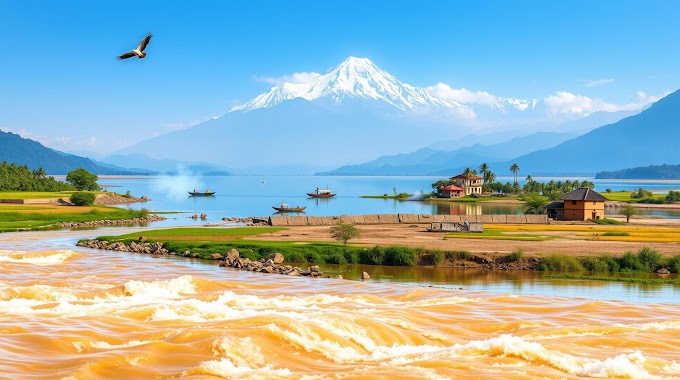
The Indus Valley Civilisation (IVC) flourished primarily in the Indus River valley, which flows through present-day Pakistan and into northwest India (Gujarat, Rajasthan, and parts of the Punjab). Now, I always tell my students: think of it like the Nile made Egypt possible, and the Indus made this civilisation possible. The river provided water for agriculture, transportation routes for trade, and fertile soil for farming. Life literally revolved around this river.
Chronologically, here's what we're looking at:
Early Harappan Phase: 3300–2600 BCE. This was the experimental phase, if you will. People were still figuring things out, setting up settlements.
Mature Harappan Phase: 2600–1900 BCE. This is the golden era. The civilisation reached its peak, with massive cities and incredible organisation. This is what most exam questions focus on.
Late Harappan Phase: 1900–1300 BCE. The civilisation started declining. By around 1300 BCE, it had largely disappeared.
Let me give you a memory trick I use with all my students: "HIM" — Harappan Is Mature (around 2600–1900 BCE). Easy, right?
Major Cities and Their Wonders
Now here's where it gets really interesting. The IVC wasn't just a bunch of small villages. It had two major metropolitan centres: Harappa and Mohenjo-daro. Both are UNESCO World Heritage Sites today, by the way.
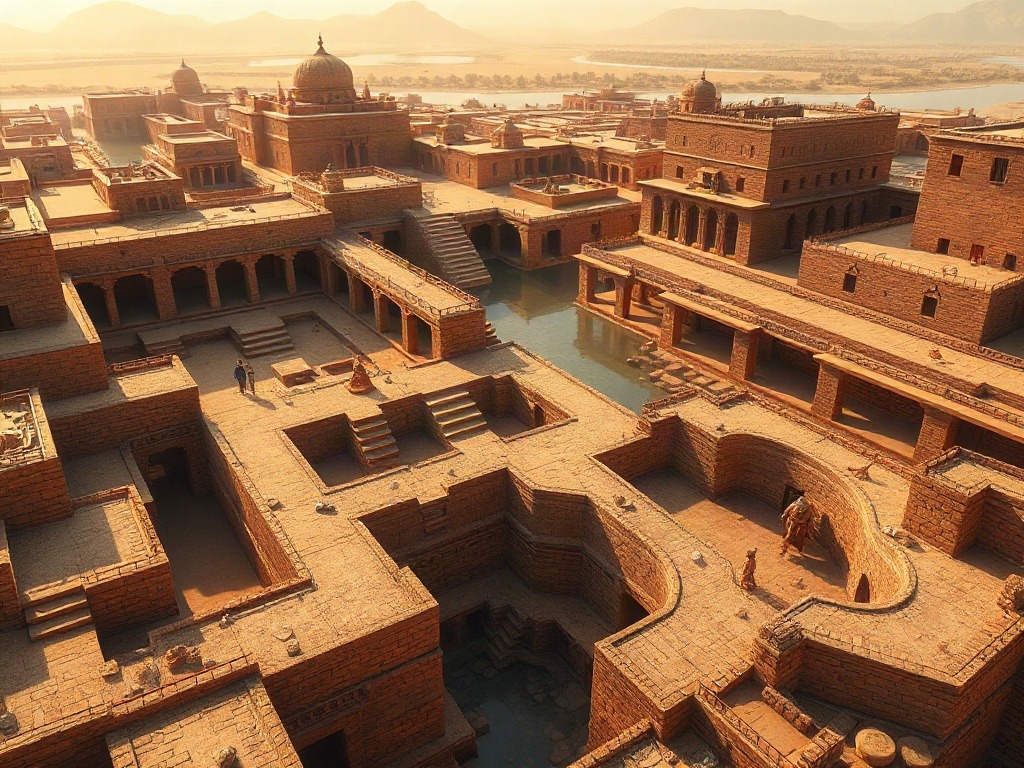
Mohenjo-daro (meaning "Mound of the Dead") is the larger and more famous one. Located in Sindh province, Pakistan, this city had a population of around 40,000–50,000 people at its peak. Can you imagine managing a city of that size 4,500 years ago without computers, without electricity, without even written records we can properly understand? Absolutely insane.
Harappa, situated in Punjab, was slightly smaller but equally sophisticated. Both cities followed almost identical urban planning principles, which tells us something important: there was a centralised authority, a unified culture, and standardised systems. This wasn't random chaos—this was organised civilisation.
Then you had secondary cities like Kalibangan (Rajasthan), Dholavira (Gujarat), and Rakhigarhi (Haryana). Each one followed the same architectural blueprint as the big cities. It's like they were all following one master plan drawn up by some ancient urban developer!
The Urban Marvel: How These Ancient People Built Incredible Cities
Town Planning That Would Impress Any Modern Architect
Okay, this is the part that genuinely fascinates me. When British archaeologist John Marshall first excavated Mohenjo-daro in 1922, his team found something shocking: a grid-pattern city with perfectly straight roads intersecting at right angles. The main streets were about 30 feet wide. Smaller streets branched off systematically.
Do you know what this means? The city planners knew what they were doing. They weren't haphazardly building houses. They had engineered the layout with geometric precision. Imagine our current cities like Delhi or Mumbai—all chaotic, with illegal constructions, random shops everywhere. Now imagine a city from 4,500 years ago that's MORE organised than that. Blows your mind, doesn't it?
Each street had proper drainage systems. Not just drainage—sewers. Underground sewage networks! The public baths, which we know existed, were connected to these drainage systems. The bricks used in construction were standardised: most were in a 1:2:4 ratio (height:width:length), which meant they could be used interchangeably. It's like the ancient version of LEGO blocks!
Here's something I emphasize to every single batch of students: there's no evidence of massive palaces or temples dominating the city. No giant monuments to a king or god. The power structure, whatever it was, wasn't displaying itself through monumental architecture like in Egypt or Mesopotamia. This suggests a different kind of society—possibly more egalitarian, or at least, leadership that didn't feel the need to advertise itself.
Housing and Daily Life
The houses in IVC cities weren't all the same size, which tells us there was economic inequality—richer and poorer people lived in different-sized homes. But even the smaller houses had bathrooms and wells. Every house had access to fresh water and a proper sewage connection. Compare that to many Indian cities today where slums don't have basic sanitation, and you realise how advanced this civilisation was.
The houses faced inwards, towards courtyards, with minimal street-facing walls. Windows were rare or completely absent on the street side. It's like they valued privacy—interesting glimpse into their social culture, isn't it?
Economy, Trade, and Daily Life in the IVC
What Did They Trade? How Did They Communicate?
The Indus people were traders. Archaeological evidence shows they traded with Mesopotamia, the Persian Gulf, and coastal regions. We've found Indus seals in Mesopotamia and Mesopotamian goods in IVC cities. They exported cotton, timber, gold, and semi-precious stones. They imported tin (essential for making bronze) and other raw materials.
Now, here's where the seals come in. The IVC had an advanced system of standardised weights and measures. They used seals—small stones carved with symbols—for commercial transactions and possibly identification. We've found over 4,000 seals! Each seal had a unique inscription, usually depicting an animal (bull, rhinoceros, tiger, crocodile) along with mysterious symbols above.
Here's the frustrating part: despite decades of research, we still can't read this script. The Indus script remains undeciphered. There's no Rosetta Stone equivalent for us, no bilingual text that could help crack the code. Some scholars think it's not even a language in the traditional sense—it might be pictographic or ideographic. This is a genuine unsolved mystery in Indian history, and honestly, it keeps me up at night sometimes!
Let me give you another memory trick: "TATS" — Trade, Agriculture, Tools, Seals. These were the pillars of IVC economy.
What They Ate, Made, and Used
They cultivated wheat, barley, peas, and sesame. Evidence suggests they also farmed cattle, goats, and sheep. They had knowledge of bronze-working, which required sophisticated metallurgical understanding. They made terracotta figurines, beads, bangles, and ornaments. The skill with which they created tiny beads from semi-precious stones is absolutely remarkable.
They wore clothes made from cotton—yes, cotton! IVC people were likely among the first to cultivate and use cotton for textiles. That's another gift from this civilisation to the world.
| Aspect | Details |
|---|---|
| Period | 3300–1300 BCE (Mature: 2600–1900 BCE) |
| Geographic Spread | Indus River valley (Pakistan, NW India). Covered ~1.26 million sq km |
| Major Cities | Mohenjo-daro, Harappa, Kalibangan, Dholavira |
| Population | Estimated 4–5 million people |
| Primary Crops | Wheat, barley, peas, sesame, cotton |
| Script | Indus script (undeciphered, 400+ symbols) |
| Key Characteristics | Urban planning, standardised weights, seals, no monumental architecture |
Religion, Culture, and the Great Mystery of Their Disappearance
Here's something that always intrigues students: we don't have clear evidence of temples or organised religious structures in IVC cities. We don't know what god or gods they worshipped. We have figurines of what might be a deity (the "Pashupati Seal" showing a horned figure suggests possibly proto-Shiva), but we can't be certain.
They did seem to value certain animals—the unicorn-horned creature appears frequently on seals, as does the bull. They may have had fertility cults. We've found female terracotta figurines that suggest goddess worship. But without being able to read their script, it's all educated guesswork.
The artistic style was remarkably consistent across all cities—another sign of unified culture and communication networks. Their art wasn't about grand glorification or religious themes as we see in Egypt. It was more practical, functional, focused on animals, seals, and everyday objects.
Why Did They Disappear? The Big Question
Around 1900 BCE, things started changing. By 1300 BCE, the civilisation had largely collapsed. What happened? This is genuinely one of history's great mysteries, and there are several theories:
Theory 1: Natural Disasters. Some scholars believe the Indus River changed its course due to tectonic activity. Without the river, agriculture failed. Settlements became unviable. People migrated to other areas.
Theory 2: Environmental Degradation. Deforestation for fuel and construction, overgrazing, and over-cultivation may have exhausted the land. The civilisation may have collapsed due to environmental pressure—a cautionary tale for us today, isn't it?
Theory 3: Invasion. The old theory suggested Vedic Aryans invaded and destroyed the civilisation. This is now mostly discredited, though there's still debate. The decline was gradual, not sudden, which doesn't align with an invasion narrative.
Theory 4: A Combination. Most modern scholars think it was a combination of environmental stress, climate change (reduced monsoons), and possibly economic factors. The civilisation didn't vanish overnight—it gradually transformed and dispersed.
What we know is: people didn't disappear. They migrated to eastern India, settling along the Ganges. Some genetic studies suggest continuity between IVC populations and modern Indian populations. So the civilisation ended, but the people lived on.
Key Takeaways for Your Exam
Alright, let me distil this into exam-friendly format. These are the points you absolutely must remember:
1. Chronology: 3300–1300 BCE, with Mature Phase being 2600–1900 BCE.
2. Location: Indus River valley, modern-day Pakistan and NW India.
3. Major Cities: Mohenjo-daro and Harappa (both in Pakistan), plus Kalibangan, Dholavira, Rakhigarhi.
4. Urban Features: Grid-pattern streets, standardised bricks, underground drainage, public baths, wells, standardised weights.
5. Economy: Agriculture (wheat, barley), animal husbandry, trade with Mesopotamia, seals for commerce.
6. No Evidence Of: Centralized palaces, monumental religious buildings, war fortifications, clear social hierarchy visible in architecture.
7. Script: Undeciphered Indus script with 400+ symbols.
8. Decline: Around 1900 BCE onwards, due to environmental/climate factors primarily.
Practice Questions
A) It had advanced drainage systems and public baths
B) It traded extensively with Mesopotamia
C) It had massive temples dedicated to various gods
D) Its script remains undeciphered to date
Answer: C) Cities like Mohenjo-daro show no evidence of large temple complexes like in contemporary Mesopotamia or Egypt.
A) 3300–2600 BCE
B) 2600–1900 BCE
C) 1900–1300 BCE
D) 1300–1000 BCE
Answer: B) 2600–1900 BCE is when the civilisation reached its peak development.
A) Mohenjo-daro
B) Harappa
C) Dholavira
D) Both A and B
Answer: C) Dholavira is located in Gujarat, India. Mohenjo-daro and Harappa are in Pakistan.
A) Religious rituals
B) Commercial transactions and identification
C) Decorative purposes only
D) Recording historical events
Answer: B) Seals were used in trade and commerce, possibly as marks of ownership or authentication.
A) Invasion by Vedic Aryans
B) Eruption of a massive volcano
C) Changes in river course and environmental degradation
D) Plague and disease
Answer: C) Climate change, reduced monsoons, possible river course deviation, and environmental pressure are the most accepted explanations for gradual decline.
There you have it—the complete story of one of the world's greatest ancient civilisations. The IVC reminds us that advanced civilisation isn't just about pyramids and palaces. It's about organisation, planning, and respect for people's daily needs. In many ways, they were ahead of their time. Study this well, and you'll not only pass your exam but genuinely appreciate your own heritage. Best of luck with your preparation!
Published by Dattatray Dagale • 07 September 2026
.jpg)
.png)



.png)


.png)


0 Comments