Introduction
Let me start with a confession: when I first started teaching SSC and UPSC students over a decade ago, I used to breeze through the Indus Valley Civilisation in about 15 minutes. "It was an advanced urban society, they had good drainage, seals with undeciphered script, and then it vanished mysteriously." Tick. Next topic. Move on.
But over the years, I realized I was doing this incredible civilisation a massive injustice. Once I dug deeper—pun intended, considering we're talking about archaeology—I discovered that the Indus Valley wasn't just another ancient society. It was revolutionary. It predates almost everything we usually celebrate in Indian history, and honestly, it raises more fascinating questions than answers.
Here's why this matters for you: The Indus Valley Civilisation appears in almost every competitive exam—SSC CGL, UPSC, state PCS, you name it. But the questions have evolved. They're not just asking "Where was the Indus Valley Civilisation located?" anymore. Examiners want you to understand why this civilisation mattered, how it functioned, and what happened to it. That's the kind of depth that separates good answers from exceptional ones.
So let's sit down, grab some chai, and unpack one of history's greatest mysteries together.
When the Indus Valley Ruled: Timeline and Geography
The Timeline That Blew Everyone's Mind
Now here's the thing that absolutely fascinates me about dating the Indus Valley Civilisation: historians initially thought it was a recent discovery in chronological terms. But when they started carbon dating and cross-referencing with other civilisations, they realized this wasn't a sidekick to ancient Egypt or Mesopotamia. In many ways, it was their contemporary.
The Indus Valley Civilisation flourished between approximately 2600 BCE and 1900 BCE—that's the mature phase, which is what we mostly study. But settlement in the region goes back to around 3300 BCE or even earlier. Let me give you perspective: when the Indus Valley was at its peak prosperity around 2300 BCE, the Egyptian Middle Kingdom was well underway, and Mesopotamia was in its classic Sumerian period. India wasn't "behind"—it was different, and arguably, more planned.
What I tell my students is this: the Indus Valley had urban planning before it had kings we can name. It had mathematics before it had temples (at least, not the kind we associate with later Hinduism). It had commerce before it had written literature we can read.
Where Exactly Was This Civilisation?
This is crucial for exam purposes, and I've seen students get confused here. The Indus Valley Civilisation wasn't confined to just the Indus valley—that's a misnomer archaeologists have kept because the main valley was where it was first discovered.
Let me map it out for you. The civilisation spread across the Indus River valley (modern-day Pakistan) and extended eastward into northwestern India. We're talking about parts of present-day Punjab, Haryana, Gujarat, and Rajasthan. The sheer geographical spread? Over 1.26 million square kilometers. That's bigger than some countries. For comparison, it was roughly 2.5 times the size of the Old Kingdom Egypt.
The major cities—and when I say "major," I mean planned, organized, sophisticated cities—were Harappa and Mohenjo-daro. Harappa sits on the Ravi River (in modern Punjab), while Mohenjo-daro is on the Indus River in Sindh. There were also significant settlements like Dholavira in Gujarat, Lothal, Banawali, and Kalibangan. Each one tells a slightly different story about how this civilisation adapted to its environment.
Urban Planning and Technology: They Were Ahead of Their Time (Literally)
City Planning That Would Impress a Modern Architect
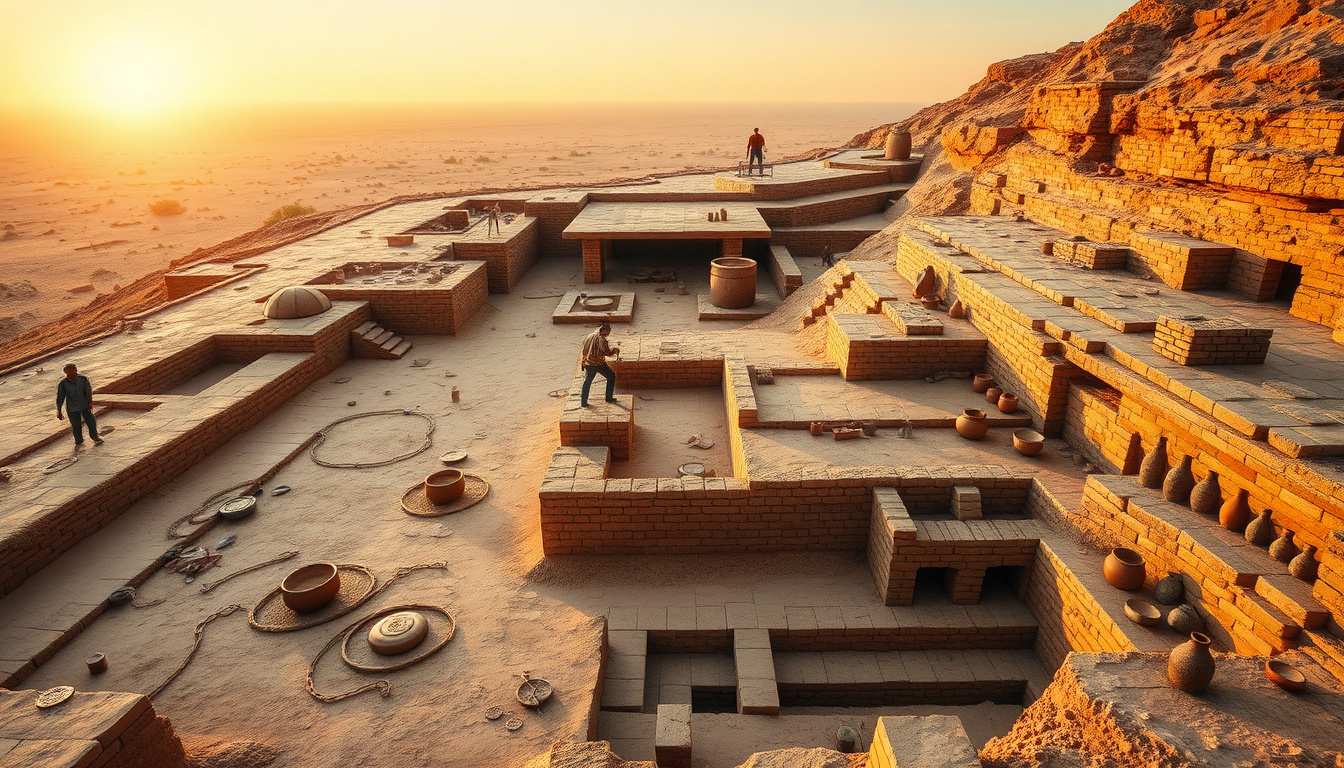
You know what genuinely amazes me? When you look at the layout of Mohenjo-daro, it feels almost too organized. The streets run in a grid pattern—north-south and east-west—like someone drew it on graph paper and then built it. That wasn't random. That was intentional urban planning.
The cities were divided into different sections. There was typically a citadel (or raised area with important buildings) and the lower city where most people lived. Buildings were made of baked bricks of standardized sizes—and here's the thing: we've measured bricks from different sites and across different time periods, and the proportions remain consistent. 1:2:4 ratio, typically. That's not coincidence; that's systematic standardization. It suggests there were standards bodies, maybe quality control, definitely planning authorities.
Let me give you a trick I use to remember the key feature of Indus Valley urban planning: DRAIN.
- D = Drainage systems (the most famous aspect)
- R = Road network (grid pattern)
- A = Architecture (standardized bricks and buildings)
- I = Infrastructure (wells, public baths)
- N = No evidence of fortifications (surprisingly)
Drainage and Water Management: Ancient Indians Were Plumbers
Okay, I'm obsessed with this aspect, and so should you be for exams because it comes up constantly.
Every major Indus Valley settlement had an intricate drainage system. Underground brick-lined drains ran beneath the streets. Wastewater from houses flowed into these drains, which eventually connected to larger drains leading outside the city. In Mohenjo-daro, we've found approximately 700 wells, which means roughly one well per 10 households. That's better sanitation than many Indian cities had until recently, honestly.
What's mind-bending is that this wasn't a luxury. It was standard. Even lower-class residential areas had drainage connections. This suggests either a very egalitarian society or at least a government that prioritized public health.
The Great Bath at Mohenjo-daro is the most famous structure. It's a public bathing area with carefully constructed steps, waterproofing techniques, and drainage systems. We still don't fully understand if it was for ritual purposes, recreation, or therapeutic reasons, but its existence tells us that bathing was culturally significant.
Weights, Measures, and Mathematics
Here's something that doesn't get enough attention: the standardization of weights and measures across this vast civilisation. Archaeologists have found weights made of stone in a decimal system. 1, 2, 4, 8, 16, 32—it goes up by powers of 2. That's sophisticated mathematics.
For commerce to work across such a large area, you need agreed-upon standards. The fact that we find the same weight standards from Harappa to Lothal to Dholavira suggests a centralized system of measurement, which implies central authority (though not necessarily a rigid monarchy as we understand it).
| Aspect of Indus Valley Civilisation | Key Features |
|---|---|
| Urban Planning | Grid pattern streets, standardized brick sizes (1:2:4 ratio) |
| Drainage System | Underground brick-lined drains, public sewage system |
| Water Supply | ~700 wells in Mohenjo-daro, public wells for communities |
| Weights & Measures | Decimal system, standardized across all settlements |
| Architecture | Multi-story buildings, flat roofs, no fortifications |
| Seals | Steatite seals with pictographs, possibly for trade/administration |
Culture, Trade, and the Mystery of the Seals
The Script We Still Can't Read
This is the part that keeps me up at night, and I'm not joking. The Indus Valley script remains undeciphered. We have over 4,000 seals with these pictographic symbols, but we can't definitively say what they mean.
Here's what we know: the script appears to be read from right to left. Most inscriptions are short—usually between 4 and 5 symbols on seals, sometimes up to 26 symbols. The repeated appearance of certain symbols suggests a structured linguistic system, not random doodling. Some scholars believe it's logographic (each symbol represents a word), while others think it's alphabetic or mixed.
Why can't we decipher it? Because there's no Rosetta Stone equivalent—no bilingual text that could help us cross-reference. And the language might not even be Indo-European, which means our assumptions about how language works don't necessarily apply.
For your exam preparation, remember: the Indus Valley script remains undeciphered, and that's an important fact in itself. When a question asks what we know about the administration or daily life, emphasize that we're inferring from archaeology, not from written records we can read.
Trade Networks That Spanned Continents
You want to know something that really shows how interconnected the ancient world was? The Indus Valley had active trade relationships with Mesopotamia, the Persian Gulf region, and possibly Egypt.
Evidence? Indus Valley seals have been found in Mesopotamian sites. Mesopotamian script mentions "Meluhha," which scholars believe refers to the Indus Valley region. Indus Valley weights and measures seem to have been adopted in trade centers outside their homeland. Goods like lapis lazuli from Afghanistan, turquoise from Iran, and shells from the coast were found in Indus Valley sites.
What fascinates me most is that this trade seemed relatively peaceful. There's no evidence of major warfare or conquest. Trade, it seems, was based on mutual benefit rather than military dominance. The Indus Valley people were merchants and manufacturers—they made pottery, beads, textiles—and they were very good at it.
Religious Beliefs and Daily Life
Now, I need to be honest here: we know very little about what these people believed in, what gods they worshipped, or what rituals they performed. We're guessing based on artifacts.
We've found figurines—some interpreted as mother goddesses, others as deities. The Great Bath might have had religious significance. Seals often feature animals, particularly the "unicorn" (a bull-like creature with a single horn), which might have religious or symbolic meaning. We've found what might be altars or ritualistic spaces in some buildings.
But here's the thing: we cannot definitively say these were temples or that these figurines were religious objects. They could have been toys. They could have been household items. This is where the undeciphered script really limits us.
What we can say with confidence: The people had an organized society with clear rules about urban planning and hygiene. They engaged in long-distance trade. They had skilled artisans and workers organized into probably guilds or professional groups. Children's toys (miniature carts, dolls) and everyday objects suggest a relatively comfortable lifestyle for at least the urban population.
The Great Mystery: What Happened to the Indus Valley Civilisation?
Theories and Evidence
Here's where my students always ask the most interesting questions. A civilisation that spread over such a vast area, that was technologically advanced, that had thriving trade networks—how does it just... disappear?
The truth is: we don't have a definitive answer. But we have several theories, and evidence for each:
Theory 1: Climate Change and Environmental Stress
Around 2000 BCE, there's evidence of a major shift in monsoon patterns. The Indus River's flow may have changed. This would affect agriculture, which was the backbone of the civilisation. Some settlements show evidence of repeated flooding. Without stable agriculture, urban populations couldn't be sustained.
Theory 2: Tectonic Activity
Some scholars point to geological evidence suggesting that tectonic shifts changed the course of rivers and affected water availability. Water scarcity in a river valley civilisation is an existential crisis.
Theory 3: Invasion by Indo-Aryans
This was the popular theory for decades, popularized by the "Aryan Invasion Theory." The Vedic texts mention conquest of dark-skinned people. Some scholars interpreted this as Indo-Aryans destroying the Indus Valley. But here's the modern consensus: the evidence for a sudden, violent conquest is weak. The decline was more gradual.
Theory 4: Gradual Abandonment
What many scholars now believe is that the civilisation gradually transformed rather than suddenly collapsed. People may have migrated due to environmental stress, abandoning major cities but continuing smaller settlements and eventually mixing with incoming Indo-Aryan populations.
Let me give you a useful mnemonic to remember the decline theories: CITE
- C = Climate change (monsoon shift)
- I = Invasion (Indo-Aryans – though debated)
- T = Tectonic activity (geological shifts)
- E = Environmental stress (water scarcity)
The Legacy: What the Indus Valley Left Behind
Here's what I find most compelling: even though the Indus Valley Civilisation ended, its influence didn't disappear entirely.
Some scholars argue that certain elements passed into later Hindu traditions—the emphasis on ritual bathing (think of river worship and bathing in the Ganges), the concept of weights and measures (which appear in Sanskrit texts), and possibly some deities. Some symbols on Indus Valley seals bear resemblance to later Hindu symbols, though this is debated.
The urban planning principles, the drainage systems, the standardization—these represent an early Indian achievement that was essentially forgotten until archaeology rediscovered it in the 1920s. That's almost tragic, isn't it?
For exam purposes, what's crucial to understand: The Indus Valley Civilisation represents the first major urban civilization on the Indian subcontinent. It predates the Vedic period (though they may have overlapped). Its decline happened gradually, probably due to multiple factors rather than a single catastrophic event. Its script and many cultural practices remain mysterious.
Quick Revision Checklist for Your Exams
Key Points to Remember:
- Time period: 2600-1900 BCE (mature phase)
- Geography: Spread over 1.26 million sq km, across Indus valley and northwestern India
- Major cities: Harappa, Mohenjo-daro, Dholavira, Lothal
- Urban planning: Grid-pattern streets, standardized bricks, no fortifications
- Technology: Advanced drainage systems, decimal weights system, wells
- Trade: Connections with Mesopotamia, Persian Gulf, possibly Egypt
- Script: Pictographic, undeciphered, 4,000+ seals found
- Decline: Likely due to climate change, tectonic activity, and environmental stress (not a sudden invasion)
- Legacy: Influenced later Indian civilizations, represented first major urban development on subcontinent
One final thought from my years of teaching: The Indus Valley Civilisation is fascinating because it challenges our assumptions about progress, civilization, and what "advancement" means. These people didn't have written literature we can read. They might not have had kingdoms or mighty rulers. But they had something else: systems, organization, and the ability to build something that lasted for nearly 1,000 years and covered an area larger than most modern nations.
That, in my opinion, is worth thinking about deeply—both for your exams and for understanding what makes a civilization truly advanced.
Practice Questions for Self-Assessment
A) It was primarily a nomadic pastoral society B) It had a grid-pattern urban layout with advanced drainage systems C) It had massive fortified walls around every city D) It was primarily based on hunting and gathering
Answer: B) It had a grid-pattern urban layout with advanced drainage systems
A) Egypt only B) Mesopotamia and the Persian Gulf region C) China and Central Asia D) Only within the Indian subcontinent
Answer: B) Mesopotamia and the Persian Gulf region
A) Climate change and monsoon shift B) Tectonic activity affecting river flow C) Conquest by the Mauryan Empire D) Environmental stress and water scarcity
Answer: C) Conquest by the Mauryan Empire (The Mauryans emerged much later, after the Indus Valley had already declined)
A) 500,000 square kilometers B) 1.26 million square kilometers C) 2.5 million square kilometers D) 3 million square kilometers
Answer: B) 1.26 million square kilometers
A) An octal (base-8) system B) A hexadecimal (base-16) system C) A decimal (base-10) system with powers of 2 D) A non-standardized, arbitrary system
Answer: C) A decimal (base-10) system with powers of 2 (1, 2, 4, 8, 16, 32...)
Published by Dattatray Dagale • 13 August 2026
.jpg)
.png)



.png)




.png)
0 Comments