Introduction
Let me be honest with you. When I first started teaching SSC CGL students ten years ago, I used to see the same terrified expression on their faces every single time we opened our Constitution textbook. Articles? Amendments? Parts? It all felt like a never-ending labyrinth of numbers and legal jargon.
Then one day, a brilliant student asked me: "Sir, do we really need to memorize all 470 articles? Or can we focus on what actually comes in the exam?"
That question changed how I teach this topic. And honestly, it should change how you approach it too.
Here's the reality: You don't need to memorize all articles. You need to understand the important ones — the ones that form the backbone of India's constitutional framework, the ones that examiners love to ask about, and the ones that actually make sense when you're reading a newspaper or watching news about elections, fundamental rights, or government functioning.
Today, I'm going to walk you through the articles that genuinely matter. We'll talk about why they matter, what they do, and most importantly — how to remember them without feeling like you're cramming for an exam the night before.
Understanding the Structure: Why Articles Exist at All
Before we jump into specific articles, let me give you a mental framework. Think of our Constitution like a building:
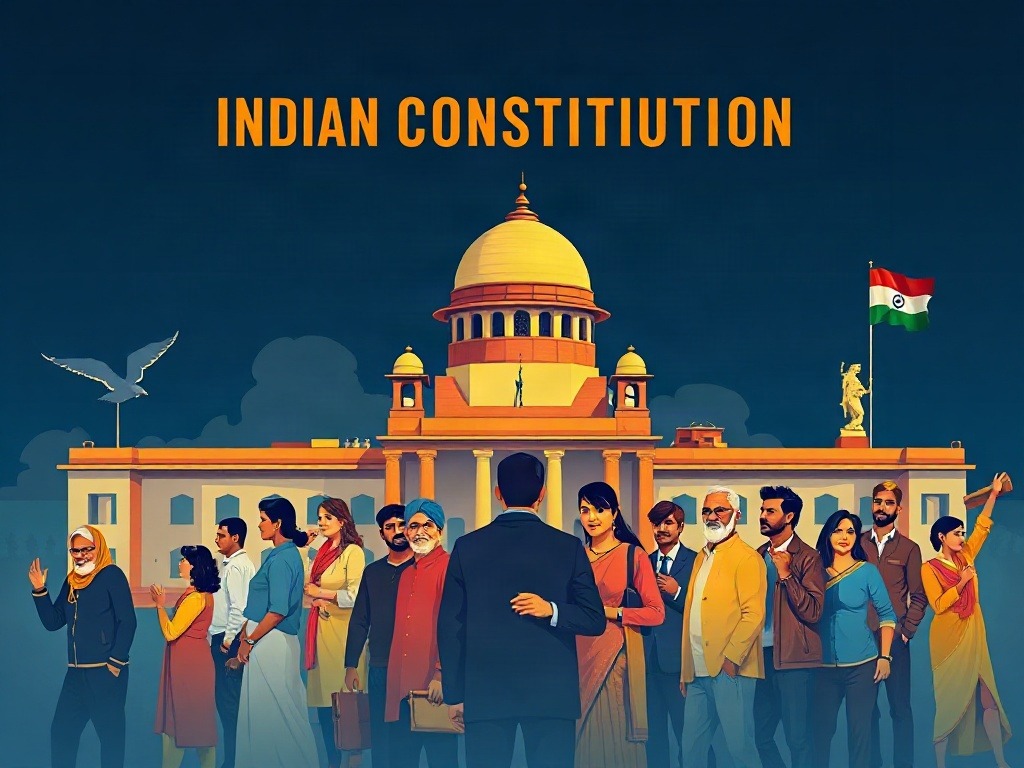
The Preamble is the mission statement — "We, the People..." — it tells you what the building is for. The Parts (there are 22 of them) are different floors. And the Articles are the actual bricks and mortar — they're the rules that make each floor function.
Now, here's where students usually go wrong. They try to memorize articles randomly. But if you understand which Part each article belongs to, suddenly everything clicks into place.
For instance, Articles 12-35 are all about Fundamental Rights (Part III). Articles 36-51 are about Directive Principles (Part IV). Articles 52-151 are about Union and State Government structure (Parts V and VI). Once you know this architecture, you're not memorizing random numbers — you're understanding a logical system.
The Big Categories You Must Know
Let me give you the mnemonic I teach all my students: FUN-DIP-SJA
F = Fundamental Rights (Articles 12-35)
U = Union Structure (Articles 52-151)
N = National Emergency (Articles 352-360)
D = Directive Principles (Articles 36-51)
I = Important Others (Articles 1-11, 355, 368)
P = Parliament (Articles 79-123)
S = State Government (Articles 152-238)
J = Judiciary (Articles 124-147)
A = Amendments (Article 368)
Once you group them this way, you're essentially studying just 9 categories instead of 470 random articles.
The Articles You Cannot Afford to Ignore
Articles 1-11: The National Identity
These are short, seemingly simple articles that examiners absolutely love. Why? Because they define what India actually is.
Article 1: India is a Union of States. This one article answered a massive question during independence: Would India be a federation or a unitary state? The answer was federation — but Ambedkar called it a "union" to suggest it's permanent and can't be broken.
I'll be honest — this might sound like just semantics. But when a question asks "Can a state secede from the Indian Union?" the answer comes directly from Article 1. The answer is no, because we're a "Union," not a voluntary association.
Article 5: Who are Indian citizens? This is crucial. Before the Constitution, there was no legal definition. Article 5 says: anyone domiciled in India on January 26, 1950 is automatically a citizen. No application form needed. This is why we didn't have a citizenship crisis at independence like Pakistan did.
Article 11: Parliament can regulate citizenship. This gives the Lok Sabha and Rajya Sabha power to change citizenship rules through law. Remember this when you encounter questions about citizenship amendments or the CAA.
Articles 12-35: Fundamental Rights (The Crown Jewels)
These are the rights that define India as a democratic nation. And here's something many students miss — understanding these articles is not just about clearing exams. It's about understanding why India's democracy has survived for 75+ years.
Article 12: Defines the "State" — and this is where it gets interesting. The State includes the central government, state governments, and all local authorities. This definition is crucial because all fundamental rights are rights against the State. So when you're fighting the government (or a local body) in court, this is your foundation.
Articles 14-18: Equality rights. These four articles are your shield against discrimination:
Article 14 = Equality before law (everyone is equal in law's eyes)
Article 15 = No discrimination on religion, caste, sex, race, place of birth
Article 16 = Equal opportunity in employment
Article 17 = Abolition of untouchability
Article 18 = No titles (this is why Ravi Shankar is Pt. Ravi Shankar, not "Pandit Ravi Shankar, OBE" in India)
Now here's the interesting part. Article 15(4) allows "affirmative action" — reservation for backward classes. This seems to contradict Article 15(1)'s promise of no discrimination based on caste. But the Supreme Court has ruled it's not a contradiction; it's equity. Discrimination that helps equals the field isn't forbidden.
Articles 19-22: Freedom rights. These are the fighting spirit of our Constitution:
Article 19 gives six freedoms: speech and expression, assembly, association, movement, residence, and profession. But — and this is important — they can be restricted "in the interest of national security, public order, or morality."
Article 21 is perhaps the most powerful: "No person shall be deprived of his life or personal liberty except according to procedure established by law." This simple sentence has been used to protect: - The right to privacy - The right to dignity - The right to a clean environment - The right to die with dignity - The right to information Courts keep expanding Article 21 because it's so foundational.
Article 22 protects people arrested or detained. You have the right to know why you're arrested, the right to a lawyer, and protection against custodial torture. This is why police can't just pick you up and keep you indefinitely.
Articles 23-28: Rights against exploitation and cultural freedom. Article 23 and 24 abolish human trafficking and child labor. Article 25-28 protect religious freedom — you can practice any religion, but the State can regulate it for reasons of public order or morality.
Article 32: The Right to Constitutional Remedies
This deserves its own spotlight. Article 32 says you can approach the Supreme Court directly if your fundamental rights are violated. No need to go through lower courts. No need for a lawyer necessarily.
This article is why poor people in India can fight the government in the Supreme Court. It's why a citizen can petition if their freedom of speech is violated. Dr. Ambedkar called Article 32 "the soul of the Constitution" because without it, all other fundamental rights are just words.
The Architecture of Government: Articles That Run the Country
Articles 52-71: The President and Vice-President
Article 52 makes India a sovereign democratic republic. We have a President as head of state.
Article 53: Executive power vests in the President. But — and this is crucial — the President exercises this power on the advice of the Council of Ministers headed by the Prime Minister. So the President is a figurehead with real powers, but those powers are exercised through the PM.
Article 61: Impeachment of the President. A President can be removed if convicted of violating the Constitution. This requires a special majority in Parliament. In India's history, no President has ever been impeached.
Articles 79-123: Parliament — The Powerhouse
Article 79 says Parliament consists of the President, Lok Sabha, and Rajya Sabha.
Article 81: Composition of Lok Sabha — maximum 552 members, though currently 545 (after delimitation). Seats are distributed among states based on population.
Article 84: Qualifications to be a Member of Parliament — you must be a citizen, at least 25 for Lok Sabha (30 for Rajya Sabha), and have your name on the electoral roll.
Article 110: This is how you define a Money Bill. A bill is a Money Bill if it deals with taxation, government borrowing, or government spending. The Lok Sabha Speaker decides. This matters because Money Bills can't be rejected by the Rajya Sabha — only the Lok Sabha has final say.
You might be wondering — why is this important? Because it gives the lower house (which represents the people directly) control over the nation's purse strings.
Article 123: Presidential ordinances. When Parliament isn't in session, the President can issue ordinances that have the force of law. But they must be laid before Parliament within six weeks, and they automatically cease if Parliament doesn't approve them.
Articles 124-147: The Judiciary — The Guardian
Article 124 establishes the Supreme Court of India with one Chief Justice and other judges as Parliament determines (currently 34).
Article 131: Original jurisdiction — The Supreme Court can hear disputes between states, or between the center and states, directly. This is why border disputes between states (like Karnataka-Maharashtra) go straight to the Supreme Court.
Article 136: This gives the Supreme Court wide discretionary powers to grant special leave to appeal. This is how even cases from lower courts can reach the Supreme Court if the SC thinks they raise important legal principles.
The Safeguards and Special Powers
Articles 352-360: Emergency Provisions
India's Constitution recognizes that normal governance might not be possible in emergencies. So it has provisions for three types of emergencies:
Article 352: National Emergency (used to be called "President's rule" or "constitutional emergency"). When national security is threatened, the President can declare a national emergency. Parliament must approve within 2 months. During emergency, fundamental rights can be suspended (except Articles 20 and 21).
India has faced this three times: 1962 (China war), 1971 (Bangladesh war), and 1975-1977 (The Emergency declared by Indira Gandhi during the political crisis).
Article 356: President's Rule in States. If a state government fails, the President can assume the state's functions and impose direct rule from New Delhi. This is meant to be temporary, but it can last up to three years.
Article 360: Financial Emergency. If the country's financial stability is threatened, the President can declare a financial emergency. This gives the center power to control state finances.
Here's my teaching trick for remembering these three: NAF = National, Article 352 / Article 356, Financial.
Article 368: Amendment — The Flexibility Clause
This article gives Parliament power to amend the Constitution. But not every part of the Constitution can be amended in the same way.
Some parts need a simple majority (ordinary amendments). Some need a special majority of 2/3 of those present and voting (most amendments). And some parts — the "basic structure" of the Constitution — cannot be amended at all, according to the Supreme Court's ruling in the Kesavananda Bharati case.
What's the basic structure? The Supreme Court has ruled it includes: sovereignty, democracy, secularism, federalism, the rule of law, and separation of powers.
| Article Number | Topic | Why It Matters |
|---|---|---|
| 1 | Union of States | Defines India's basic political identity |
| 12-35 | Fundamental Rights | Protect citizens from state oppression; enforceable in court |
| 21 | Right to Life & Liberty | Most expansively interpreted; covers privacy, dignity, clean air |
| 32 | Right to Constitutional Remedies | Direct access to Supreme Court; soul of Constitution |
| 52 | Republic | Establishes President as head of state |
| 79 | Parliament Structure | Three components: President, Lok Sabha, Rajya Sabha |
| 110 | Money Bills | Lok Sabha supremacy in financial matters |
| 124 | Supreme Court | Guardian of Constitution; final arbiter of law |
| 352 | National Emergency | Used 3 times in India's history |
| 368 | Amendment Power | Makes Constitution flexible yet protected |
Quick Tips for Exam Success
Link articles to real events. When you study Article 21, think about the privacy judgment (2017). When you study Article 356, remember how it was used in Maharashtra, West Bengal, etc. Real examples stick better than dry memorization.
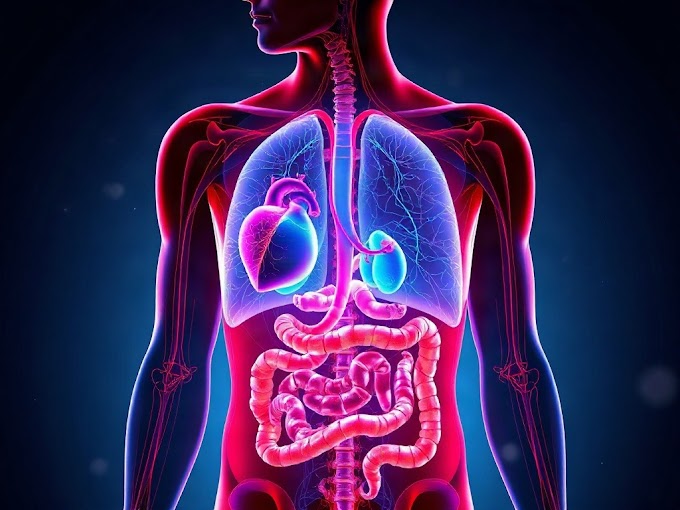
Create visual connections. I always tell students: imagine the Constitution as a human body. The Preamble is the brain (mission). Articles 1-11 are the skeleton (structure). Articles 12-35 are the nervous system (your senses and freedoms). Articles 79-151 are the organs (governance). Articles 352-360 are the immune system (emergencies).
The article number itself often hints at its content. Articles 12-35 are Fundamental Rights. 36-51 are Directive Principles. 52-71 are President and Vice President. This pattern helps.
Practice asking "why" not just "what." Don't just memorize "Article 21 is about right to life." Ask: Why did courts expand it to include privacy? Why is Article 32 called the soul? Why does Article 368 have restrictions? This thinking will help you answer application-based questions.
Test Your Understanding
A) Article 21 B) Article 32 C) Article 14 D) Article 131
Answer: B) Article 32 — Dr. Ambedkar explicitly called this the soul because without enforcement mechanism, other rights are worthless.
A) India is a unitary state B) India is a union of states C) India is a monarchy D) India is a confederation
Answer: B) India is a union of states — The word "union" suggests permanence (states cannot secede).
A) It guarantees freedom of speech and expression B) It is an absolute right with no restrictions C) It includes freedom of association D) It can be restricted in the interest of public order
Answer: B) It is an absolute right with no restrictions — Article 19 freedoms can be restricted for national security, public order, or morality.
A) Fundamental Rights B) Parliament's composition C) Amendment of the Constitution D) Judicial review
Answer: C) Amendment of the Constitution — But some parts (basic structure) cannot be amended even under Article 368.
A) All fundamental rights can be suspended B) Articles 20 and 21 C) All rights under Article 19 D) Articles 14-18
Answer: B) Articles 20 and 21 — Right against ex post facto laws (Article 20) and right to life and liberty (Article 21) are protected even during emergencies.
There you have it. This is how I'd teach this topic if you were sitting across from me with a cup of chai. The Constitution isn't meant to be intimidating — it's meant to be read, understood, and appreciated. Because at its heart, it's a document written for us, by us, about us.
Master these articles, understand the "why" behind them, and connect them to real news and events. That's when exams become easy, and more importantly, that's when you truly understand what makes India's democracy tick.
Good luck! You've got this.
Published by Dattatray Dagale • 14 September 2026
.jpg)
.png)


.png)




.png)
0 Comments