Introduction
Let me start with something that might surprise you. When I ask my students, "What do you think was the most important year in Indian history?" most of them say 1947. Independence Day, right? Freedom from British rule. Makes sense. But here's what I've learned after teaching thousands of aspirants: 1857 might actually be *the* year that set everything in motion.
Think of it like this — 1947 was when India got its independence certificate. But 1857? That's when Indians first said, "Enough is enough." That's when the entire colonial structure that seemed unshakeable for a century started to crack. And honestly, understanding 1857 properly will not only help you ace your SSC CGL and UPSC exams, but it'll also help you *understand* modern India.
So pull up a chair, because we're diving deep into the most pivotal revolt in Indian history.
Why Did 1857 Happen? The Real Story Behind the Spark
You know, every time I teach this part, I ask students: "If you were ruled by a foreign power for 100 years, what would finally make you say 'no'?" And the answers vary — bad economy, cultural disrespect, religious issues, unfair treatment. Here's the thing: all of these were true for India by 1857.
The Economic Drain That Nobody Talks About
The British came to India as traders. They left as emperors. But in between, they systematically sucked the wealth out of our country. By the mid-1800s, India's share of world GDP had dropped from 23% (when they arrived) to barely 4%. Thousands of Indian weavers lost their jobs because British factories were producing cloth cheaper. Zamindari system was exploitative. Peasants were starving while the British exported Indian grain to England.
Now, you might think peasants would rebel over hunger. But here's the psychological part — Indians accepted this for decades because they thought the British were "inevitable," "modern," "superior." That's the real crime of colonialism. It makes you believe you deserve to be ruled.
The Racial Arrogance and Cultural Humiliation
This is something textbooks don't emphasize enough, but it's crucial for understanding why 1857 *had* to happen. By the 1850s, the British stopped treating Indians like subjects they could "civilize." They started treating them like a separate, inferior race. Indian soldiers (sepoys) couldn't get promotions. Indian merchants were banned from certain clubs. Even educated Indians — pandits, poets, lawyers — were made to feel like second-class citizens in their own country.
The turning point? The British openly started undermining Hindu and Muslim religious sentiments. They introduced new uniforms for the Indian Army. The sepoys (Indian soldiers) had to remove their caste marks before wearing them. For a Hindu sepoy, this was devastating. For a Muslim sepoy, it felt equally disrespectful. And then came the cartridges.
The Revolt Itself: Who, What, Where, When
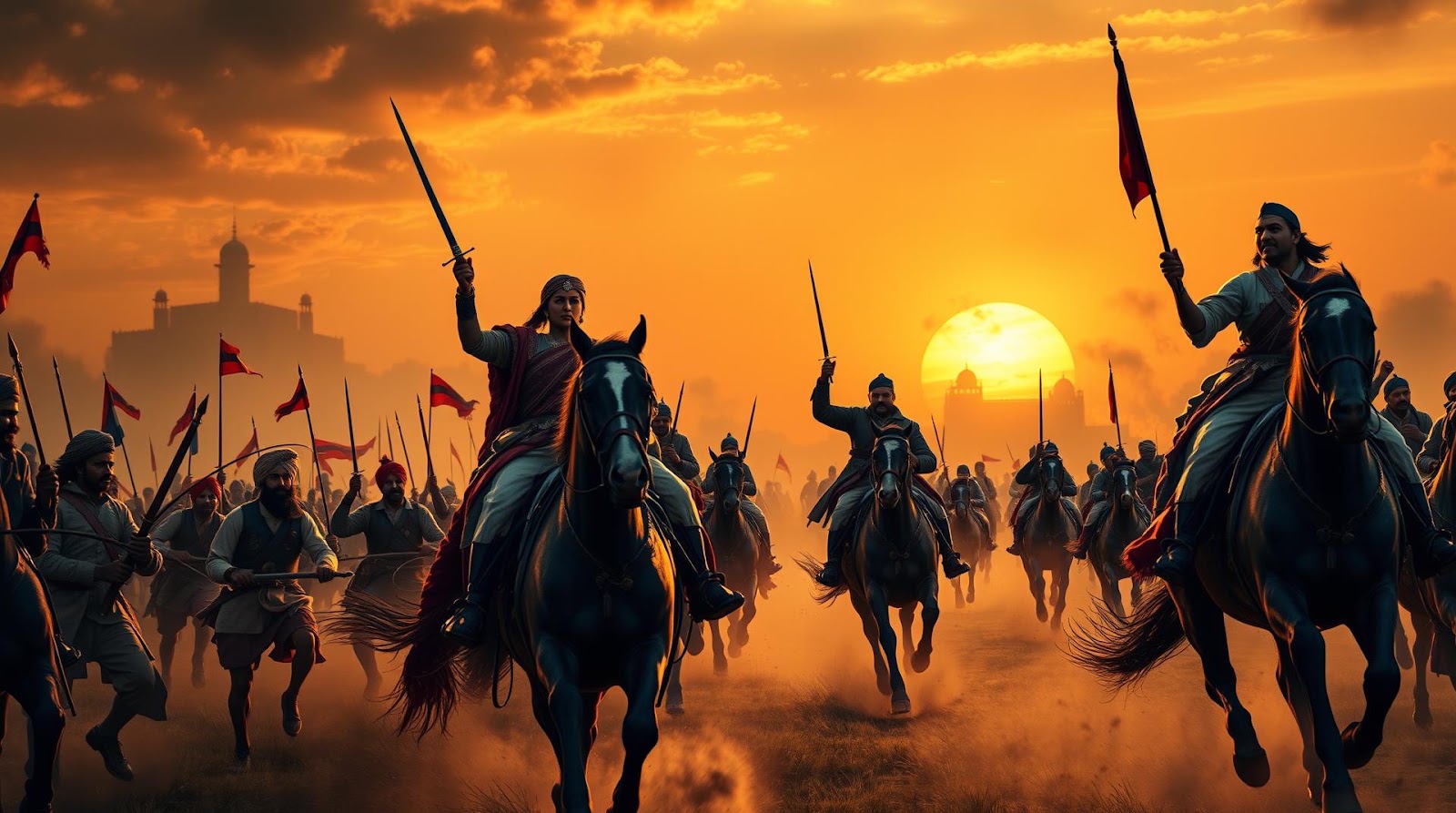
The 1857 Revolt started on May 10 at Meerut (near Delhi) and spread like wildfire across northern and central India. It's called the "Sepoy Mutiny" in some British texts and the "Indian Rebellion" or "First War of Independence" by us. The name matters — we'll discuss why in a moment.
The Heroes You Should Remember
Let me give you a trick I tell all my students. I call it the "PRANK" method for remembering the main leaders of 1857:
- P — Pandit Deen Dayal (Lucknow)
- R — Rani Lakshmibai (Jhansi)
- A — Azimullah Khan (Kanpur, advisor to Nana Sahib)
- N — Nana Sahib (Kanpur)
- K — Kunwar Singh (Bihar)
Now, I could also mention Bahadur Shah Zafar (the Mughal Emperor who became the figurehead of the revolt), Maulvi Ahmadullah (religious leader in Bihar), Tatya Tope (Nana Sahib's military strategist), and many others. But these five? They were the face of the 1857 Revolt.
Here's something that gives me goosebumps even after ten years of teaching: These weren't politicians or professional revolutionaries. Rani Lakshmibai was a widowed queen who shouldn't have been part of any battle by 19th-century standards. Kunwar Singh was over 70 years old when he took up arms. Nana Sahib had been betrayed by the British. But they *fought*. That's the spirit of 1857.
How It Spread and Why It Failed
The revolt started with sepoys, but it quickly became a mass movement. Peasants joined. Village leaders joined. Even some zamindars joined (though many didn't, which was significant). The rebels captured Delhi within days. They even declared Bahadur Shah Zafar as the Emperor of India — a symbolic moment that showed they wanted to restore Indian sovereignty.
But here's where the tragedy lies. The revolt was decentralized. There was no central command structure. Different regions were fighting different battles with different strategies. The British, on the other hand, had superior weaponry, better communication (thanks to the telegraph), and most crucially — loyalty from certain sections of the Indian population.
Punjabi soldiers, for example, didn't join the revolt. Many because they had their own grievances against the Bengalis and Marathis. That's the bitter truth — India wasn't united yet. Divide and conquer. The British knew this game too well.
By 1858, the major centers of rebellion were crushed. By 1859, it was essentially over. The British response was brutal beyond imagination. Thousands were hanged. Entire villages were set on fire. Bahadur Shah Zafar, the last Mughal emperor, was exiled to Rangoon (now Yangon) where he died in poverty.
| Aspect | Key Details |
|---|---|
| Start Date | May 10, 1857 (Meerut) |
| Main Regions | Delhi, Lucknow, Kanpur, Jhansi, Bihar, Indore |
| Major Leaders | Rani Lakshmibai, Nana Sahib, Kunwar Singh, Bahadur Shah Zafar |
| Killed/Captured | Estimated 10,000+ Indians died; thousands executed by British |
| Ended By | 1859 (completely suppressed) |
Why 1857 Still Matters: The Ripple Effects
Here's where it gets interesting. The British declared the revolt a failure. They executed leaders, punished regions, and tightened their control. But something changed fundamentally after 1857.
First, the British realized they couldn't rule India the way they had been. They shifted from East India Company rule to direct Crown rule. They became more careful about cultural sensitivities (though still exploitative). More importantly, they realized that India *could* organize, *could* rebel, *could* dream of freedom.
Second, for Indians, 1857 was the first pan-Indian consciousness. Muslims and Hindus fought together. Peasants and soldiers fought together. This wasn't just a regional uprising — it was a rebellion against foreign rule. It gave birth to the idea that India could be independent.
Third, and this is crucial for your exam, the intellectual and educated class took note. If sepoys and peasants could challenge an empire, why couldn't educated Indians do it through constitutional means? This led to the formation of the Indian National Congress in 1885 (just 28 years later!). The freedom struggle became organized, systematic, and ultimately successful.
You could say 1857 was the violent prelude to the non-violent symphony of Gandhi's freedom struggle. One fed into the other.
Debunking Myths and Understanding the Real Legacy
I want to address something that bothers me as an educator. In many textbooks, 1857 is called the "Sepoy Mutiny." This language minimizes what actually happened. A mutiny is when soldiers disobey orders. A rebellion or a war of independence is when people fight for their freedom.
The British called it a mutiny because it was easier to ignore. But Indians called it — and still call it — a rebellion. Some even call it the "First War of Independence." Now, was it the first *successful* war of independence? No. But it was definitely the first *organized national* rebellion against colonial rule.
Another myth: that 1857 unified India. It didn't. But it *showed* that unity was possible. It exposed the weaknesses of British rule. It inspired generations of freedom fighters.
And here's something personal that drives my teaching. When I read about Rani Lakshmibai fighting on horseback despite being widowed, or Kunwar Singh at 70 years old, I think about the human spirit. These weren't people with perfect plans or guaranteed success. They were ordinary people pushed to extraordinary courage by circumstances. That's a lesson no textbook can fully capture.
One more mnemonic for exam success. Remember what 1857 changed with "CROWN":
- C — Crown took over from Company (East India Company rule ended)
- R — Racial segregation increased but policy became more careful
- O — Organized resistance became possible (INC formed 28 years later)
- W — Weaknesses of empire exposed
- N — National consciousness awakened for the first time
Conclusion: Why You Should Care
Look, I know exam preparation can feel mechanical sometimes. You memorize dates, names, events. But here's what I want you to understand: 1857 isn't just a chapter in your history book. It's the moment when Indians decided they weren't going to accept subordination. It's messy, it's tragic, it's inspiring, and it's undeniably *ours*.
When you write about 1857 in your exam, don't just list facts. Show that you understand why it happened, why it mattered, and how it shaped everything that came after. That's what separates a good answer from a great one.
And honestly? Understanding 1857 helps you understand India today. It helps you understand why we value independence, why we're proud of our heritage, and why we still celebrate freedom fighters. It's history, but it's also identity.
Practice Questions
A) Delhi B) Meerut C) Lucknow D) Kanpur
Answer: B) Meerut — The sepoys of the Meerut cantonment rebelled on May 10, 1857, which sparked the wider revolt.
A) Akbar B) Shah Jahan C) Bahadur Shah Zafar D) Aurangzeb
Answer: C) Bahadur Shah Zafar — He was the last Mughal emperor and was chosen by the rebels as the symbol of Indian resistance.
A) Shortage of ammunition B) Cartridges allegedly greased with pig and cow fat C) Poor quality of weapons D) Lack of ammunition allowance
Answer: B) Cartridges allegedly greased with pig and cow fat — Whether true or false, this rumor outraged both Hindu and Muslim sepoys as it violated their religious beliefs.
A) Kunwar Singh B) Nana Sahib C) Tatya Tope D) Maulvi Ahmadullah
Answer: A) Kunwar Singh — He was over 70 years old when he participated in the 1857 revolt and became one of its most inspiring figures.
A) Formation of the Indian National Congress B) Transfer of power from East India Company to the British Crown C) Introduction of the Indian Civil Service D) Establishment of universities in major cities
Answer: B) Transfer of power from East India Company to the British Crown — After 1857, direct Crown rule replaced Company rule, marking a shift in British colonial administration.
Published by Dattatray Dagale • 28 June 2026
.jpg)
.png)



.png)




.png)

0 Comments