Introduction
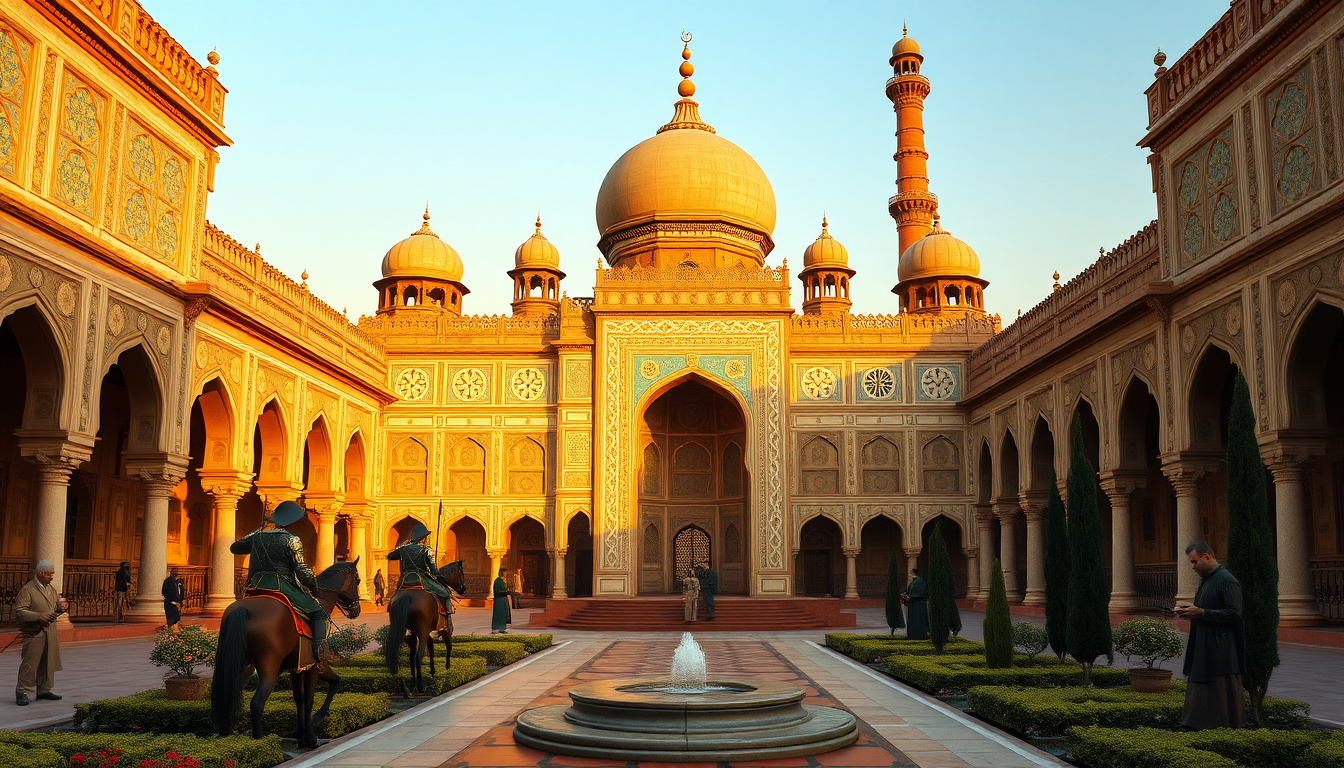
Listen, when I first started teaching, I realized most students think of Medieval India as just... well, a messy period between something called "Ancient India" and "Mughal India." But here's the thing — the Delhi Sultanate is where the real drama begins. It's the period where Islam came, stayed, mixed with Hindu traditions, created new art forms, built magnificent cities, and changed the entire social fabric of India. It's like watching a cricket match where the entire game dynamics shift because a new captain takes over.
The Delhi Sultanate wasn't one single empire — it was actually a succession of five different sultanates, from 1206 CE to 1526 CE. Three centuries. Three hundred years of conquest, rebellion, construction, intrigue, and cultural fusion. And if you're preparing for SSC or UPSC, this is gold. Examiners absolutely love asking about this period because it has everything: architecture, administrative systems, military innovations, and that fascinating Hindu-Muslim cultural synthesis.
Let me walk you through this journey the way I explain it to my students over chai — straightforward, no unnecessary jargon, and with tricks that actually stick in your brain.
The Five Sultanates: Understanding the Timeline
Now, here's where most students get confused. They think "Delhi Sultanate" is one thing. But it's actually five different dynasties that ruled from Delhi. Let me give you a memory trick that I've used with literally hundreds of students:
Remember: "SKTMB" — Slave, Khilji, Tughlaq, Mamluk... wait, that doesn't work. Let me give you the real one that works:
"Slave-Khilji-Tughlaq-Sayyid-Lodi hone do" — sounds funny, but you'll never forget the order!
The Slave Dynasty (1206–1290 CE)
This is where it all begins. Muhammad of Ghor conquered Delhi in 1192, but he went back to Afghanistan. His slave-general Qutb-ud-Din Aibak stayed back and established the first sultanate. Yes, he was technically a slave (that's what "Mamluk" means), but he became the Sultan. Talk about a power move!
Qutb-ud-Din is famous for two things: being the first Sultan of Delhi and starting the construction of the Qutb Minar in 1193 — that gorgeous 73-meter tower you've probably seen in pictures. But he didn't complete it; his son-in-law Iltutmish finished it. The Qutb Minar is basically the defining monument of this entire period.
The Slave Dynasty lasted about 84 years and gave Delhi stability for the first time. Iltutmish (1211–1236) was particularly important because he organized the administration, controlled rebellions, and made Delhi culturally significant. His daughter, Razia Sultana, even ruled for a few years (1236–1240) — a woman Sultan in 13th century India. Remarkable.
The Khilji Dynasty (1290–1320 CE)
Enter Jalaluddin Khilji. This guy was basically the "new management" that comes in and tries to shake things up. But his nephew Alauddin Khilji? Now that's a name that echoes through history.
Alauddin was brilliant, ambitious, and ruthless. He expanded the sultanate like nobody's business — conquered Gujarat, Rajasthan, and even sent expeditions to the Deccan. But here's what makes him special: he was an administrative genius. He controlled inflation, reorganized the military, and fixed the taxation system. When his generals started getting too powerful, he simply executed them. Harsh? Yes. Effective? Also yes.
Alauddin also defended Delhi against the Mongol invasions multiple times. Those weren't small raids — the Mongols were literally the scariest military force of that era. But he held them off. That's why historians consider him the greatest Sultan of this early period.
The Tughlaq Dynasty (1320–1414 CE)
Ghazi Tughlaq established this dynasty, but his son Muhammad bin Tughlaq? That's a personality study in itself. Extremely intelligent but also... let's say "unconventional." He made decisions that seemed genius and then immediately looked like disaster.
His most famous blunder: shifting the capital from Delhi to Daulatabad (in the Deccan) in 1327. The entire court, the entire administration, everybody had to move. It was supposed to help control the Deccan, but it was a logistical nightmare. After a few years, he moved the capital back. Imagine if our PM suddenly decided to shift everything from Delhi to Hyderabad and then changed his mind. That's the scale of this decision.
But Muhammad bin Tughlaq also did brilliant things. He introduced token currency (copper coins) as a substitute for gold and silver — basically an early version of fiat money. He improved the bureaucracy and expanded the sultanate's reach. His reign was long (1325–1351) and complex, which is why examiners love asking about him.
After Muhammad's death, the Tughlaq Dynasty became weaker. His successor, Firoz Shah Tughlaq (1351–1388), was more interested in welfare schemes and construction than military conquest. He built hospitals, schools, and aqueducts. Kind of like a medieval welfare state. His reign was peaceful, and people liked him, but the sultanate's power declined.
The Art, Architecture, and Culture of the Sultanate
Now, let me tell you something that changes how you think about this period entirely. The Delhi Sultanate wasn't just about conquest and administration. It was a cultural powerhouse that created a unique Indo-Islamic civilization.
The architecture is the most visible proof. The Qutb Minar, the Jama Masjid, the tombs of various sultans — these weren't just buildings. They represented a fusion of Islamic and Indian architectural styles. You see Islamic geometric patterns, but also Indian construction techniques. It's like when Bollywood blends Hollywood storytelling with Indian music and culture — something entirely new emerges.
Literature flourished too. Amir Khusrau, a poet and musician who lived during this period, is considered the father of Hindustani music and Urdu literature. He blended Persian, Arabic, and Hindi — languages of the court, the mosque, and the people. The result? Urdu. A language that became the voice of millions.
In music, the sultanate period saw the evolution of qawwali and the development of the tabla. In Persian literature, scholars and poets created masterpieces that influenced not just India, but all of Islamic civilization.
Here's what's fascinating for exam purposes: the sultanate created something that Delhi hadn't seen before — a truly cosmopolitan urban culture where Hindu and Muslim traditions coexisted, sometimes conflicted, but ultimately created something new. This wasn't always peaceful, but it was real.
Administrative Structure and Military Organization
Let me break down how these sultans actually ran their empires. The Delhi Sultanate developed an administration that was actually quite sophisticated for its time.
The Bureaucratic System
At the top was the Sultan — absolute monarch, but bound by Islamic law (Sharia) in theory. Below him was a council of ministers called the "Diwan." The key positions were:
Diwan-i-Vizarat (Prime Minister) — handled general administration
Diwan-i-Ariz-i-Mamalik (War Minister) — managed the military
Diwan-i-Istikraj (Revenue Minister) — collected taxes
Diwan-i-Insha (Correspondence) — handled official letters and records
The sultans also appointed governors for different provinces (Iqtedars), but this often led to problems. Once a governor became powerful enough, they'd think, "Why listen to Delhi?" Rebellions were common. Alauddin Khilji solved this by rotating governors frequently and keeping their families as hostages in Delhi. Dark, but it worked.
The Military Machine
The Delhi Sultanate maintained one of the most organized armies of its time. Unlike earlier Indian kingdoms that relied on feudal levies, the sultans maintained a standing army of paid soldiers. They introduced heavy cavalry, which was revolutionary for that period.
The soldiers were called "Ghazi" (if they were warriors) or "Sipahis" (if they were regular troops). The command structure was hierarchical and disciplined. This is actually why the sultanate could defend against the Mongols — they had a professional, organized force.
Alauddin Khilji's reforms were particularly famous. He increased army size, improved weapons, and introduced a system where soldiers were branded (literally marked) to prevent desertion and duplicate enrollment. Brutal? Yes. But it created an effective force.
Revenue and Taxation
The sultanate extracted revenue through the "Iqta system." Land was divided into areas called "Iqtas," and nobles (Iqtedars) were given control in exchange for military service and revenue collection. This sounds like feudalism, but it was different because the tenure wasn't permanent — the Sultan could reassign Iqtas whenever he wanted.
The main taxes were:
Kharaj — tax on non-Muslims
Jizya — special poll tax on Hindus
Ushr — agricultural tax on Muslim-owned land
Now, the Jizya is something examiners always ask about. It was a tax, not a tribute. Hindus who paid Jizya were exempted from military service and had certain legal protections. It was controversial, definitely, and religious minorities under sultans like Firoz Shah Tughlaq faced more restrictions, but it's important to understand it as a historical system, not through a modern lens.
| Sultanate | Founder | Period | Key Achiever | Specialty |
|---|---|---|---|---|
| Slave (Mamluk) | Qutb-ud-Din Aibak | 1206–1290 | Iltutmish | Stability & Organization |
| Khilji | Jalaluddin Khilji | 1290–1320 | Alauddin Khilji | Expansion & Military Reform |
| Tughlaq | Ghazi Tughlaq | 1320–1414 | Muhammad bin Tughlaq | Experimental Reforms |
| Sayyid | Khizr Khan | 1414–1451 | Muhammad Shah | Weak & Transitional |
| Lodi | Bahlol Lodi | 1451–1526 | Ibrahim Lodi | Afghan Rule & Decline |
The Rise and Fall: Understanding Why It Ended
By the late 14th century, the Delhi Sultanate had already lost much of its control over the provinces. The Sayyid Dynasty (1414–1451) that came after the Tughlaq period was weak — so weak that they actually delegated power back to the Iqtedars. They ruled on paper, but governed nothing.
The Lodi Dynasty (1451–1526) tried to reassert control but faced constant rebellions. Ibrahim Lodi, the last Sultan of Delhi, was facing serious internal challenges when Babur showed up from Central Asia. One decisive battle at Panipat in 1526, and the Delhi Sultanate was over. The Mughal Empire began.
But here's why this matters for your exam: the Delhi Sultanate created the template for how the Mughals would rule. The Mughal system is built on the administrative structures, military organization, and urban culture of the sultanate. Without understanding the Delhi Sultanate, you can't truly understand Mughal India.
Also, let me give you one more memory trick for the Lodi dynasty: "Bahlol-Sikandar-Ibrahim Lodi karo recall" — these are the three Lodi sultans that matter.
Three centuries. Five dynasties. Countless conflicts, beautiful monuments, literary masterpieces, and the creation of something entirely new — a civilization where Persian, Arabic, Turkish, and Indian influences merged into something uniquely Indian. When the Mughals came, they didn't destroy this; they built upon it.
That's the real legacy of the Delhi Sultanate. Not just conquest or power, but the creation of a cultural synthesis that defines India even today.
---Practice Questions
A) Iltutmish B) Qutb-ud-Din Aibak C) Muhammad of Ghor D) Firoz Shah Tughlaq
Answer: B) Qutb-ud-Din Aibak — He was technically a slave-general of Muhammad of Ghor but established the first independent sultanate in Delhi in 1206 CE.
A) Shifting capital from Delhi to Daulatabad and introducing token currency B) Establishing the Iqta system C) Introducing the Jizya tax D) Building the Qutb Minar
Answer: A) Shifting capital from Delhi to Daulatabad and introducing token currency — Both were his experiments, though the token currency was controversial and eventually abandoned.
A) Taj Mahal B) Qutb Minar C) Jama Masjid D) Humayun's Tomb
Answer: B) Qutb Minar — Started by Qutb-ud-Din Aibak and completed during the Slave Dynasty, it remains an iconic example of the period's architectural achievement (Note: Taj Mahal is Mughal-era, not Sultanate-era).
A) Building the most monuments B) Introducing Urdu language C) Military reforms and successful defense against Mongol invasions D) Introducing the Jizya tax
Answer: C) Military reforms and successful defense against Mongol invasions — Alauddin's military organization and the standing army he maintained were crucial in defending Delhi against multiple Mongol invasions.
A) 1192 CE B) 1398 CE C) 1526 CE D) 1556 CE
Answer: C) 1526 CE — Babur defeated Ibrahim Lodi in the First Battle of Panipat in 1526 CE, establishing the Mughal Empire and ending the Delhi Sultanate period.
Published by Dattatray Dagale • 21 July 2026
.jpg)
.png)



.png)




.png)

0 Comments