Introduction
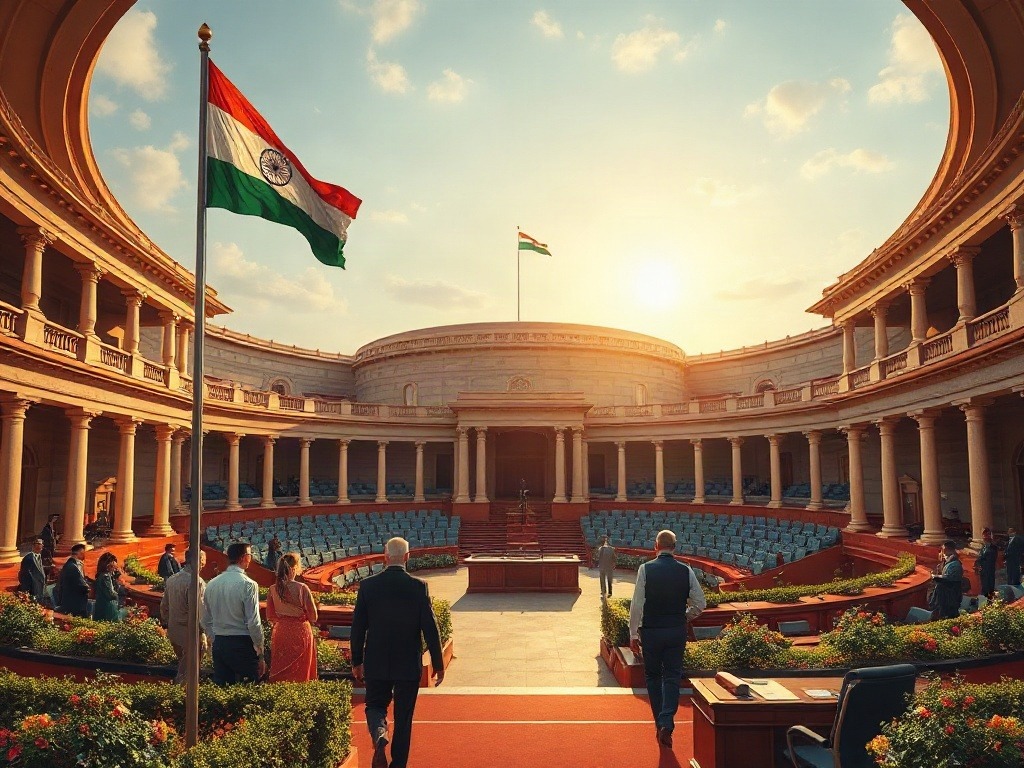
You know what's funny? I've taught thousands of students, and almost all of them think Parliament is just a bunch of people shouting at each other on TV. Sure, we see the heated debates, the walkouts, the dramatic finger-pointing—that's what makes it to the news. But the real magic? That happens in the corridors, in committees, and in the painstaking process of turning an idea into law.
Let me tell you something I realized after teaching this for over a decade: understanding Parliament isn't just about memorizing which house does what. It's about understanding how your country actually runs. Every law that affects you—from the fees your college charges to the roads you drive on—has gone through this process. So let's dive deep, and I promise you'll never look at Parliament the same way again.
The Two Houses: A Tale of Power and Purpose
India's Parliament isn't like your classroom with one teacher and one set of rules. It's more like having two cricket captains, each with different responsibilities but working toward the same match victory. We have a bicameral legislature—two houses. And no, this isn't just for "checks and balances" jargon. It serves a real purpose.
The Lok Sabha: The People's House
The Lok Sabha is where the real firepower lies. With 543 elected members (plus 2 nominated from the Anglo-Indian community), it's the larger chamber and the more democratic one. Why? Because every member is directly elected by you and me—the common voters. No fancy appointment process, no state-based selection. Pure democracy.
The Speaker of the Lok Sabha is like the referee in a cricket match—maintains order, decides who speaks, rules on procedural matters. The current system makes the Speaker incredibly powerful, which is why their election is taken so seriously.
Here's something that trips up students: the Lok Sabha has a five-year term (unless dissolved earlier), and every five years, we have general elections. The Prime Minister must be a member of the Lok Sabha or must become one within six months of their appointment. Why? Because the PM needs the confidence (support) of the Lok Sabha to govern. No confidence, no government. It's that simple and that powerful.
The Rajya Sabha: The Federal House
Now, the Rajya Sabha is different. Think of it as the voice of the states. It has 245 members—233 elected indirectly by state assemblies and 12 nominated by the President. There's no general election for the Rajya Sabha. Instead, every two years, one-third of its members' terms expire and new ones are chosen. This ensures continuity—there's always experienced leadership around.
Members serve six-year terms, which I love explaining to students because it shows the framers' intent: stability over populism. A Rajya Sabha member doesn't have to panic about re-election every five years, so theoretically, they can vote based on conscience rather than vote-bank politics. (I said "theoretically"—we all know how politics works!)
The Rajya Sabha can reject or delay bills (except financial bills), amend them, and question the government. But here's the catch: if there's a clash between the two houses on a regular bill, it goes to a joint session where the Lok Sabha, being larger, almost always wins. So the Rajya Sabha is a check, but not an absolute veto.
The Legislative Process: From Idea to Law
Alright, this is where it gets really interesting. Imagine you have a brilliant idea to make your city's public transport free for students. How does that become a law? Let me walk you through the actual journey.
Bill Introduction and First Reading
Everything starts with a bill—a proposed law. Now, who can introduce a bill? In theory, any member of Parliament can, but here's the practical bit: most bills come from the government side because they have the numbers and resources to push them through. However, any MP can introduce what's called a "Private Member's Bill." These rarely pass (sad, but true), but they matter because they raise important issues.
When a bill is first introduced—let's call this the First Reading—it's basically just announced. There's no debate, no voting. The bill gets published in newspapers so the public knows what's coming. This is transparency in action.
The Second Reading: The Meat of the Process
Now comes the real battle. During the Second Reading, the bill is discussed clause by clause. Members debate it. Some love it, some hate it. Amendments are proposed. This is where you see the Parliament on TV—heated discussions, sharp questions, the works.
The Second Reading actually has two parts: The General Discussion: Members discuss the bill's overall purpose and principles. The Clause-by-Clause Discussion: They go through each part, propose amendments, and vote on them.
Let me give you a trick I tell all my students to remember the key stages: IRF—Introduction, Revision, Finalization. That's First Reading, Second Reading, Third Reading. Simple, right?
The Third Reading and Passage
After all amendments, the bill comes back for a final vote—the Third Reading. Here, there's no more debate (that's done). It's just a straight vote: do you support this bill as it now stands? If it passes, it goes to the other house (if it started in Lok Sabha, it goes to Rajya Sabha, and vice versa). Both houses go through the same process.
Now here's where it gets tricky. If both houses pass the bill identically, it goes to the President. But what if the Rajya Sabha rejects it or makes changes? Then there's a back-and-forth. If they can't agree, and it's a regular bill, they can have a joint session where Lok Sabha's larger numbers usually win.
Special Bills and Presidential Assent
Not all bills are created equal. Some are more powerful than others, and the process differs slightly.
Money Bills: The Government's Golden Ticket
Money bills deal with government revenue, borrowing, or spending. Here's the catch: only the Lok Sabha can introduce them, and the Rajya Sabha can only delay them by 14 days. After that, if the Lok Sabha passes it again, it becomes law. No questions asked. This makes sense because the government needs flexibility with finances, and the directly elected house (Lok Sabha) gets the final say.
Constitutional Amendment Bills
To amend the Constitution, you need a special majority—two-thirds of both houses. Some amendments (like those affecting federal structure) need ratification by half the states too. This high bar ensures the Constitution can't be casually changed. It's a feature, not a bug.
Presidential Assent: The Final Step
Once Parliament passes a bill, it goes to the President. Now, the President's role here is largely ceremonial—they almost always give assent. But technically, the President can send it back once for reconsideration. If Parliament passes it again (with the same or increased majority), the President must assent. It's a safety check, not a veto power.
| Bill Type | Introduced In | Special Rule | Majority Needed |
|---|---|---|---|
| Ordinary Bill | Either House | Both houses must pass identically | Simple Majority |
| Money Bill | Lok Sabha Only | Rajya Sabha can delay max 14 days | Simple Majority (Lok Sabha) |
| Constitutional Amendment | Either House | Some need state ratification | Two-thirds Majority |
| Finance Bill | Lok Sabha Only | Government's budget implementation | Simple Majority |
The Questions That Actually Matter
After teaching this for so long, I know what students really want to understand: Why does this matter? How does this affect me?
Let me be real with you. Parliament's legislative process is slow. It's designed to be slow. Bills take months, sometimes years. There's debate, discussion, amendment. Some people see this as inefficiency. But here's what I see: it's the price of democracy. When you involve 543 elected representatives, stakeholders, public opinion, and two houses of review, things take time. But when a law finally passes, it has been examined from every angle. It has public support. It's legitimate.
The real insight? India's Parliament isn't just about passing laws. It's about passing laws that actually have the country behind them. That's not a bug. That's a feature.
Now, for your exam preparation, let me give you another mnemonic that I've found works brilliantly: SAFARI for the houses' comparison—Structure, Authority, Flexibility, Age, Representative base, Independence. Just quickly think through each letter for Lok Sabha and Rajya Sabha, and you've got your answer ready.
A) 240 B) 543 C) 250 D) 552
Answer: B) 543 (including 2 nominated Anglo-Indian members)
A) 7 days B) 14 days C) 30 days D) Cannot delay at all
Answer: B) 14 days. This is a key feature—Rajya Sabha has limited power over Money Bills.
A) 4 years B) 5 years C) 6 years D) 7 years
Answer: C) 6 years, with one-third members retiring every 2 years.
A) Rajya Sabha B) Lok Sabha C) Both equally D) The President decides
Answer: B) Lok Sabha, being larger, essentially always wins in a joint session.
A) Rajya Sabha only B) Lok Sabha only C) Either house but preferably Lok Sabha D) Must remain outside both
Answer: C) The PM can be from either house but must have the confidence of the Lok Sabha and must become a member within 6 months if not already.
Published by Dattatray Dagale • 15 September 2026
.jpg)
.png)



.png)



.png)



0 Comments