Introduction
Let me start with a confession: when I first started teaching, I found the Vedic period boring. A bunch of pastoral people, some rituals, and Sanskrit texts seemed like dry historical stuff. Then one day, a student asked me a question that changed everything: "Sir, why do we still say 'namaste' instead of 'hello'?"
That simple question opened my eyes. The Vedic period isn't just history—it's living, breathing, present in every aspect of modern Indian life. From the way we greet each other, to our marriage ceremonies, to the philosophical underpinnings of how we think about life itself—it's all Vedic. And once you see that connection, studying this era stops being about memorizing dates and starts being about understanding yourself.
So if you're preparing for SSC CGL or UPSC, or if you're just curious about where "Indian-ness" comes from, you're in the right place. Let's dive deep into one of history's most transformative periods.
What Actually Was the Vedic Period?
The Timeline and the People
First, the basics—but I promise I'll make it stick. The Vedic period roughly spans from 1500 BCE to 600 BCE. Now, you might be thinking, "Sir, these dates feel random." They do! And honestly, they're not carved in stone. Historians still debate them. But 1500 BCE is when the Aryans (I'll explain that term in a moment) entered the Indian subcontinent, and by 600 BCE, we're already seeing the rise of kingdoms and the early development of what we'd call classical Indian civilization.
For your exam memory, think of it this way: 1500 BCE = Arrival, 600 BCE = Transformation. The thousand years between? That's the Vedic period—a time of massive social, religious, and cultural development.
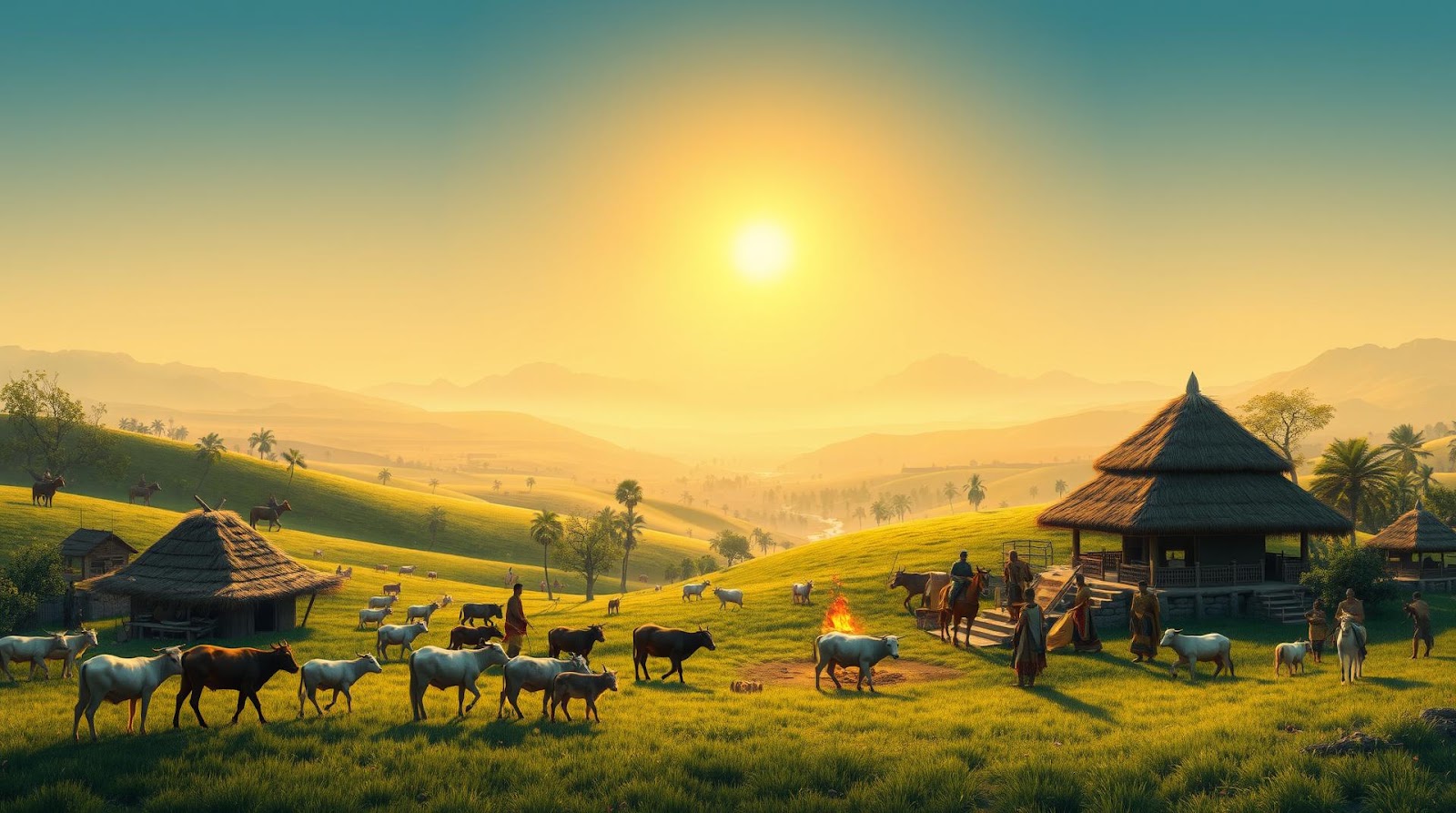
Now, about those Aryans. This word gets thrown around a lot, and I've seen it confuse students. The word "Arya" simply means "noble" in Sanskrit. These were Indo-European pastoral groups who migrated into northwestern India (modern-day Punjab) and gradually spread eastward over centuries. They weren't invaders in the Hollywood sense—it was more like a slow, generational migration. They came with their horses, their cattle, their language (which would become Sanskrit), and their religious practices.
Early Vedic vs. Later Vedic: The Evolution
Here's where it gets interesting, and where a lot of students get marks by knowing this distinction. The Vedic period is split into two phases:
Early Vedic Period (1500-1000 BCE): Picture this—nomadic, pastoral societies. They're moving around with their herds, living in simple settlements, worshiping gods of nature (Indra the rain god, Agni the fire god, Varuna the cosmic order god). Society is relatively simple. They have a leader, priests, warriors, and common people. The famous text here is the Rigveda—the oldest of the four Vedas and possibly the oldest religious text in the world still in active use.
Later Vedic Period (1000-600 BCE): Now settle down. They're farming more, settling into larger territories in the Gangetic plains. Society becomes more complex. You start seeing the emergence of kingdoms, proper administrative systems, and the beginnings of the varna system (which I'll explain shortly). The texts here are the Yajurveda, Samaveda, and Atharvaveda. Writing isn't common yet—everything's oral tradition. Imagine entire philosophical treatises memorized and recited perfectly. Crazy, right?
Society, Economy, and the Varna System
How Society Was Organized
Let me be very clear about something before I explain the varna system: it's nothing like what it became later. What emerged in the Vedic period was a functional classification system. Over time—centuries later—it calcified into the caste system with all its rigidity and discrimination. But in the Vedic era? It was more fluid.
Society was divided into four varnas based on occupation and duty:
1. Brahmins (Priests and Scholars): They performed rituals, maintained religious knowledge, and advised rulers. Think of them as the intellectuals of society.
2. Kshatriyas (Warriors and Rulers): They protected society, fought wars, and governed. The kings and princes belonged here.
3. Vaishyas (Merchants and Farmers): They engaged in trade, agriculture, and animal husbandry. The economic backbone.
4. Shudras (Laborers and Service Providers): They performed manual labor and served other varnas.
Here's my trick to remember the hierarchy for exams: "B-K-V-S = Brain, Knife, Value, Service." Brahmins (brain), Kshatriyas (knife/warriors), Vaishyas (commerce/value), Shudras (service). Silly? Yes. Memorable? Absolutely.
Now, the important part: this wasn't rigid initially. A person's varna was based on their guna (qualities) and karma (actions), not birth. You could change your varna by changing your occupation. But gradually, as we move toward the Later Vedic period and beyond, it becomes hereditary. By the time we hit the Brahminical texts like the Manusmriti (much later, around 200 BCE), it's locked in by birth. That's the degradation that happened.
The Economy: Cows, Trade, and Wealth
In the early Vedic period, the economy was pastoral. Cows weren't just animals—they were wealth. You measured a man's richness by his cattle. This is why cows became sacred; they represented economic value and survival. A raid for cattle was like a bank robbery. Indra, the king of gods, was famous for winning cows in battles!
By the Later Vedic period, you see agriculture becoming dominant. But here's something interesting—even with farming, pastoral activities remained important. Vedic society valued both. They also developed a barter system initially, but gradually moved toward using metals (especially gold and copper) as medium of exchange.
Trade networks existed too. We have evidence of contact with Mesopotamia through the Indus seals and trade goods. But the Vedic culture was more inland, focused on North India, while the Harappan civilization (contemporary but different) was thriving in the Indus Valley. By the time the Vedic culture spread eastward to the Gangetic plains, the Indus Valley Civilization had already declined. That's a whole different story though!
Religion, Philosophy, and the Vedas
Understanding the Vedas
The Vedas are the foundation. Four of them: Rigveda, Yajurveda, Samaveda, and Atharvaveda. If you're preparing for exams, you need to know their order and characteristics.
Rigveda: The oldest, composed around 1500-1200 BCE. It's a collection of 1028 hymns addressed to various gods. It's the source for understanding early Vedic religion and society. When you read the Rigveda, you're essentially reading the oldest autobiography of India.
Yajurveda: The "Veda of Sacrifices." It contains instructions for performing yagnas (rituals). More technical and procedural than the Rigveda.
Samaveda: The "Veda of Melodies." Basically, hymns set to music from the Rigveda. Used in rituals.
Atharvaveda: The newest of the four, composed around 1000 BCE. Contains spells, charms, and knowledge about medicine, magic, and practical life. It's the most "down-to-earth" Veda—includes hymns about everything from curing diseases to protecting homes from demons.
The Religion and Philosophy
Vedic religion was polytheistic—lots of gods representing natural forces. Indra (rain/thunder), Agni (fire), Varuna (cosmic order and waters), Surya (sun), Ushas (dawn), Maruts (wind)—each had their own personality and stories. These weren't distant, transcendent gods; they were almost like personalities you could have a relationship with through rituals.
The central religious practice was the yajna (sacrifice). A Brahmin priest would perform elaborate rituals, offer materials (ghee, grain, sometimes animals) into the sacred fire, recite mantras, and it was believed the gods would grant blessings. It was transactional religion—you performed the ritual correctly, the gods had to give you what you wanted. No shortcuts.
Later, especially in the Upanishads (philosophical texts that came after the Vedas, around 800-600 BCE), there's a massive shift. Instead of "satisfy the gods through rituals," the philosophy becomes "understand the Brahman (universal reality)." This moves from action-based religion to knowledge-based philosophy. It's the birth of Hindu philosophical thought as we know it.
| Aspect | Early Vedic Period | Later Vedic Period |
|---|---|---|
| Lifestyle | Nomadic, pastoral | Settled, agricultural |
| Geography | Punjab and Indus region | Gangetic plains |
| Key Text | Rigveda | Yajurveda, Samaveda, Atharvaveda |
| Primary Activity | Animal herding | Agriculture and farming |
| Political System | Tribal chiefdoms | Kingdoms and states |
| Religious Focus | Ritual and sacrifice | Ritual and philosophical inquiry |
Culture, Language, and Legacy
Sanskrit and the Birth of a Language
Sanskrit emerged as the language of the Vedas and became the lingua franca of the educated elite. It's not just any language—it's remarkably systematic. The Vedic Sanskrit (language of the oldest Vedas) is slightly different from Classical Sanskrit that developed later, but they're closely related.
Here's something that blows my mind every time I think about it: Sanskrit grammar is so logical and scientific that computer scientists have used it to design programming languages. There's a reason why many philosophers consider Sanskrit one of the most sophisticated languages ever created.
The Vedic people were obsessed with language precision. They had different ways to recite the Vedas—forward, backward, alternating—to ensure not a single syllable was ever lost. This is why we have the Rigveda today almost exactly as it was composed 3500 years ago.
Art, Music, and Daily Life
Unlike the Indus Valley Civilization (which had sophisticated urban planning), Vedic culture left fewer material remains. We know about their life mostly through the texts themselves. From the Rigveda, we learn they loved music, had various musical instruments, enjoyed games (especially a dice game called "Aksha"), and had a sophisticated understanding of mathematics and astronomy.
Women in early Vedic society had more freedom than later. Some hymns are attributed to female seers. Women could perform rituals and were educated. This changed in the Later Vedic period as society became more patriarchal, but initially, it wasn't as rigid.
Art remained mostly in the form of literature. There's no evidence of large-scale sculpture or painting from the Vedic period. The beauty was in words, mantras, and philosophical ideas.
The Enduring Legacy
And now we circle back to why this matters today. The Vedic period established:
Philosophical foundations: The ideas of karma, dharma, moksha (liberation), rebirth—all Vedic in origin. These aren't just religious concepts; they've shaped how Indians think about ethics, duty, and the meaning of life for millennia.
Ritual and ceremony: Every Hindu wedding, every death ceremony, every major life event incorporates Vedic elements. The mantras chanted are Vedic Sanskrit. The rituals follow Vedic prescriptions.
Caste and social organization: For better or worse, the varna system's skeleton was formed here and became the caste system. Understanding its origins helps us understand modern social dynamics in India.
Literary and linguistic heritage: Sanskrit, the language of scholarship in India for centuries, was born here. The entire Sanskrit literary tradition—from the Mahabharata to Kalidasa's plays—stands on the Vedic foundation.
So when you study the Vedic period, you're not studying dusty history. You're studying the source code of Indian civilization.
Key Takeaways for Your Exams
Let me give you the compressed version for last-minute revision:
Timeline: 1500-600 BCE
Two phases: Early Vedic (nomadic, pastoral, 1500-1000 BCE) and Later Vedic (settled, agricultural, 1000-600 BCE)
Four Varnas: Brahmins, Kshatriyas, Vaishyas, Shudras (originally occupation-based, later hereditary)
Four Vedas: Rigveda (oldest), Yajurveda, Samaveda, Atharvaveda
Religion: Polytheistic, yajna-centered, later moving toward philosophical inquiry (Upanishads)
Key characteristics: Oral tradition, Sanskrit language, pastoral to agricultural transition, tribal to kingdom transition
Now, let's practice some questions!
A) Yajurveda B) Samaveda C) Rigveda D) Atharvaveda
Answer: C) Rigveda — It was composed around 1500-1200 BCE and is the foundation text of Vedic literature.
A) Land B) Gold coins C) Cattle D) Trade goods
Answer: C) Cattle — Cows represented economic wealth and were so valued that they later became sacred in Hindu culture. Raids for cattle were common.
A) Birth B) Occupation and duties C) Wealth D) Geography
Answer: B) Occupation and duties — This is crucial. It wasn't hereditary initially but became so in later periods.
A) Rigveda B) Yajurveda C) Upanishads D) Puranas
Answer: C) Upanishads — Though technically post-Vedic, the Upanishads represent the philosophical development from Vedic ritualism. They focus on understanding Brahman (universal reality).
A) Indus Valley B) Punjab C) Gangetic plains D) Deccan plateau
Answer: C) Gangetic plains — The Vedic people migrated eastward from the Punjab region into the Gangetic plains during the Later Vedic period, establishing agricultural settlements.
Final thought: The Vedic period is dense with information, but remember—every detail connects to modern India. When you see a Hindu ritual, when you encounter the concept of karma in a movie, when you read about caste issues in the news—it all traces back to these ancient texts and practices. Study it not as dry history, but as the origin story of Indian thought. That's when it becomes unforgettable. All the best with your preparation!
Published by Dattatray Dagale • 31 May 2026
.jpg)
.png)



.png)



.png)
0 Comments