Introduction
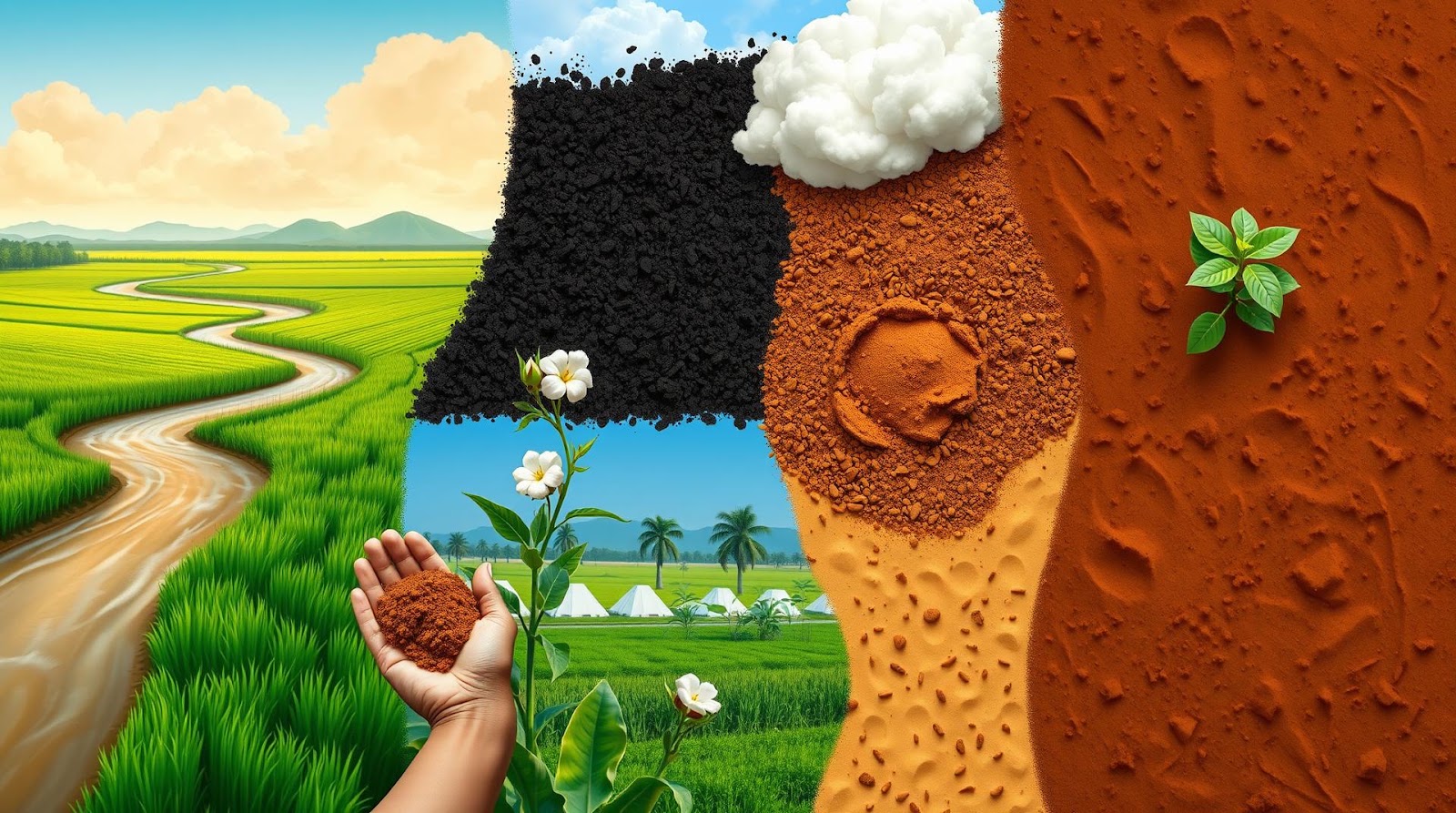
Let me start with something I noticed while teaching: most students treat soil like it's just... dirt. Brown stuff under your feet. But when you realize that the soil beneath the Punjab grows wheat that feeds 400 million people, or that the black soil of Maharashtra creates perfect cotton — suddenly, soil becomes absolutely fascinating.
Here's what I want you to understand today: Indian agriculture isn't random. It's not like someone just decided "let's grow rice in West Bengal and sugarcane in Uttar Pradesh" and got lucky. Every major crop grows where it does because of the soil type, the climate, the rainfall, and the geography. When you crack these connections, geography stops being a memorization nightmare and becomes logical — almost like a detective game.
I've been teaching SSC CGL and UPSC for over a decade now, and I can tell you with confidence: if you understand Indian soils and agriculture together, you'll crack 80% of the geography questions that come your way. So let's dive in.
The Five Soil Types of India: Know Them Like Your Favourite Cricket Players
India has five major soil types. I'm going to teach you a trick I use with all my students. Think of them like five cricket players with different strengths.
Alluvial Soils: The All-Rounder
Alluvial soils are basically the Virat Kohli of Indian soils — versatile, found almost everywhere, and incredibly fertile. These are young soils deposited by rivers, which is why they're called "transported soils."
Now, here's what I want you to visualize: every monsoon, rivers like the Ganges, Brahmaputra, and Indus flood. They carry silt, sand, and clay from the mountains and deposit them in their plains. Over thousands of years, this creates the most nutrient-rich soils in India. That's why the Indo-Gangetic Plain — stretching from Punjab to West Bengal — is basically India's bread basket.
Alluvial soils cover about 40% of India. They're found in river valleys and deltaic regions. What makes them special? They're well-drained, easy to work with, and packed with nutrients. But here's the catch — they lack humus and minerals like potassium and phosphorus, so farmers need to add fertilizers. That's why you'll always see a connection between alluvial soils and agricultural development.
Major crops in alluvial soil regions: wheat, rice, sugarcane, maize, and cotton.
Black Soils: The Specialist
If alluvial is the all-rounder, black soil is the specialist — incredible at one job, which is growing cotton. These soils are also called "regur soils," and they're formed from the weathering of lava flows (volcanic rock).
The Deccan Plateau, particularly regions of Maharashtra, Madhya Pradesh, Gujarat, and Karnataka, has vast stretches of black soil. The colour comes from iron oxide and organic matter. What makes black soil unique is its water-holding capacity — it's sticky when wet and hard when dry. Farmers actually prefer working with it during the monsoon season rather than summer.
You want to remember black soil for one reason: cotton. The Narmada valley, Vidarbha region in Maharashtra, and parts of Gujarat produce the bulk of India's cotton because of this soil. But black soil also grows jowar (sorghum), groundnut, and sugarcane.
Here's a teaching tip: in exams, if a question mentions "cotton production" or "Deccan Plateau agriculture," think black soil first.
Red Soils: The Iron-Rich One
Red soils get their colour from iron oxide, and they're found in areas with moderate to high rainfall in regions of moderate elevation. You'll find them mainly in Tamil Nadu, parts of Karnataka, Telangana, and Jharkhand.
Red soils are actually quite old soils — heavily weathered and leached (meaning nutrients have been washed away by rainfall). This makes them less fertile than alluvial or black soils. But they're not useless. With proper fertilization, they grow pulses, oilseeds, cotton, and maize beautifully.
The interesting thing about red soils is their response to pH management. They're naturally acidic, so farmers need to add lime or alkaline materials to make them suitable for certain crops. That's agricultural chemistry meeting geography.
Laterite Soils: The Acidic Challenge
Laterite soils form in tropical regions with high rainfall — think Western Ghats, Northeast India, and coastal areas. They're formed by intensive leaching of the parent rock. The name comes from "later," meaning brick, because when exposed to air, they harden like bricks.
Here's the challenge with laterite soils: they're highly acidic and deficient in nitrogen, phosphorus, and potassium. For a long time, people thought laterite regions couldn't support much agriculture. But modern farming practices have changed that. Today, with proper management, laterite soils grow spices (turmeric, pepper), coconut, areca nut, and various plantations.
The laterite plateau of the Western Ghats is actually a treasure trove of spices — which is why Kerala, Tamil Nadu, and Karnataka produce the world's best spices.
Desert Soils: The Tough Customer
Desert soils are found in arid regions — primarily Rajasthan and parts of Gujarat. They're sandy, lack organic matter, and have poor water-holding capacity. Naturally, they're not very fertile.
But here's what's fascinating: with irrigation, desert soils can become productive. The Indira Gandhi Canal (formerly Rajasthan Canal) transformed vast stretches of the Thar Desert into agricultural land. Today, areas like Sri Ganganagar grow wheat, mustard, and various pulses because of irrigation compensating for the soil's limitations.
The Soil-Crop Connection: Why Geography Matters
Now, you might be wondering: "Why does my teacher keep saying soil and crops are connected?" Let me explain with a real example from my own teaching experience.
A student once asked me: "Sir, why does Punjab grow wheat while Kerala grows coconut?" And that's exactly the right question. The answer isn't random — it's written in the soil.
The Punjab Story: Alluvial Magic
Punjab's soils are Indo-Gangetic alluvial soils. They're incredibly fertile, well-suited for wheat cultivation. The region gets moderate rainfall, has an excellent irrigation system (fed by the Sutlej and Ravi rivers), and the soil's natural properties match wheat's requirements perfectly. Wheat likes well-drained soil that's not waterlogged but nutrient-rich. Alluvial soil in Punjab provides exactly that. That's why Punjab produces 50% of India's wheat and is called the "granary of India."
The Maharashtra Story: Cotton King
Maharashtra's black soil is perfect for cotton because cotton requires soil that holds water during the growing season (the black soil's water-holding capacity is legendary) but also drains well to prevent waterlogging. Black soil does both. Plus, cotton tolerates the slightly lower nutrient availability of black soil because it's tough. Maharashtra produces about 40% of India's cotton.
The Kerala Story: Spices and Laterite
Kerala's laterite soils are acidic and low in nutrients, but they're perfect for spices like pepper, cardamom, and nutmeg. These crops have evolved to thrive in acidic soils. The high rainfall of Kerala keeps these soils moist, which spices appreciate. And the natural slope of the Western Ghats ensures excellent drainage.
This isn't coincidence. This is geography working perfectly.
| Soil Type | Main Regions | Key Characteristics | Primary Crops |
|---|---|---|---|
| Alluvial | Indo-Gangetic Plain, River valleys | Fertile, well-drained, young soil | Wheat, Rice, Sugarcane |
| Black | Deccan Plateau (Maharashtra, MP, Karnataka) | High water-holding capacity, volcanic origin | Cotton, Jowar, Sugarcane |
| Red | South India (Tamil Nadu, Karnataka) | Iron oxide rich, leached, acidic | Pulses, Oilseeds, Maize |
| Laterite | Western Ghats, Northeast India | Highly acidic, formed in tropical rainforest | Spices, Coconut, Tea |
| Desert | Rajasthan, Parts of Gujarat | Sandy, low organic matter, requires irrigation | Wheat (with irrigation), Mustard |
Indian Agriculture: Seasonal Patterns and Geographic Distribution
India's agriculture is heavily influenced by the monsoon, but here's what many students miss: different regions practice different types of agriculture because of their soil and geography combinations.
The Kharif and Rabi System
Kharif crops are the monsoon crops — rice, maize, cotton, sugarcane, jowar. They're planted with the southwest monsoon (June-July) and harvested in autumn (September-October). The best kharif-growing regions are those with alluvial and black soils that can handle the heavy rainfall and water logging that comes with the monsoon.
Rabi crops are the winter crops — wheat, barley, gram, mustard. They're planted after the monsoon ends (October-November) and harvested in spring (March-April). Rabi crops do brilliantly in areas that have good soil moisture retention from the monsoon but less rainfall during the growing season.
Here's the trick I teach students: if you see a question about crops in an alluvial plain region, think both kharif AND rabi. If you see a question about desert regions, think rabi and summer crops with irrigation.
Regional Agricultural Patterns
Northern Plains: The Indo-Gangetic Plain is the wheat-rice belt. Alluvial soils, excellent irrigation, and a dedicated agricultural infrastructure make this region India's most productive. Punjab and Haryana specialize in wheat; West Bengal in rice.
Deccan Plateau: This is the cotton-jowar zone. Black soils are perfect for these crops. The rainfall is moderate and erratic, so farmers have adapted by growing crops that can handle drier conditions.
Coastal Regions and Western Ghats: These areas with laterite soils and high rainfall specialize in spices, coconut, areca nut, and tea. Kerala alone produces 97% of India's cardamom.
Rajasthan: Traditionally, desert soils limited agriculture. But irrigation has changed the game completely. The Indira Gandhi Canal has made Sri Ganganagar one of India's most productive agricultural districts.
The Memory Trick You'll Actually Use
I always teach this mnemonic, and honestly, students swear by it. When you need to remember the five soils and their characteristics, think: **ABRLAD**
Alluvial - Abundant fertility, Anywhere in plains
Black - Brick-hard when dry, Best for cotton
Red - Rich in iron, Rainfall moderate
Laterite - Leached heavily, Laterally formed
Acid - Always in tropical regions
Desert - Dry, needs Drip irrigation
Use this before every practice test, and I promise you won't confuse your soils.
Quick Revision Summary
When preparing for SSC or UPSC, remember these connections:
1. Soil determines crop viability — Wheat won't grow in Kerala's laterite soil no matter how hard you try, because the soil's properties don't match wheat's needs.
2. Geography enables agriculture — Punjab's success isn't just about hard work; it's about having alluvial soil + plains + irrigation. All three together.
3. Climate interacts with soil — Even black soil in a region that gets 200cm of rainfall behaves differently than black soil in a region that gets 60cm of rainfall.
4. Exam pattern recognition — When you see "cotton production," think Maharashtra and black soil. When you see "spice production," think Kerala and laterite. This isn't guessing; this is understanding geography.
---A) Alluvial soil B) Black soil C) Laterite soil D) Desert soil
Answer: B) Black soil — because of its high water-holding capacity and volcanic origin, perfect for cotton cultivation in the Deccan Plateau.
A) Laterite soil formation B) Black soil deposits C) Alluvial soil from river deposition D) Desert soil irrigation
Answer: C) Alluvial soil from river deposition — rivers continuously deposit nutrient-rich silt during monsoons.
A) Punjab B) Rajasthan C) Kerala D) Maharashtra
Answer: C) Kerala — laterite soils and high rainfall create ideal conditions for pepper, cardamom, and other spices.
A) Iron and magnesium B) Nitrogen, phosphorus, and potassium C) Silicon and aluminum D) Calcium and sulfur
Answer: B) Nitrogen, phosphorus, and potassium — due to intensive leaching in moderate to high rainfall areas.
A) Improving desert soil fertility naturally B) Providing irrigation to overcome soil limitations C) Introducing laterite soil from other regions D) Changing the climate pattern
Answer: B) Providing irrigation to overcome soil limitations — showing how water management can compensate for poor soil quality in desert regions.
Published by Dattatray Dagale • 21 June 2026
.jpg)
.png)



.png)




.png)

0 Comments