Introduction
I'll be honest with you—when I first started teaching ancient Indian history, the Indus Valley Civilisation was the topic that made me genuinely excited. Not because it's in the syllabus (though it absolutely is), but because it's one of those rare historical periods that feels like a real mystery novel. We're talking about a civilisation that thrived from around 3300 BCE to 1300 BCE, and yet, thousands of years later, we still can't fully read their script or understand exactly what happened to them.
Now, you might be wondering why this matters for your SSC CGL or UPSC preparation. Here's the thing: Indus Valley questions are predictable and repetitive. Once you understand the core facts and the archaeology behind them, these questions become free marks. I've seen the same questions cycle through exams for the past decade. So let's crack this together, the way I explain it to my students over a cup of chai—straightforward, memorable, and exam-focused.
What Was the Indus Valley Civilisation?
The Geographic Heart of the Civilisation
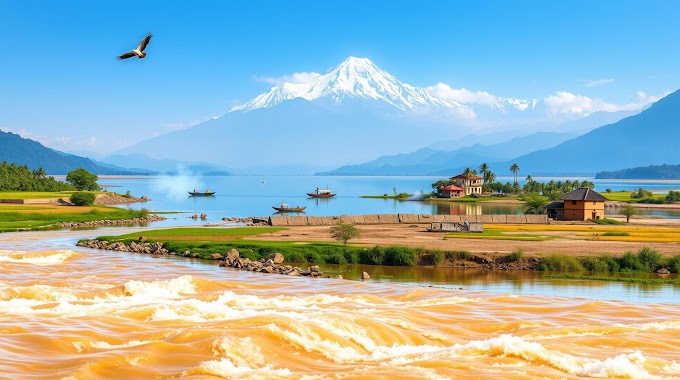
Imagine you're looking at a map of India. Now extend your vision to what we call the Indus River system—which flows through modern-day Pakistan and touches parts of northwestern India and even a tiny bit of Afghanistan. The Indus Valley Civilisation spread across this enormous region, covering roughly 1.26 million square kilometres. That's bigger than the entire state of Madhya Pradesh!
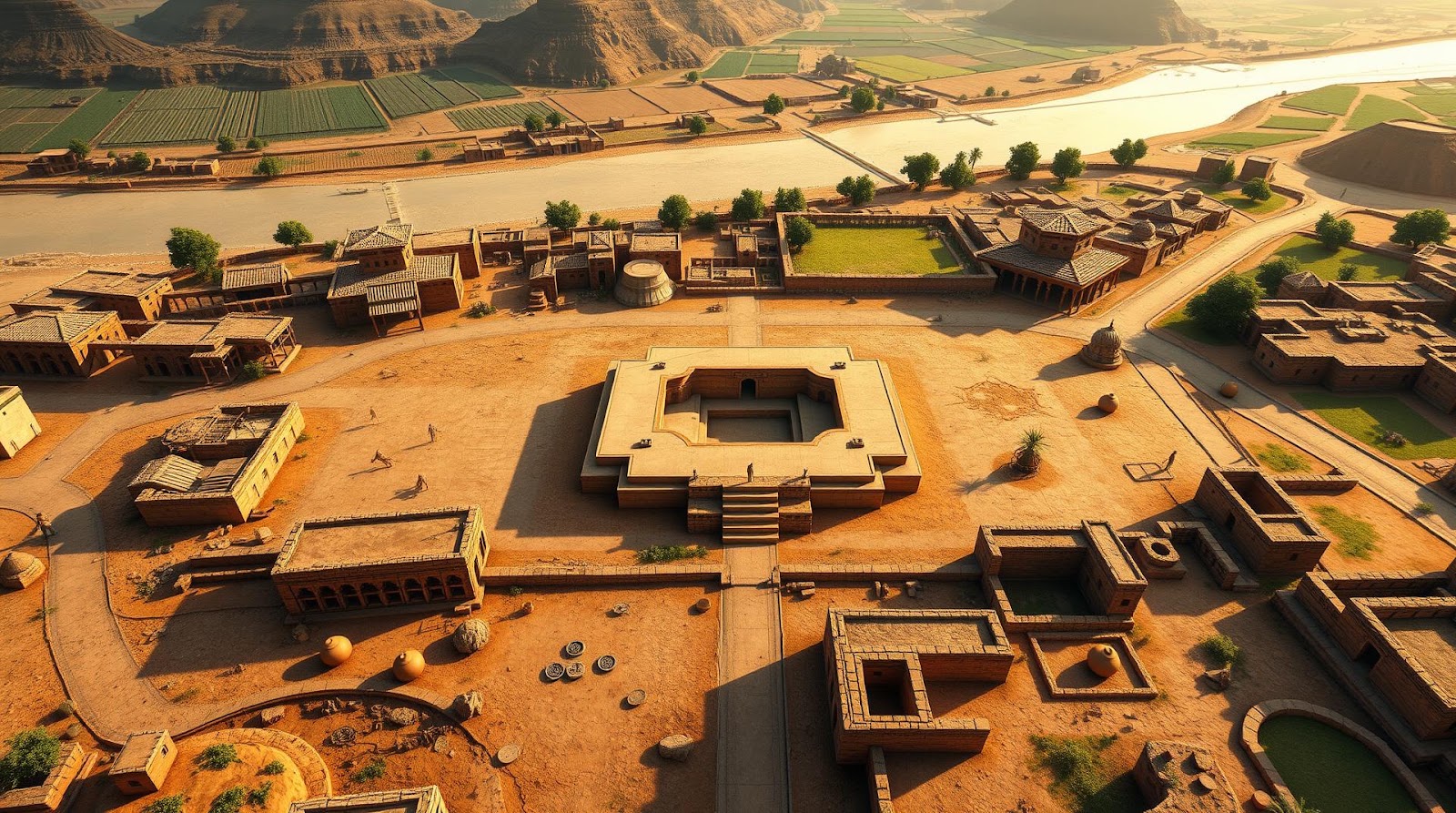
The main centres were Harappa (in Punjab, Pakistan) and Mohenjo-daro (in Sindh, Pakistan), which is why you'll sometimes hear this civilisation called the "Harappan Civilisation." But here's what's crucial—it wasn't just two cities. There were hundreds of settlements spread across this vast area. Places like Lothal, Dholavira, Kalibangan, and Banawali were all part of this network. We know this because archaeologists have found similar pottery, seals, weights, and urban planning across all these sites.
Why It's Called a Civilisation, Not Just a Culture
You'll see the terms "civilisation" and "culture" thrown around in history, and students often confuse them. Let me clarify: a culture is when a group of people share beliefs, arts, and customs. A civilisation is when they've got cities, writing, social hierarchy, and organised systems. The Indus Valley had all of these, so it deserves the name "civilisation."
In fact, it was one of the world's earliest urban civilisations. When the Indus Valley was at its peak around 2600-1900 BCE, Egypt had the Old Kingdom, and Mesopotamia had city-states. The Indus Valley Civilisation was their contemporary, not some primitive precursor to Indian history. That's important context for your essays.
Characteristics That Make This Civilisation Extraordinary
Urban Planning That Still Amazes Architects
Here's what blows my mind every time I teach this: if you visit Mohenjo-daro or look at its excavation plans, you'll see streets laid out in a perfect grid pattern. North-south streets, east-west streets, all at right angles. The main streets were about 30 feet wide, with smaller lanes branching off. There were proper drainage systems, public wells, and even what appear to be public baths. The Great Bath at Mohenjo-daro is one of the oldest known public bathing structures in the world.
Compare this to most ancient civilisations, and you'll realise how unusual this level of planning was. The Greeks didn't have this level of urban sophistication until centuries later. The fact that they could coordinate such massive urban projects across such a huge geographical area tells us they must have had a strong central authority and excellent communication systems.
Seals, Weights, and the Mystery of the Script
One of the most fascinating (and frustrating) aspects of Indus Valley archaeology is their writing system. We've found thousands of seals—small stone or terracotta objects with inscriptions—but we still haven't definitively deciphered the script. There are roughly 400-600 distinct signs in the script, and it appears to have been written from right to left.
Why do we know so much about their weights and measures? Because they were incredibly standardised. Whether you found weights in Mohenjo-daro or Lothal, they followed the same ratio system. This tells us they had a unified system for trade and commerce across the entire civilisation. Imagine if today, every state in India had its own weights and measures—trade would be a nightmare, right? The Indus people solved this problem thousands of years ago.
Let me give you a memory trick I tell all my students: "SSW – Seals, Script, Standardisation." Whenever you see a question about Indus Valley defining characteristics, remember these three S's. The seals tell us about their trade, the script (undeciphered) tells us about their mystery, and standardisation tells us about their organisational genius.
What We Know About Their Daily Life
The Indus Valley people weren't nomads wandering around with cattle. They were settled agriculturalists. They grew wheat, barley, cotton, and various pulses. They domesticated animals like cattle, buffalo, goats, and sheep. The cotton cultivation is particularly interesting because it connects directly to their textile industry—we've found spindles and loom weights, proving they were spinning and weaving cotton.
Their houses were made of baked bricks (not sun-dried), which is why they've survived thousands of years. Houses had multiple rooms, and interestingly, many seemed to have bathrooms and toilets. A flush toilet system has been found at Mohenjo-daro! This level of sanitation wasn't common in many ancient civilisations.
In terms of jewellery and personal adornment, they loved it. We've found terracotta figurines wearing bangles, necklaces, and other ornaments. One famous figurine is the "Dancing Girl" of Mohenjo-daro—a bronze statue that shows graceful posture and detailed craftsmanship.
| Aspect | Details |
|---|---|
| Time Period | 3300-1300 BCE (Peak: 2600-1900 BCE) |
| Main Sites | Harappa, Mohenjo-daro, Lothal, Dholavira, Kalibangan |
| Area Covered | Approx. 1.26 million sq. km (5 times the size of Mesopotamia) |
| Primary Occupation | Agriculture, trade, craftsmanship |
| Main Crops | Wheat, barley, cotton, pulses |
| Architectural Feature | Grid-pattern cities, drainage systems, public baths |
| Trade Partners | Mesopotamia, Central Asia, possibly Egypt |
| Script Status | Still undeciphered (400-600 signs identified) |
The Great Mystery: What Happened to the Indus Valley Civilisation?
Now here's the interesting part—and this is where exam questions love to twist things. The Indus Valley Civilisation didn't suddenly vanish like Atlantis. It declined gradually over several centuries.
The Theories Behind the Decline
Scholars have proposed several theories, and you need to know them for your exam:
1. Environmental Collapse Theory: Around 2000 BCE, the climate in the region became drier. The monsoons weakened, and rivers changed their course. If the Indus River shifted its channel, it would have devastated agriculture-dependent settlements. Archaeological evidence shows that many settlements were abandoned, and those that remained saw a decline in size and prosperity.
2. Tectonic Activity Theory: Some scholars believe that earthquakes and geological shifts altered the flow of rivers, particularly the Sutlej. This would have made agriculture increasingly difficult, forcing people to migrate.
3. The Aryans/Indo-Aryans Theory: This one's controversial, so let me be careful here. For decades, scholars suggested that Indo-Aryan invasions from Central Asia led to the collapse of the Indus Valley Civilisation. But here's what's important: there's no clear archaeological evidence of a massive invasion. What we likely had was migration and gradual cultural interaction. The Vedas (composed by Indo-Aryans) do mention battles and conquests, but whether these refer to the Indus Valley people is debated.
The most accepted view today is that the Indus Valley Civilisation didn't abruptly collapse due to invasion but declined gradually due to environmental stress and possibly external migration. As it weakened, Indo-Aryan groups settled in the region, and over centuries, the Vedic culture became dominant.
Here's a memory trick for you: "E-T-A" – Environment, Tectonic shifts, Aryans (migration). These are your three main theories. Don't get stuck on any one; exam questions often ask you to discuss multiple theories.
Key Facts That Always Appear in Exams
Religion and Beliefs
We don't have clear written records of their religion, but archaeological finds give us clues. We've found terracotta figurines that appear to be goddesses or fertility symbols. There are seals with what might be a "Proto-Shiva" figure—a horned deity in a yogic posture. Whether this directly connects to later Hindu traditions is debated, but it's interesting to note.
They didn't seem to build large temples like the Egyptians or Mesopotamians. This suggests their religious practices might have been different—perhaps more domestic or community-based rather than monumental.
Society and Governance
Here's what's mysterious: we haven't found evidence of palaces or temples, nor have we found the remains of kings or an obvious ruling elite. This has led some scholars to suggest that the Indus Valley Civilisation might have been more egalitarian than other contemporary civilisations. Maybe they were governed by councils of merchants or administrators rather than absolute monarchs.
The standardised weights, measures, and seals suggest there was some form of centralised authority managing trade and administration, but it might have been less autocratic than Egypt or Mesopotamia.
Trade and External Contacts
The Indus Valley wasn't isolated. We've found evidence of trade with Mesopotamia (modern-day Iraq) and Central Asia. Seals have been found in Mesopotamian sites, proving contact. There's also evidence of trade with the Persian Gulf region and possibly Egypt, though direct evidence with Egypt is less clear.
Their main exports were likely cotton, timber, and possibly ivory. They imported metals like tin (for bronze-making) and semi-precious stones. The standardised weights we discussed earlier? They were crucial for maintaining trade relationships across such vast distances.
A) Grid-pattern streets and planned layouts B) Underground sewage and drainage systems C) Large monumental temples D) Standardised weights and measures
Answer: C) Large monumental temples. The Indus Valley Civilisation did not build large temples like other ancient civilisations. This is a key distinguishing feature.
A) Fully deciphered and showing Indo-Aryan language B) Written from left to right like modern English C) Still undeciphered despite extensive research D) Only found in Mesopotamia
Answer: C) Still undeciphered despite extensive research. This remains one of archaeology's great mysteries, with 400-600 identified signs.
A) Religious idol for temple worship B) Artistic and craftsmanship excellence C) Royal statue of a queen D) Agricultural tool
Answer: B) Artistic and craftsmanship excellence. The Dancing Girl demonstrates their skill in bronze casting and artistic sensibility.
A) Aryans' invasion theory B) Environmental collapse theory C) Tropical monsoon theory D) Vedic migration theory
Answer: B) Environmental collapse theory. Weakened monsoons, climate change, and river course changes made agriculture difficult, leading to gradual decline and migration.
A) Delhi and Agra B) Harappa and Mohenjo-daro C) Varanasi and Pataliputra D) Taxila and Ujjain
Answer: B) Harappa and Mohenjo-daro. These two sites are the largest and most extensively excavated, giving us the most information about the civilisation.
One last thing before you close this tab: when you're revising Indus Valley for your exam, focus on three things. First, the geographical extent and major sites. Second, their urban planning and technological sophistication. Third, the theories of decline. Skip the overthinking about religious symbols or minor details—they rarely appear in MCQs.
I've been teaching this for over a decade, and I can guarantee you'll see at least one question on Indus Valley in your exam. Now you're ready for it. Go score those marks!
Published by Dattatray Dagale • 24 June 2026
.jpg)
.png)



.png)



.png)

0 Comments